
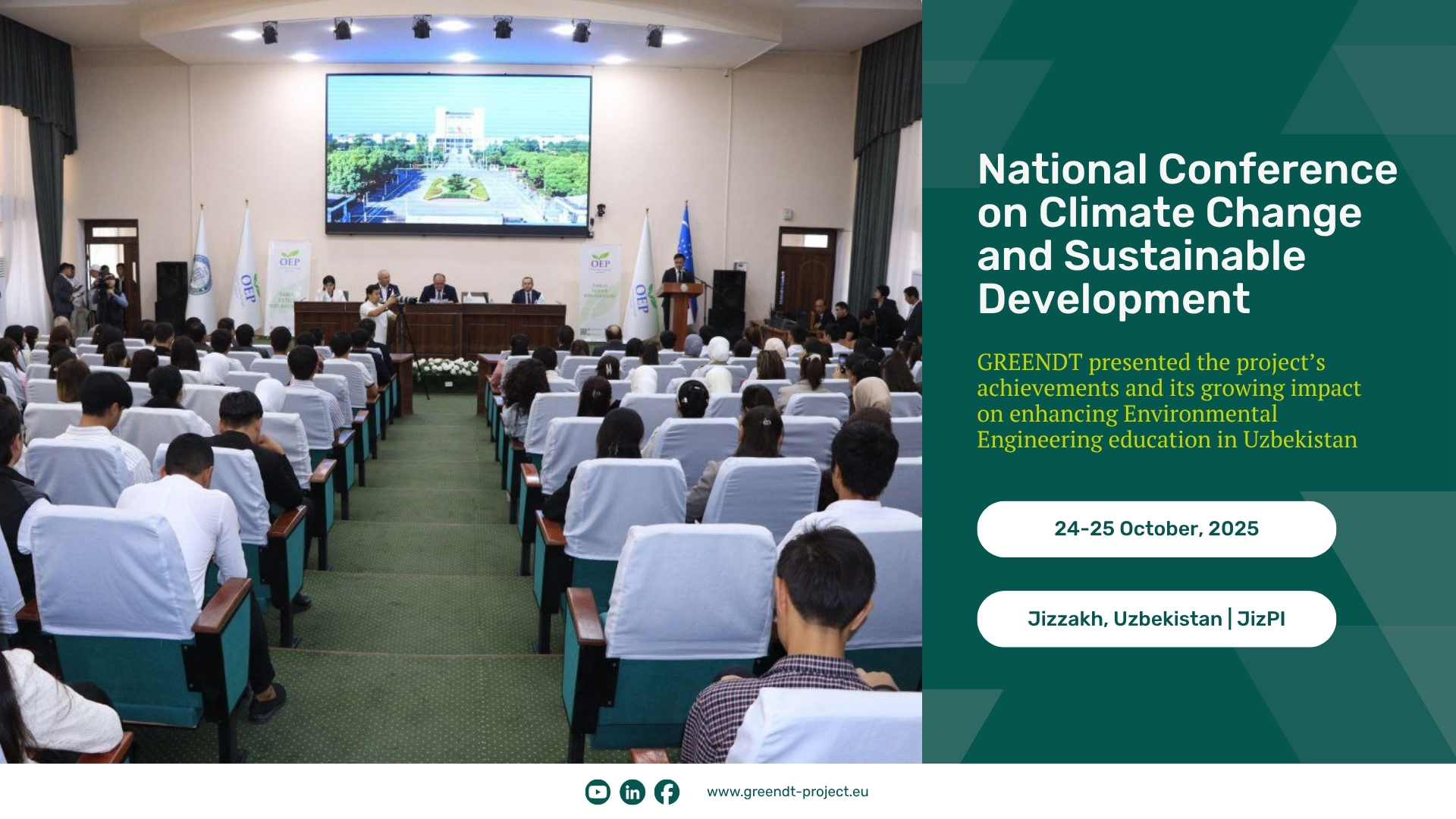
Date: October 24–25, 2025
Venue: Jizzakh Polytechnic Institute, Uzbekistan
The GREENDT Project proudly took part in the Republican Scientific and Practical Conference on “Scientific Achievements in Climate Change and Sustainable Development,” held on October 24–25, 2025, at Jizzakh Polytechnic Institute (JizPI).
This significant national event was jointly organized by:
- The Ministry of Higher Education, Science and Innovation of the Republic of Uzbekistan.
- The Department of Ecology, Environmental Protection, and Climate Change of Jizzakh Region.
- The Ecological Party of Uzbekistan.
- The Legislative Chamber of the Oliy Majlis of the Republic of Uzbekistan.
- In cooperation with the Erasmus+ Capacity Building in Higher Education (CBHE) project 101179013-GREENDT: “Implementing Environmental Engineering Master Degrees through Sustainable Transition and Societal Change.”
GREENDT Representation and Contributions
The GREENDT Project was represented by:
- Mr. Jamshid Abdunazarov – JizPI Project Manager (on-site)
- Mr. Sarvarbek Yusupov – National Coordinator (online)
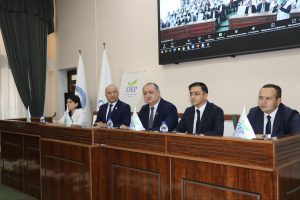
Both speakers presented the project’s achievements and its growing impact on enhancing Environmental Engineering education in Uzbekistan. They highlighted GREENDT’s ongoing efforts to align academic programs with sustainable development goals, promote green and digital transition, and foster international collaboration and innovation in higher education.
About the Conference
The conference brought together scientists, researchers, master’s and doctoral students to discuss innovative solutions and research findings in the following thematic areas:
- Green technologies in industry and energy, transition to alternative energy sources, and waste management.
- Scientific approaches to addressing environmental challenges in natural sciences and agriculture, including the role of artificial intelligence in sustainability.
- Eco-friendly construction materials and technologies, and sustainable urban transport systems.
- Youth engagement and environmental education through modern pedagogical technologies.
The event provided a national platform for knowledge sharing, networking, and promoting sustainable practices in research, industry, and education.
GREENDT’s Role in Sustainable Transition
Through participation in events like this, the GREENDT Project continues to reinforce its mission of advancing green and digital transformation across higher education institutions in Central Asia. By integrating sustainability-focused engineering curricula and fostering cross-sector collaboration, GREENDT contributes to building a more resilient, environmentally responsible future for Uzbekistan and beyond.