GREENDT Team Participated in EU Village 2026

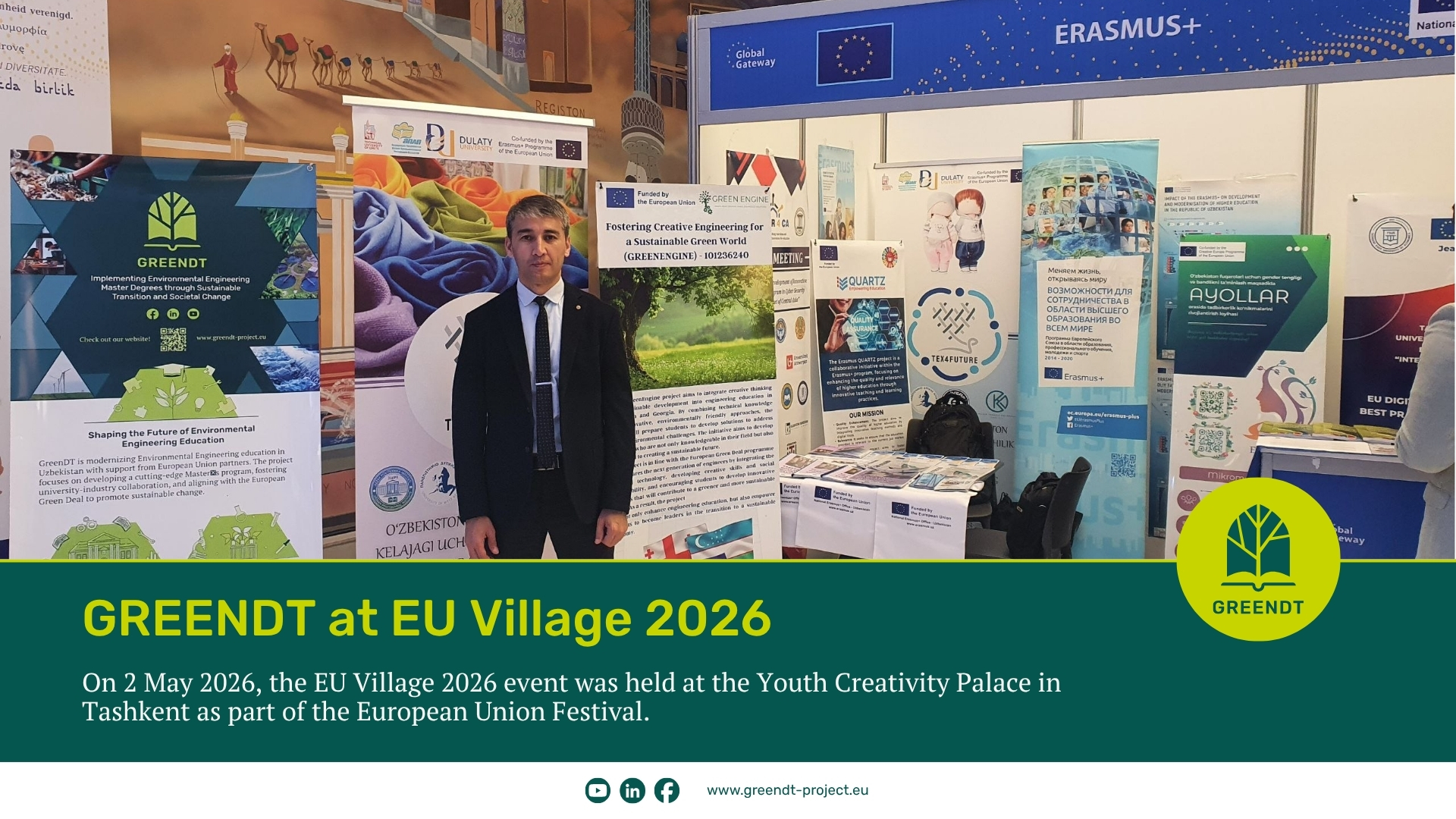
On 2 May 2026, the EU Village 2026 event was held at the Youth Creativity Palace in Tashkent as part of the European Union Festival. 

The event aimed to showcase EU-funded projects, partnerships, educational opportunities, and Erasmus+ initiatives to the wider public, media representatives, students, and stakeholders. 

The GREENDT Erasmus+ CBHE project – “Implementing Environmental Engineering Master Degrees through Sustainable Transition and Societal Change” – was also represented at this important public outreach event. During the festival, GREENDT promotional and communication materials were presented to visitors, highlighting the project’s objectives, partner institutions, key activities, and expected impact on the development of Environmental Engineering education in Uzbekistan. 

GREENDT contributes to the modernization of higher education by supporting the development of Environmental Engineering Master’s programmes, promoting green transition, sustainability, climate awareness, and innovative approaches to environmental education. 

EU Village 2026 provided an excellent platform to promote the achievements of Erasmus+ CBHE projects in Uzbekistan, strengthen visibility, and engage with a broad audience interested in European cooperation and educational opportunities. 

The GREENDT team remains committed to fostering international cooperation for a sustainable future, green education, and the advancement of Environmental Engineering in Uzbekistan. 

A Seminar-Training was held at “UzAuto MOTORS” JSC within the GREENDT Project

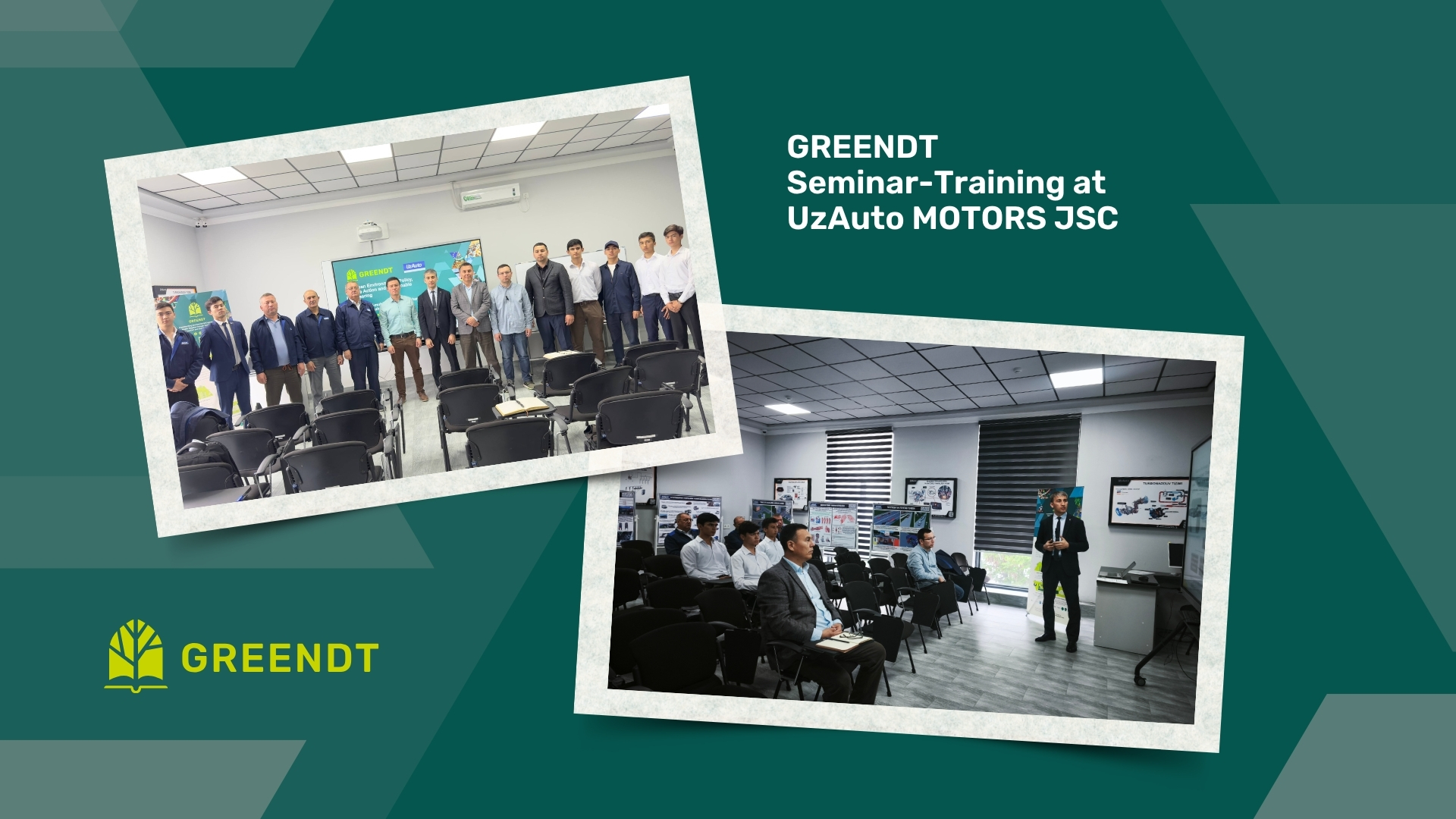
On 22 April 2026, within the framework of the GREENDT project under the ERASMUS+ programme, and as part of WP5: Dedicated capacity building on European environmental policy and environmental engineering, a seminar-training was organized at UzAuto MOTORS JSC.

The training was devoted to the topic “European Environmental Policy, Climate Action and Sustainable Engineering”, and covered the following areas:

  • An introduction to the GREENDT project and European Environmental and Climate Law.
  • Air Quality Monitoring & Modelling: A Comprehensive Approach.
  • Environmental Engineering, Sustainability, and Water Issues: Engineering Our Future.
  • Sustainability and Energy Efficiency in Buildings: Driving the Future of Climate Action
  • Fossil Fuels vs Renewable Energies.  

During the seminar, managers and specialists from various departments of UzAuto MOTORS JSC took part and gained important knowledge in the fields of environmental safety, sustainable production, and green technologies. 

This event became an important step toward strengthening the integration of education and industry, as well as promoting the wider implementation of environmental responsibility and sustainable development principles within enterprises. 

Such trainings within the GREENDT project contribute to strengthening capacity in environmental engineering in Uzbekistan, promoting the wider introduction of modern green approaches in enterprises, and enhancing practical efforts in environmental protection.

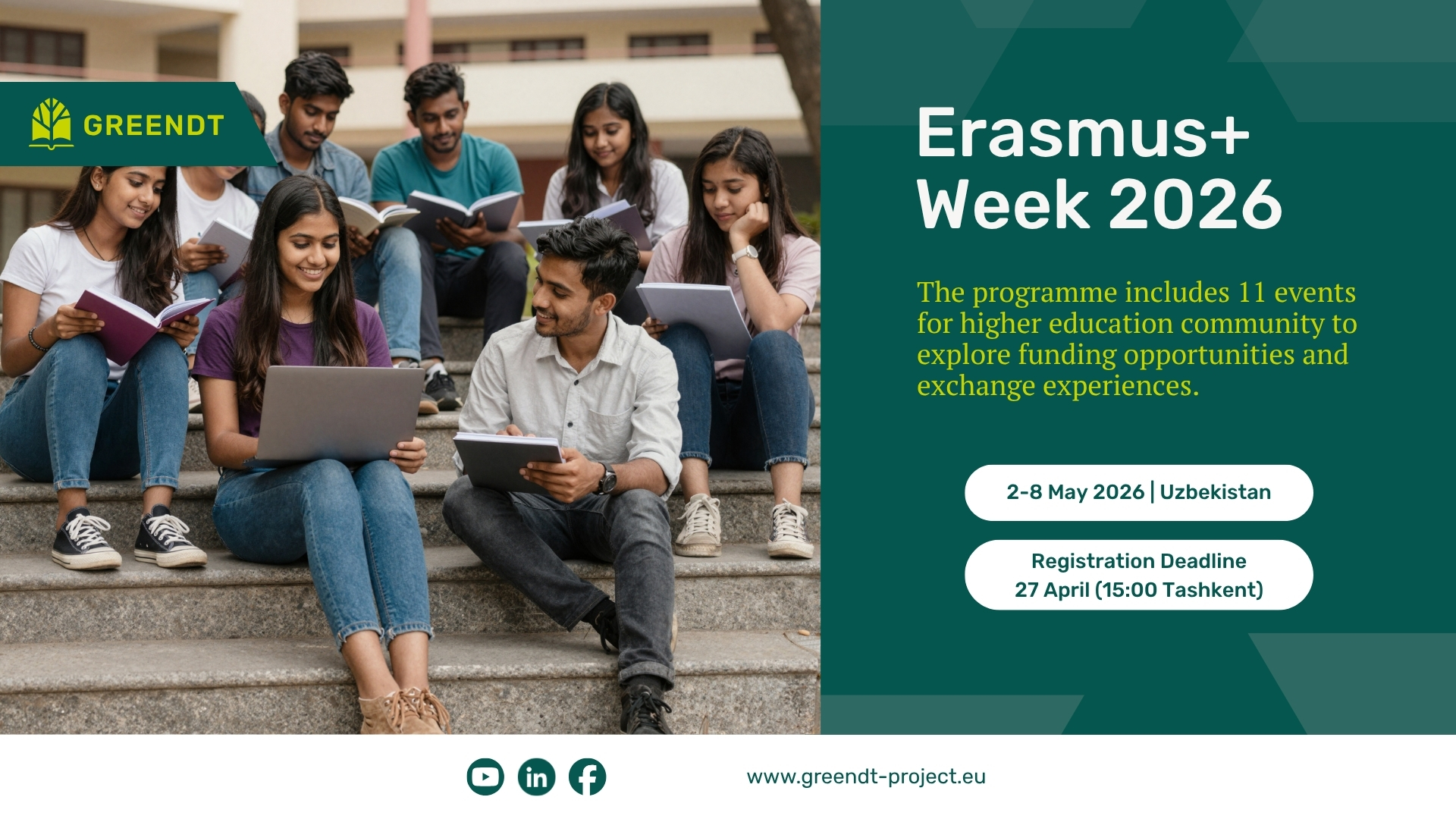
Erasmus+ Week 2026 opens registration for a week of opportunities in Uzbekistan

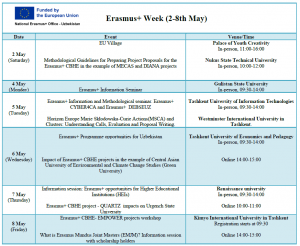
The Erasmus+ Week 2026 has officially opened its registration period, inviting participants to explore the wide range of opportunities and achievements of the Erasmus+ programme. Taking place from 2 to 8 May 2026, this week-long initiative will bring together students, academics, and professionals interested in international cooperation and higher education, with a particular focus on activities across Uzbekistan.

During the week, a total of 11 events will be held, including 8 in-person sessions across different regions of Uzbekistan and 3 online events, allowing flexible participation depending on availability. The programme will feature presentations on Erasmus+ opportunities, showcases of project results, and an online exhibition highlighting Capacity Building in Higher Education (CBHE), Jean Monnet, and International Credit Mobility (ICM) projects. In addition, participants can attend information seminars, thematic sessions, interviews, and a dedicated session on Marie Skłodowska-Curie Actions opportunities.

The registration deadline is 27 April 2026 at 15:00 (Tashkent time). It is important to note that only registered participants will receive official invitations to attend both in-person and online events. From the GreenDT project perspective, Erasmus+ Week 2026 represents a valuable opportunity to strengthen engagement with the Erasmus+ system in Uzbekistan, fostering new collaborations, and continue promoting knowledge exchange in higher education.

REGISTER HERE

One Year of the New EU Air Quality Directive – What It Means for Future Environmental Engineers

The EU’s new Ambient Air Quality Directive (EU) 2024/2881 has been in force since December 2024, and it is already reshaping how Europe thinks about pollution, health and urban planning – even though the strict new limit values only become binding in 2030. For GreenDT, which is building innovative Environmental Engineering Master Degrees aligned with the EU Green Deal, this evolving framework is a unique opportunity to connect education, research and real policy change.​

From legal text to real change

Over the past year, EU countries have started translating the directive into national law, updating their rules to reflect tighter standards for pollutants like PM2.5, PM10 and NO2 and to introduce new obligations for planning and enforcement. Authorities are designating responsible bodies, defining zones and agglomerations, and preparing new air quality plans and roadmaps that must show how they will reach the 2030 targets.​

At the same time, EU agencies are publishing guidance and tools to support consistent implementation, from modelling methodologies to reporting formats. This creates a growing demand for professionals able to navigate both the technical and governance dimensions of air quality, exactly where Environmental Engineering graduates can play a leading role.​

Smarter monitoring, stronger rights

The directive is transforming how air quality is measured and communicated. Countries are upgrading monitoring networks, adding more stations in dense urban areas and sensitive sites such as schools and hospitals, and complementing measurements with mandatory atmospheric modelling in hotspots.​

New indicators such as ultrafine particles and black carbon are gaining importance, alongside better data on health impacts, especially for vulnerable groups. Citizens also gain stronger rights to clear, real‑time information and, in certain cases, to seek compensation when authorities fail to respect air quality laws, making clean air not just a goal but an enforceable right.​

Air quality today: progress and gaps

Recent analyses from the European Environment Agency show that air quality in Europe has steadily improved over the last decade, with many monitoring stations now meeting current EU standards for key pollutants. However, exposure to fine particles and ozone still remains above health‑based WHO guidelines for most urban residents, and the new 2030 EU limits will be much harder to meet without additional action.​

This “gap to target” assessment helps cities and regions prioritise interventions in transport, industry, residential heating and port and airport operations, where persistent pollution hotspots remain. In practice, this means more low‑emission zones, cleaner public transport, stricter industrial permits and innovative solutions for heating and cooling – areas where environmental engineers are essential.​

Why this matters for GreenDT

GreenDT’s mission is to empower staff and students in Uzbekistan’s universities by transferring knowledge and best practices from EU Environmental Engineering education, fully aligned with the Green Deal and Europe’s transition policies. The new air quality directive provides a concrete, up‑to‑date policy framework that GreenDT partners can embed in teaching, labs and collaborative projects.​

Master programmes and laboratories developed under GreenDT can use the directive’s standards, monitoring requirements and planning obligations as real case studies: from designing sensor networks and modelling scenarios, to evaluating policy options and communicating risks to communities. In this way, students are not just learning about regulations on paper – they are training to become the engineers who will help cities meet those regulations and protect public health in Europe, Uzbekistan and beyond.​

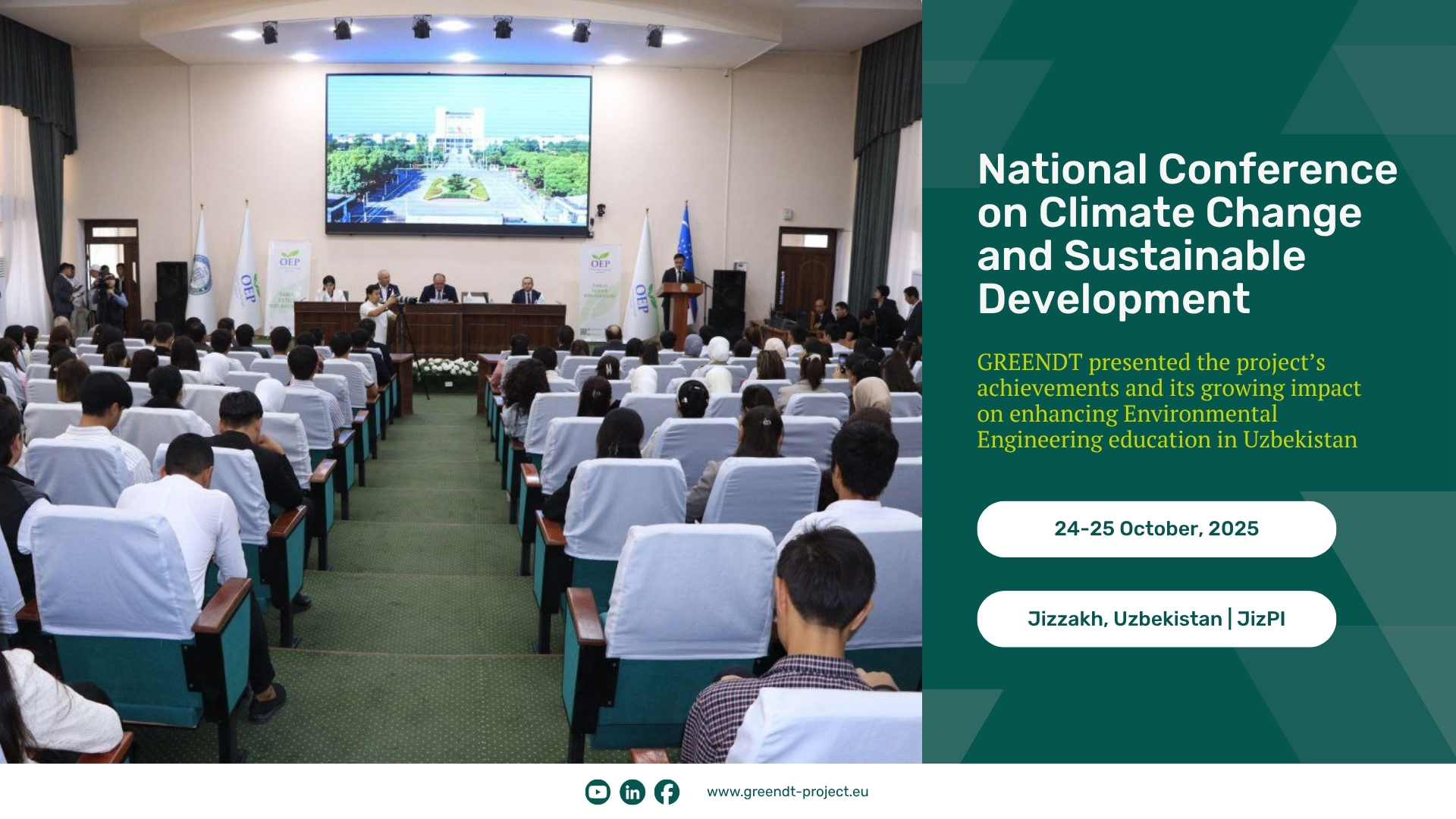
GREENDT Project at the National Conference on Climate Change and Sustainable Development

Date: October 24–25, 2025
Venue: Jizzakh Polytechnic Institute, Uzbekistan

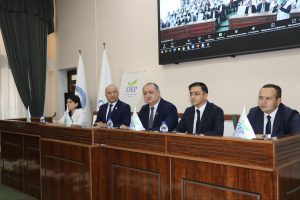
The GREENDT Project proudly took part in the Republican Scientific and Practical Conference on “Scientific Achievements in Climate Change and Sustainable Development,” held on October 24–25, 2025, at Jizzakh Polytechnic Institute (JizPI).

This significant national event was jointly organized by:

GREENDT Representation and Contributions

The GREENDT Project was represented by:

  • Mr. Jamshid AbdunazarovJizPI Project Manager (on-site)
  • Mr. Sarvarbek YusupovNational Coordinator (online)

Both speakers presented the project’s achievements and its growing impact on enhancing Environmental Engineering education in Uzbekistan. They highlighted GREENDT’s ongoing efforts to align academic programs with sustainable development goals, promote green and digital transition, and foster international collaboration and innovation in higher education.

About the Conference

The conference brought together scientists, researchers, master’s and doctoral students to discuss innovative solutions and research findings in the following thematic areas:

  1. Green technologies in industry and energy, transition to alternative energy sources, and waste management.
  2. Scientific approaches to addressing environmental challenges in natural sciences and agriculture, including the role of artificial intelligence in sustainability.
  3. Eco-friendly construction materials and technologies, and sustainable urban transport systems.
  4. Youth engagement and environmental education through modern pedagogical technologies.

The event provided a national platform for knowledge sharing, networking, and promoting sustainable practices in research, industry, and education.

GREENDT’s Role in Sustainable Transition

Through participation in events like this, the GREENDT Project continues to reinforce its mission of advancing green and digital transformation across higher education institutions in Central Asia. By integrating sustainability-focused engineering curricula and fostering cross-sector collaboration, GREENDT contributes to building a more resilient, environmentally responsible future for Uzbekistan and beyond.

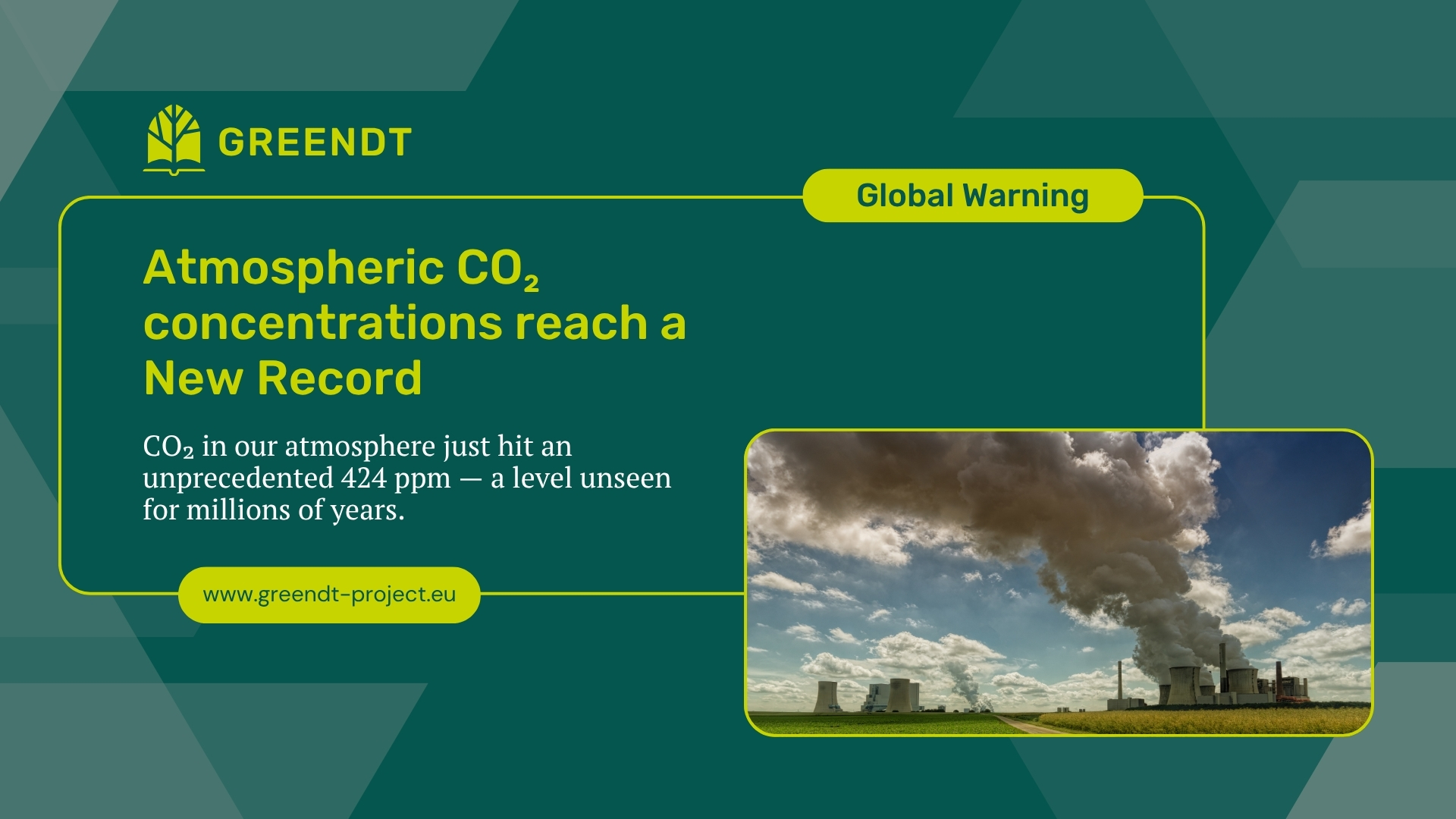
Unprecedented Surge: Atmospheric CO2 Concentrations Reach a New Record

The concentration of carbon dioxide (CO₂) in Earth’s atmosphere has reached record-breaking levels, and the pace of this increase is faster than ever before. This surge is a key driver of global warming and a warning signal that urgent action is needed from governments, organizations, and individuals alike.

The Current Situation

In 2024, global average CO₂ levels reached their highest point since modern measurements began. Atmospheric monitoring stations, including the historic Mauna Loa Observatory in Hawai‘i, recorded averages above 424 parts per million (ppm). This represents a dramatic increase from pre-industrial levels of about 280 ppm and even from recent decades, when the rate of growth was already accelerating.

From 2023 to 2024, the year-on-year rise in CO₂ concentration was approximately 3.5 ppm — the largest annual increase since systematic records began in 1957. This rapid climb underlines how human activity continues to reshape the chemistry of the atmosphere.

Why It Matters

Carbon dioxide is the most important long-lived greenhouse gas. It traps heat in the atmosphere, strengthening the natural greenhouse effect that keeps our planet habitable. However, when CO₂ concentrations increase, more heat remains near Earth’s surface, causing global temperatures to rise.

Scientific data from ice cores and atmospheric measurements show that current CO₂ levels are unprecedented in hundreds of thousands of years. Such concentrations are now driving the climate system into conditions that no human civilization has ever experienced.

What’s Driving the Increase

The main cause of this historic surge is the burning of fossil fuels — coal, oil, and gas — for energy and transportation. Deforestation and industrial agriculture further amplify the problem by reducing the planet’s ability to absorb CO₂ naturally through vegetation and soils.

Natural factors, such as El Niño events, can intensify these effects by reducing plant growth and increasing the frequency of wildfires, temporarily boosting CO₂ levels even higher.

The Consequences

The increase in CO₂ concentrations locks in additional global warming for decades and centuries to come, because this gas remains in the atmosphere for a very long time. The impacts are already visible: stronger heatwaves, prolonged droughts, more severe wildfires, melting ice sheets, and rising sea levels.

If emissions continue at their current pace, some projections indicate that atmospheric CO₂ could exceed 800 ppm by the end of this century — a level last seen millions of years ago, when global temperatures and sea levels were dramatically higher.

More information:

GREENDT Advances with Third Train-the-Trainers Workshop in Tashkent, Uzbekistan

Preparation of Didactic Materials on Air Pollution and Climate Change
The GREENDT project continues to advance its mission of transforming environmental and engineering education across Central Asia through its third Train-the-Trainers (ToT) workshop, titled “Preparation of Didactic Materials on Air Pollution and Climate Change.”

Held from 15–17 October 2025 at the Central Asian University of Environmental and Climate Change Studies (Green University) in Tashkent, Uzbekistan, the workshop aimed to strengthen educators’ abilities to design, adapt, and implement effective teaching resources on air pollution, air quality management, and climate change mitigation.

Day 1 – Understanding Atmospheric Emissions and Air Quality Fundamentals

The first day provided a scientific foundation for understanding air pollution dynamics. Participants explored the sources and classifications of atmospheric emissions, the interaction between meteorological conditions and pollutant dispersion, and the principles of air quality assessment.

Hands-on exercises using OpenAir, an open-source analytical tool, enabled participants to visualize and interpret real-world air quality datasets. Through guided practice, they learned to process monitoring data, identify pollution episodes, and generate graphical outputs for teaching and policy discussions. 

Day 2 – Pollutants, Health Impacts, and Atmospheric Chemistry

The second day deepened the focus on the chemical and health dimensions of air pollution. Sessions examined the formation pathways of primary and secondary pollutants, their toxicological effects on human health, and chemical transformation mechanisms occurring in the atmosphere.

Participants engaged with the CLASS model (Chemistry Land-surface Atmosphere Soil Slab) to simulate atmospheric processes such as photochemical reactions and pollutant transport. These simulations served as a basis for developing interactive classroom exercises and case studies that link theory to practical environmental scenarios in Central Asia. 

Day 3 – Monitoring, Modelling, and Climate Interactions

The final day focused on integrating monitoring techniques, modelling tools, and climate change considerations. Participants learned about state-of-the-art air quality monitoring networks, data calibration techniques, and forecasting methods for predicting pollution levels.

Practical sessions on remote sensing and satellite data analysis introduced participants to the use of atmospheric imagery for identifying large-scale pollution patterns and climate feedback loops. Laboratory demonstrations on aerosol sampling and chemical analysis further complemented these digital methods, helping educators translate complex scientific tools into accessible learning experiences.

The day concluded with a collaborative session to review and refine the didactic materials developed throughout the workshop. Participants discussed how to integrate these resources into existing curricula, ensuring that future engineers and environmental scientists gain both theoretical knowledge and practical analytical skills. 

Towards Sustainable Air Quality Education

This third ToT workshop marked a major milestone in GREENDT’s effort to empower educators and researchers with advanced methodologies for teaching air pollution and climate change. By combining scientific depth, data-driven analysis, and applied learning, the workshop equipped participants to produce high-quality educational materials that will enhance environmental education across the region.

Through this initiative, GREENDT continues to build a network of trainers capable of fostering sustainability-focused education and supporting evidence-based decision-making in air quality and climate management — contributing to a cleaner, healthier, and more resilient future for Central Asia and beyond.

GREENDT held dissemination conference at CAGU on green and digital transformation

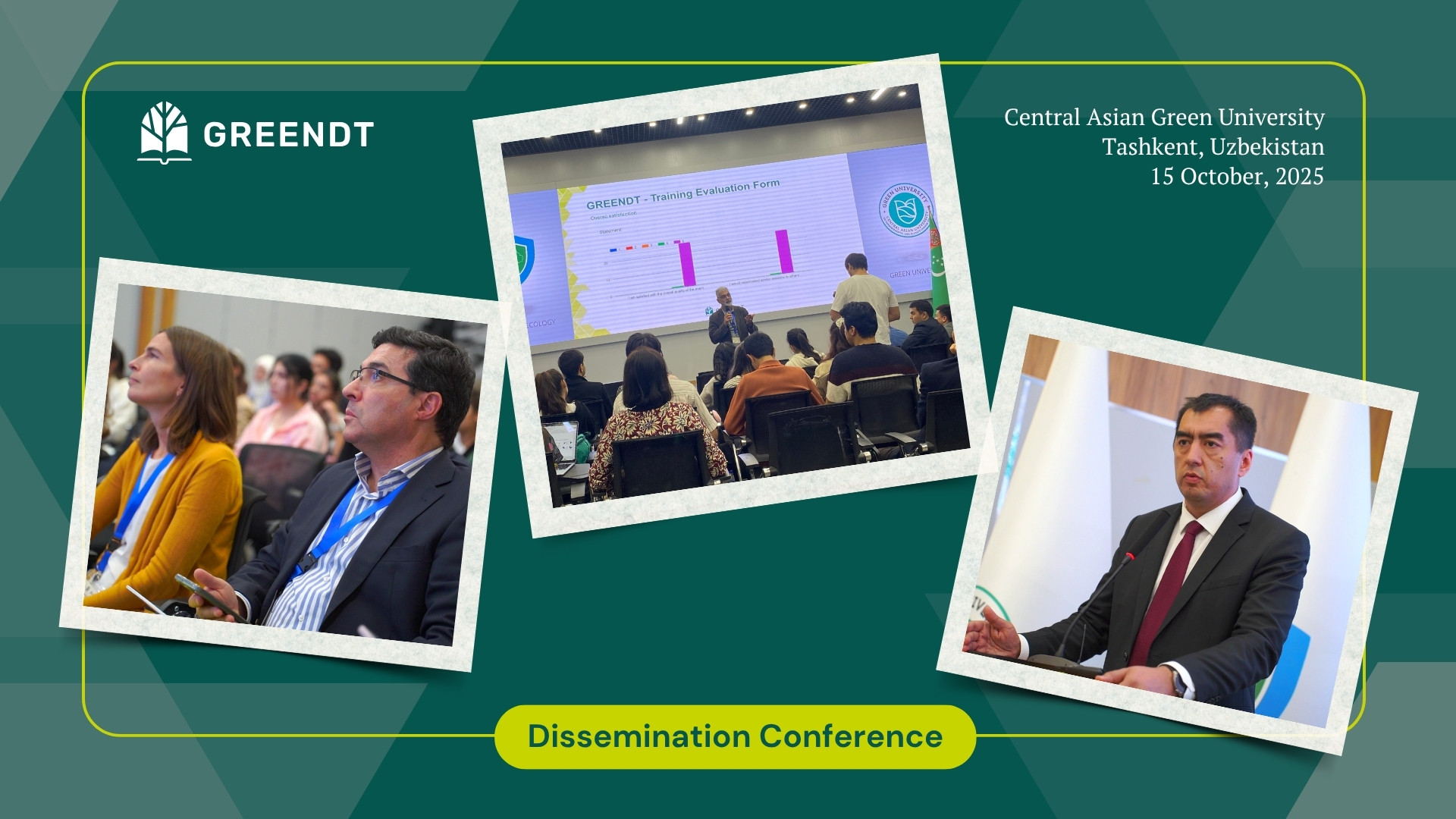
The GREENDT Project held a Dissemination Conference on October 15, 2025, at the Central Asian Green University (CAGU) in Tashkent, Uzbekistan. The event brought together representatives from ministries, universities, and related initiatives to exchange perspectives and foster collaboration on sustainable development, environmental engineering educationt and digital transformation in Central Asia.

As hosts of the event, the seminar was opened by Mr. Shakhriyor Nurulloev, Vice-Rector and currently Acting Rector of CAGU, who welcomed participants. Following him, Duarte Alves, coordinator of the GREENDT Project, presented the project’s status, emphasizing its key role in supporting environmental engineering education in Uzbekistan.

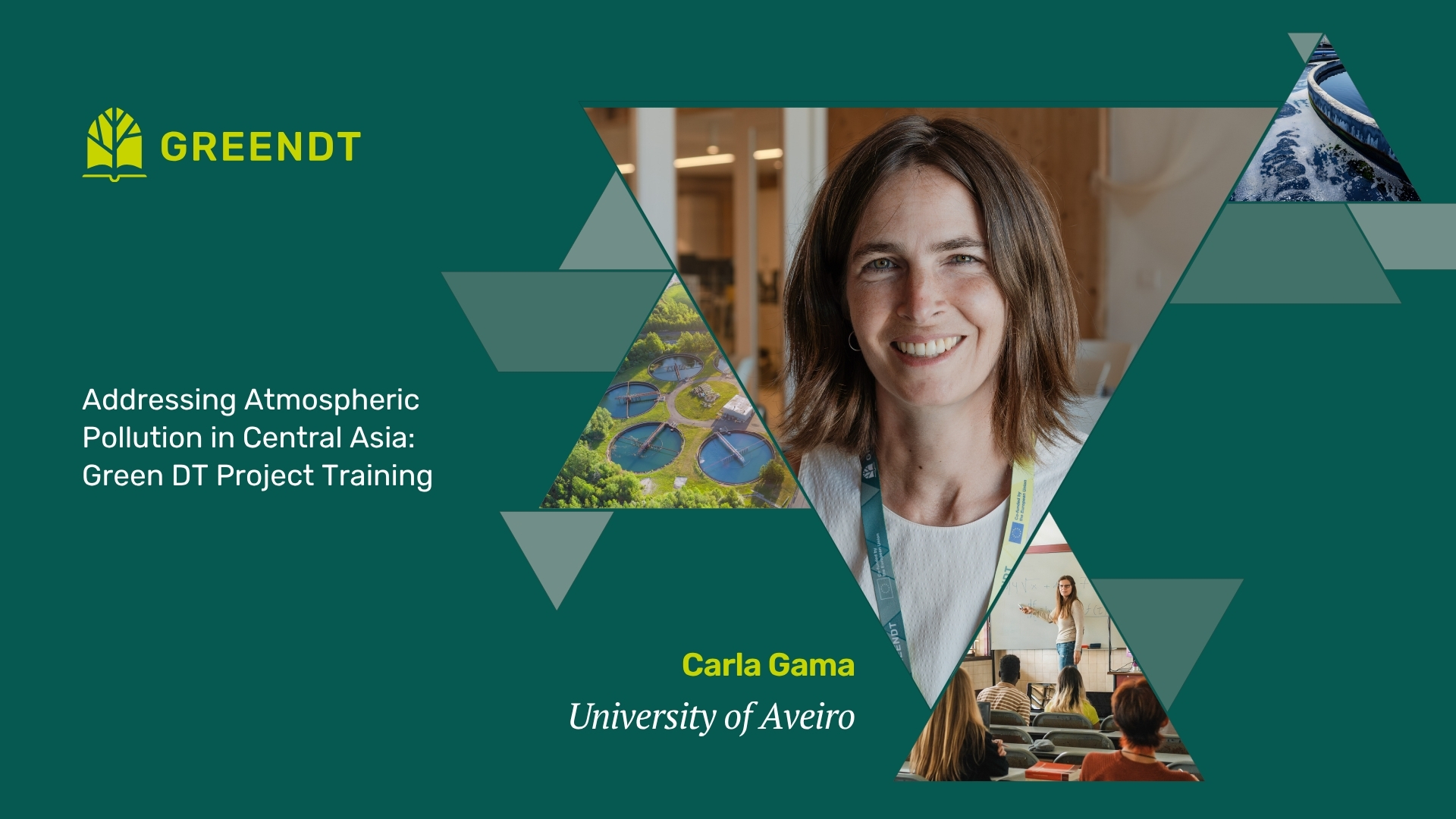
The conference then turned to the experiences gained through the Training of Trainers (ToT) activities carried out under the GREENDT framework. Claudio Cameselle (Universidade de Vigo), António Curado (Instituto Politécnico de Viana do Castelo), and Carla Gama (Universidade de Aveiro) shared insights and reflections from the ToT sessions recently held in Ourense, Viana do Castelo, and in parallel with the event at CAGU. Their contributions covered a wide range of topics, including engineering diplomacy, equity and inclusion, and water management; sustainable energy management, natural radiation, and GIS; as well as air pollution and climate change.

The seminar also featured presentations from related initiatives active in Uzbekistan and Central Asia, showcasing their efforts to foster sustainability, innovation, and capacity building across the region.

  • The SPHERE project (2024-2027) is driving Uzbekistan toward a greener future by transforming higher education into sustainable transportation.
  • The GDCAU project (2024-2027) aims to promote sustainable development and green transformation within higher education institutions in Central Asia.
  • The SILKWAY project (2024-2027) is focused on electricity and heat production, which is also particularly important given the current geopolitical situation affecting countries in the Central Asian region.

Through this conference, GREENDT reinforced its commitment to advancing green and digital transformation in higher education, fostering stronger academic cooperation between European and Central Asian institutions.

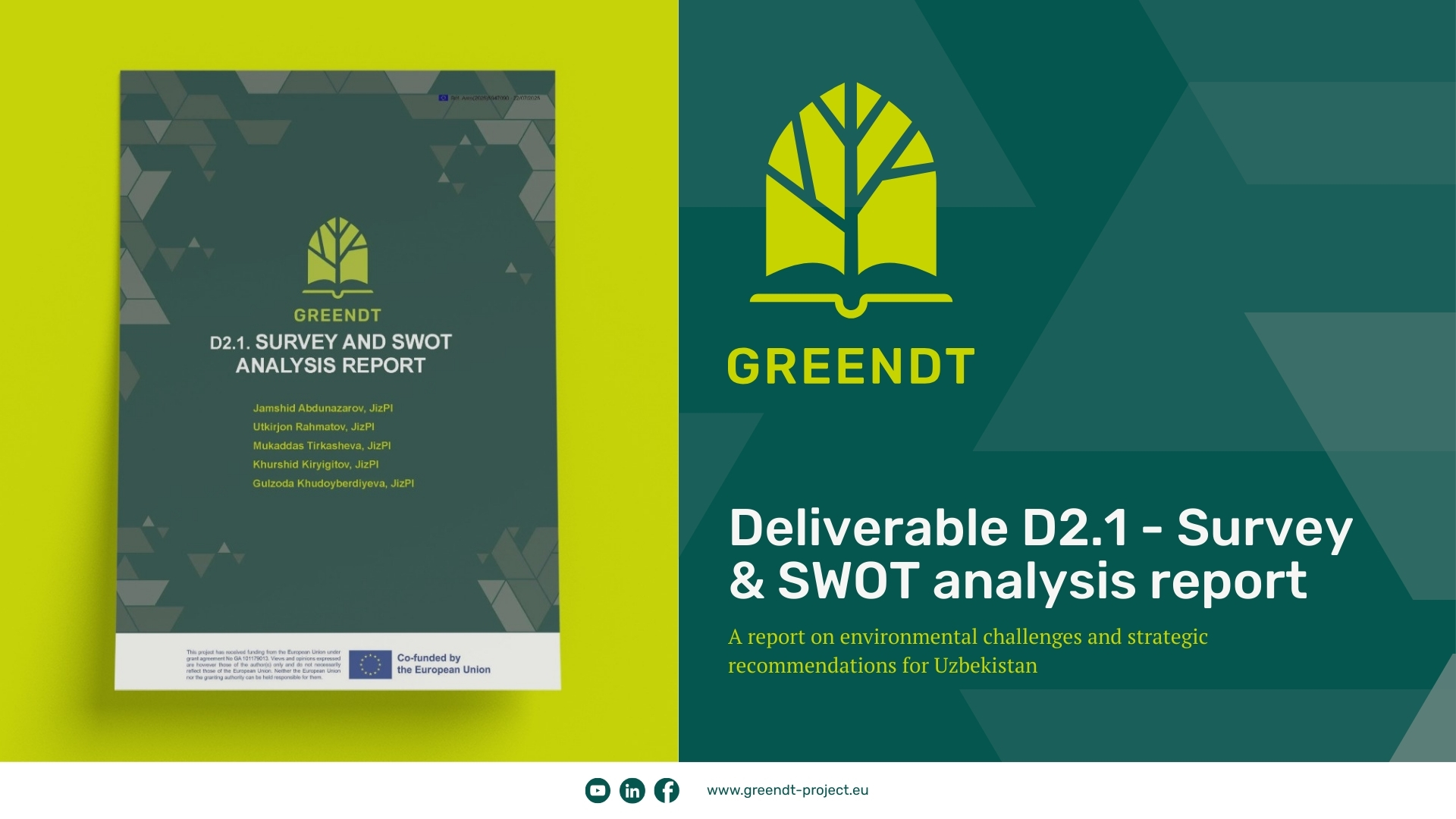
GREENDT releases Deliverable D2.1: A report on environmental challenges and strategic recommendations for Uzbekistan

The GREENDT project has released Deliverable D2.1 – Survey and SWOT Analysis Report, which is now available on the project website. Developed under Work Package 2, led by Industry, the report provides an in-depth assessment of Uzbekistan’s most pressing environmental challenges and offers strategic recommendations to enhance education, innovation, and sustainability in the country.

The deliverable focuses on key environmental challenges emerging from Uzbekistan’s rapidly developing industrial sector, including air, water, and soil pollution, as well as waste management issues and the urgent need for energy efficiency and green transition. Within the framework of the GREENDT project, the report plays a crucial role in strengthening master’s-level education in environmental engineering and fostering stronger collaboration between academia and industry.

To prepare the report, the JizPI team conducted an extensive survey targeting higher education institutions (HEIs) and industrial enterprises. The questionnaire addressed topics such as environmental legislation, educational gaps, industry integration, skills requirements, and innovation opportunities. The collected data was complemented by a SWOT analysis of Uzbekistan’s current environmental policies and educational system.

The findings reveal both significant potential and critical challenges. While there is growing awareness of environmental protection laws and an increasing demand for master’s programmes in environmental engineering, the report identifies key weaknesses, including limited cooperation between universities and industries, insufficient research infrastructure, and a shortage of qualified professionals. Opportunities lie in developing joint programmes with European universities, integrating innovative teaching methods, and expanding practical training through laboratories and internships.

Based on these insights, the report proposes some recommendations, including:

  • Strengthening collaboration between universities and industry.
  • Enhancing practical and technical skills through modern teaching tools and laboratory work.
  • Integrating European best practices into the local education system, including dual degree programmes.
  • Improving systematic monitoring and quality assessment to align local standards with international frameworks.

The publication of Deliverable D2.1 represents an important milestone for the GREENDT project, offering valuable insights and practical recommendations to enhance environmental education and foster sustainable industrial development in Uzbekistan.

The full report is now available for download HERE!

GREENDT advances with Second Train-the-Trainers Workshop in Viana do Castelo, Portugal

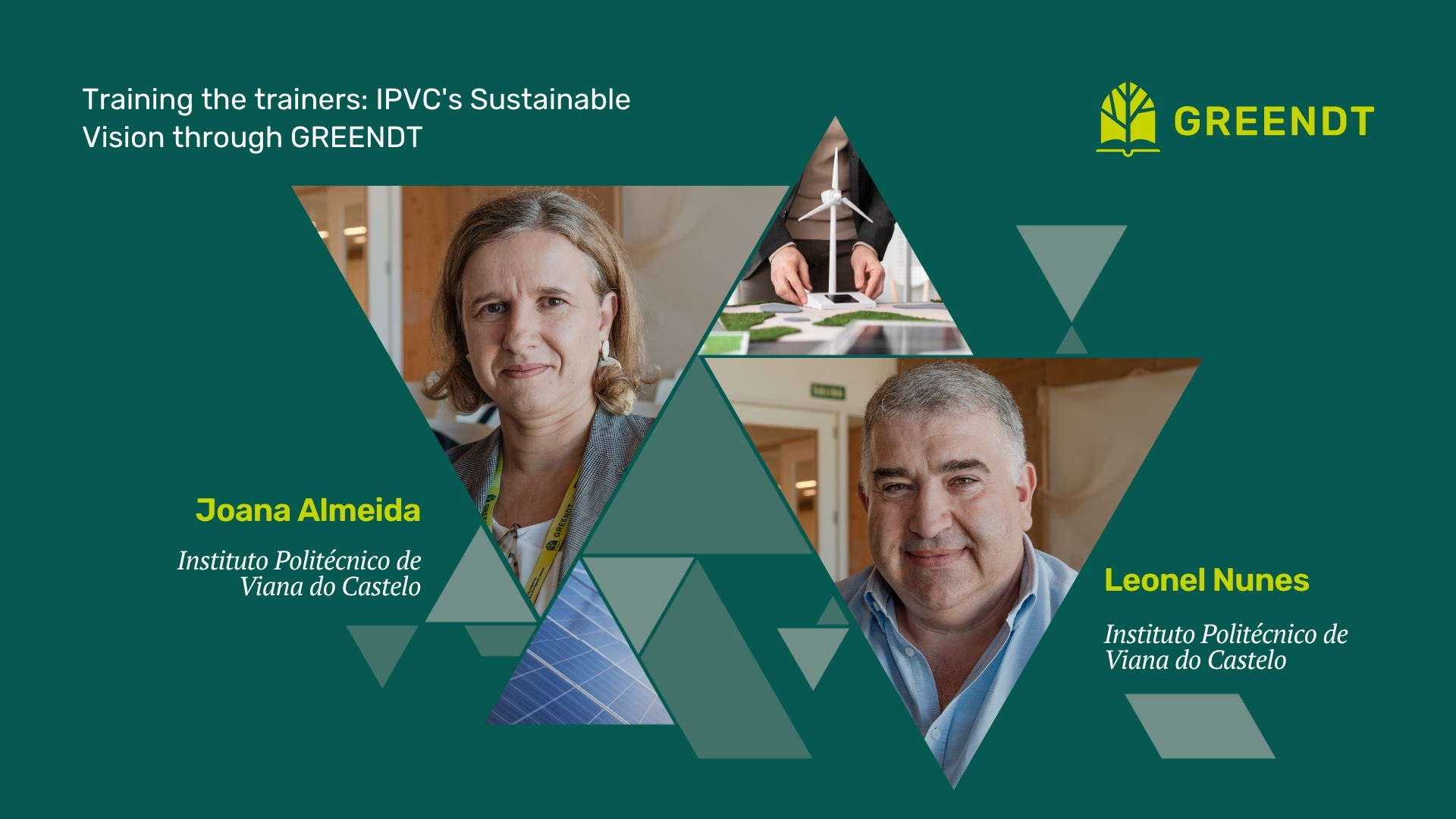
The GREENDT project continued its mission to reshape engineering education through sustainability with its second Train-the-Trainers (ToT) workshop, hosted from July 21 to 23, 2025, at the Instituto Politécnico de Viana do Castelo in Portugal. As part of Task 3.3 – Implementation of ToT-Enhanced Training Sessions, the event focused on the capacity building in sustainable energy management, natural radiation, and geospatial technologies for researchers, educators, engineers, and students from across the consortium.

Professors Joana Almeida and Leonel Nunes, both from IPVC, emphasized the relevance of these trainings to capacitate attendees on how to address Uzbekistan’s environmental main issues.

Day 1 – Sustainability, Risk, and Indoor Environmental Quality

Participants explored integrated approaches to sustainability in engineering, covering the following topics:

The sessions reflected the need to address health, safety and sustainability issues, that can be tackled throughout the project.

Day 2 – Renewable Energy, Land Use, and Geospatial Innovation

Building on the first day’s foundations, the second round invited participants to deepen their understanding of sustainability through real-world applications, spatial analysis, and strategic planning tools designed to address complex environmental challenges. Sessions addresed:

  • Fossil vs. Renewable Energies.
  • Technical Visit to the Sustainable Building.
  • Land Management.
  • Practical Geoprocessing and Remote Detection.

Focusing on Uzbekistan’s actual issues, the sessions highlighted the importance of integrated planning for sustainable development.

Day 3 – Field Visits and Final Wrap-Up

On the last training day, participants had the opportunity to connect theoretical learning with real-world practices in renewable energy, water management, and sustainable waste treatment through direct engagement with regional institutions and industry leaders. Visits included:

  • ENERCON (Lanheses): Visit to a major renewable energy manufacturer.
  • Águas do Alto-Minho (Gil Eanes Ship-Museum): Exploration of Portugal’s maritime life and regional water management initiatives.
  • RESULIMA (Vila Fria): Study visit to a waste treatment and sustainability innovation facility.

The day concluded with a final wrap-up session led by IPVC members, reinforcing key takeaways from the training and setting the third workshop to be held later in October, in Uzbekistan.

Towards Sustainable Transformation in Engineering Education

Throughout the three-day workshop, faculty and technical staff from partner institutions engaged in knowledge exchange and co-development of educational materials — also laying the groundwork for sustainable collaboration beyond the GREENDT project.

This second ToT workshop not only delivered specialized technical training, but also reinforced GREENDT’s broader vision: equipping educators to train future engineers capable of addressing global environmental challenges through innovation, equity, and collaboration.