One Year of the New EU Air Quality Directive – What It Means for Future Environmental Engineers

The EU’s new Ambient Air Quality Directive (EU) 2024/2881 has been in force since December 2024, and it is already reshaping how Europe thinks about pollution, health and urban planning – even though the strict new limit values only become binding in 2030. For GreenDT, which is building innovative Environmental Engineering Master Degrees aligned with the EU Green Deal, this evolving framework is a unique opportunity to connect education, research and real policy change.​

From legal text to real change

Over the past year, EU countries have started translating the directive into national law, updating their rules to reflect tighter standards for pollutants like PM2.5, PM10 and NO2 and to introduce new obligations for planning and enforcement. Authorities are designating responsible bodies, defining zones and agglomerations, and preparing new air quality plans and roadmaps that must show how they will reach the 2030 targets.​

At the same time, EU agencies are publishing guidance and tools to support consistent implementation, from modelling methodologies to reporting formats. This creates a growing demand for professionals able to navigate both the technical and governance dimensions of air quality, exactly where Environmental Engineering graduates can play a leading role.​

Smarter monitoring, stronger rights

The directive is transforming how air quality is measured and communicated. Countries are upgrading monitoring networks, adding more stations in dense urban areas and sensitive sites such as schools and hospitals, and complementing measurements with mandatory atmospheric modelling in hotspots.​

New indicators such as ultrafine particles and black carbon are gaining importance, alongside better data on health impacts, especially for vulnerable groups. Citizens also gain stronger rights to clear, real‑time information and, in certain cases, to seek compensation when authorities fail to respect air quality laws, making clean air not just a goal but an enforceable right.​

Air quality today: progress and gaps

Recent analyses from the European Environment Agency show that air quality in Europe has steadily improved over the last decade, with many monitoring stations now meeting current EU standards for key pollutants. However, exposure to fine particles and ozone still remains above health‑based WHO guidelines for most urban residents, and the new 2030 EU limits will be much harder to meet without additional action.​

This “gap to target” assessment helps cities and regions prioritise interventions in transport, industry, residential heating and port and airport operations, where persistent pollution hotspots remain. In practice, this means more low‑emission zones, cleaner public transport, stricter industrial permits and innovative solutions for heating and cooling – areas where environmental engineers are essential.​

Why this matters for GreenDT

GreenDT’s mission is to empower staff and students in Uzbekistan’s universities by transferring knowledge and best practices from EU Environmental Engineering education, fully aligned with the Green Deal and Europe’s transition policies. The new air quality directive provides a concrete, up‑to‑date policy framework that GreenDT partners can embed in teaching, labs and collaborative projects.​

Master programmes and laboratories developed under GreenDT can use the directive’s standards, monitoring requirements and planning obligations as real case studies: from designing sensor networks and modelling scenarios, to evaluating policy options and communicating risks to communities. In this way, students are not just learning about regulations on paper – they are training to become the engineers who will help cities meet those regulations and protect public health in Europe, Uzbekistan and beyond.​

GREENDT advances with Second Train-the-Trainers Workshop in Viana do Castelo, Portugal

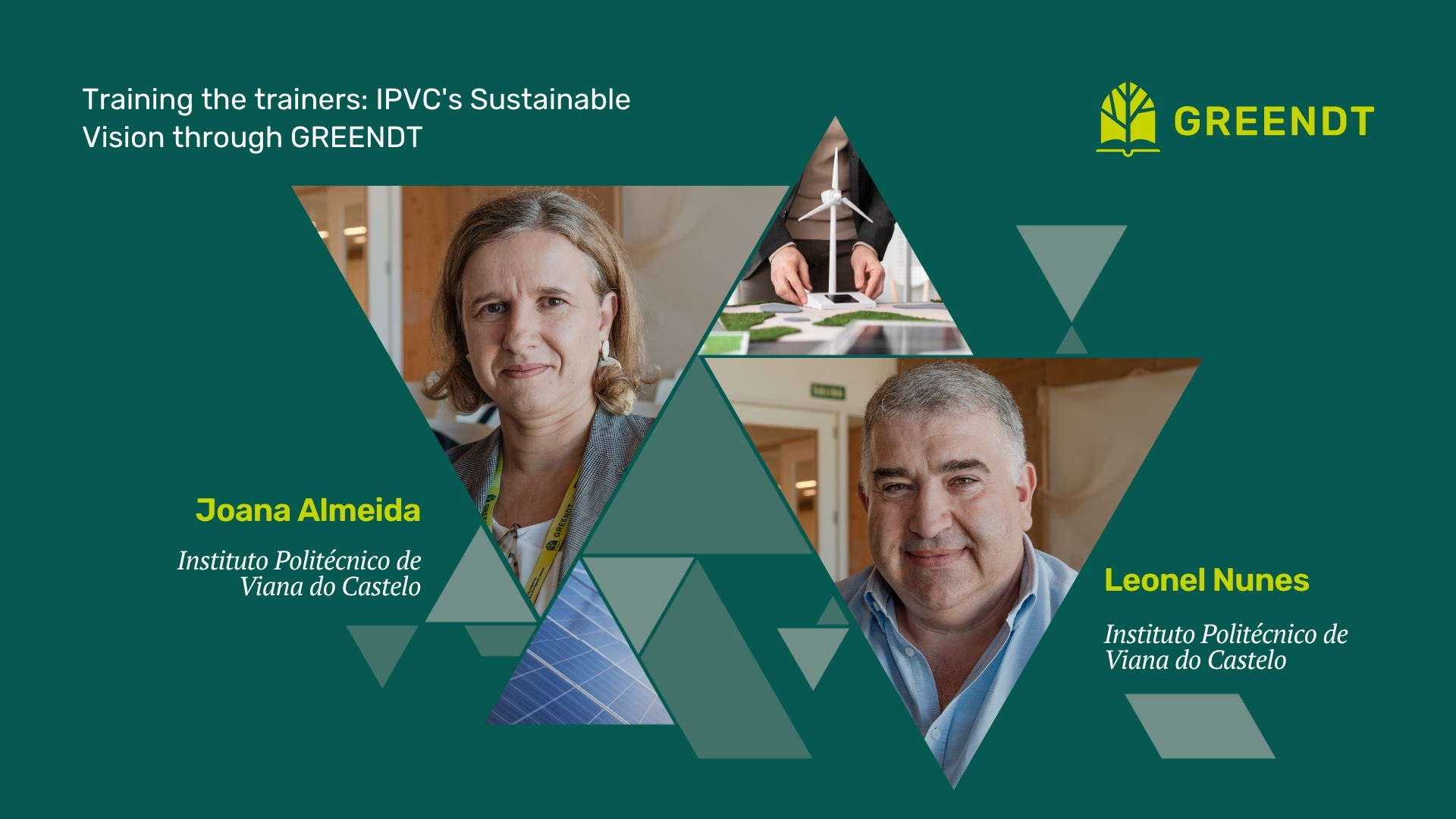
The GREENDT project continued its mission to reshape engineering education through sustainability with its second Train-the-Trainers (ToT) workshop, hosted from July 21 to 23, 2025, at the Instituto Politécnico de Viana do Castelo in Portugal. As part of Task 3.3 – Implementation of ToT-Enhanced Training Sessions, the event focused on the capacity building in sustainable energy management, natural radiation, and geospatial technologies for researchers, educators, engineers, and students from across the consortium.

Professors Joana Almeida and Leonel Nunes, both from IPVC, emphasized the relevance of these trainings to capacitate attendees on how to address Uzbekistan’s environmental main issues.

Day 1 – Sustainability, Risk, and Indoor Environmental Quality

Participants explored integrated approaches to sustainability in engineering, covering the following topics:

The sessions reflected the need to address health, safety and sustainability issues, that can be tackled throughout the project.

Day 2 – Renewable Energy, Land Use, and Geospatial Innovation

Building on the first day’s foundations, the second round invited participants to deepen their understanding of sustainability through real-world applications, spatial analysis, and strategic planning tools designed to address complex environmental challenges. Sessions addresed:

  • Fossil vs. Renewable Energies.
  • Technical Visit to the Sustainable Building.
  • Land Management.
  • Practical Geoprocessing and Remote Detection.

Focusing on Uzbekistan’s actual issues, the sessions highlighted the importance of integrated planning for sustainable development.

Day 3 – Field Visits and Final Wrap-Up

On the last training day, participants had the opportunity to connect theoretical learning with real-world practices in renewable energy, water management, and sustainable waste treatment through direct engagement with regional institutions and industry leaders. Visits included:

  • ENERCON (Lanheses): Visit to a major renewable energy manufacturer.
  • Águas do Alto-Minho (Gil Eanes Ship-Museum): Exploration of Portugal’s maritime life and regional water management initiatives.
  • RESULIMA (Vila Fria): Study visit to a waste treatment and sustainability innovation facility.

The day concluded with a final wrap-up session led by IPVC members, reinforcing key takeaways from the training and setting the third workshop to be held later in October, in Uzbekistan.

Towards Sustainable Transformation in Engineering Education

Throughout the three-day workshop, faculty and technical staff from partner institutions engaged in knowledge exchange and co-development of educational materials — also laying the groundwork for sustainable collaboration beyond the GREENDT project.

This second ToT workshop not only delivered specialized technical training, but also reinforced GREENDT’s broader vision: equipping educators to train future engineers capable of addressing global environmental challenges through innovation, equity, and collaboration.

GREENDT Kicks Off First Train-the-Trainers Workshop in Ourense, Spain

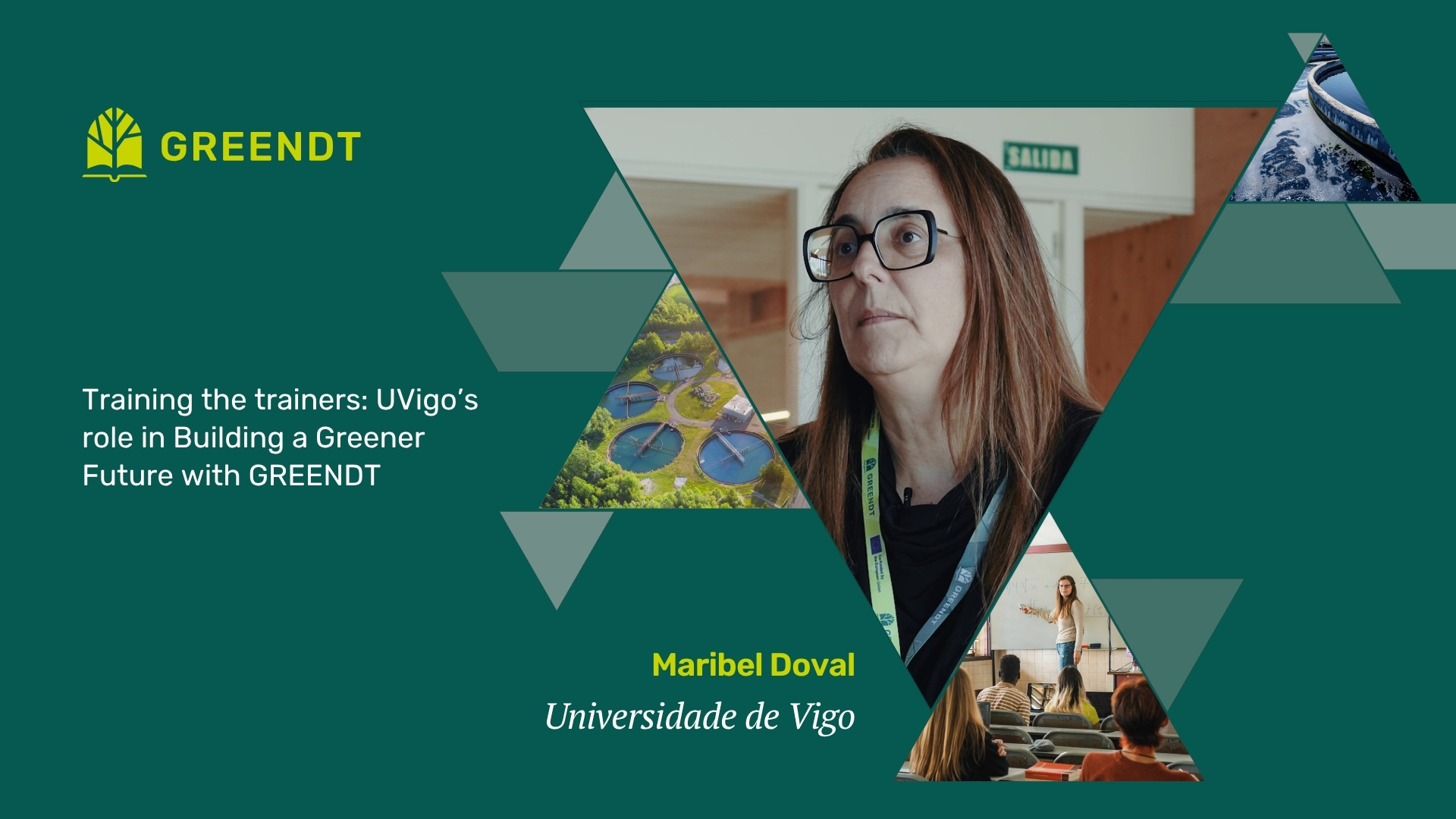
The GREENDT project successfully launched its first Train-the-Trainers (ToT) workshop from July 16 to 18, 2025, hosted by the Universidade de Vigo (UVigo) at its Ourense Campus. The event marked a significant milestone in Task 3.3 – Implementation of ToT-Enhanced Training Sessions, bringing together researchers, educators, engineers, and students from across the consortium to co-develop and evaluate educational resources on key themes of the project: Engineering Diplomacy, Equity & Inclusion, and Environmental Engineering. 

Professor Maribel Doval, Associate Professor at UVigo’s Faculty of Education and Social Work and the university’s GREENDT coordinator, opened the session by emphasizing UVigo’s commitment to embedding sustainability, equity, and diversity into engineering education: 

“Our goal is to support our partner universities in designing a Master’s course that remains viable and impactful beyond the end of project funding. This means training future engineers to not only understand environmental systems, but to be able to navigate social and legal dimensions through diplomacy and inclusive practices.” 

A Deep Dive into Multidisciplinary Training Topics 

The training was structured around three key thematic pillars, directly aligned with the United Nations Sustainable Development Goals (SDGs): 

  1. Engineering Diplomacy (SDG 13 – Climate Action, SDG 16 – Peace, Justice & Strong Institutions)

Participants explored how engineers can act as mediators and influencers in global sustainability transitions. Topics included: 

  • European Environmental and Climate Law
  • The European Green Deal and Renewable Energy Law
  • Policy Instruments for Global Environmental Governance 

This module introduced the concept of “engineering diplomacy” as an emerging competence that links technical innovation with regulatory, legal, and policy-making processes. 

  1. Equity and Inclusion in Engineering Education (SDG 4 – Quality Education, SDG 10 – Reduced Inequalities)

Hosted at UVigo’s Faculty of Education and Social Work, this module emphasized redesigning curricula to serve diverse learner populations. Sessions addressed: 

  • Engineering for All: Inclusive approaches to STEM education 
  • Intersectionality and social justice in higher education 
  • Institutional strategies for inclusive excellence 

The module championed values-based teaching as a core component of engineering training, especially in global contexts. 

  1. Environmental Engineering, Sustainability & Water Issues (SDG 6 – Clean Water and Sanitation, SDG 7 – Affordable and Clean Energy, SDG 11 – Sustainable Cities)

Focusing on practical environmental issues, this segment explored: 

  • Environmental Engineering Curriculum Development 
  • Water Quality, Treatment Technologies, and Ecosystem Health 
  • Integration of Geothermal and Photovoltaic Systems into Education 

Participants also reviewed and provided feedback on Resource Kits developed for each thematic area, supporting the future rollout of the Master’s programme. 

Field Visits and Experiential Learning 

Beyond classroom sessions, participants engaged in hands-on and site-based learning, including visits to: 

  • UVigo’s geothermal and photovoltaic energy systems 
  • The pilot plant, soil, and environmental science labs 
  • The Velle Wastewater Treatment Plant (WWTP), a best practice model for sustainable urban water management 
  • The Botanical Garden and Sil River Canyons, showcasing the region’s ecological and cultural heritage 

These activities highlighted how UVigo’s Ourense Campus operates as a living laboratory aligned with the Agenda 2030 and Spain’s green transition objectives. 

Building Capacity for Long-Term Impact 

Throughout the training, visiting faculty and researchers from partner institutions collaborated with UVigo experts to review, adapt, and co-create teaching and learning materials. The workshop also provided opportunities for cross-institutional networking and interdisciplinary exchange—laying the groundwork for sustainable collaboration beyond the GREENDT project. 

With this first training session completed, GREENDT takes a major step toward institutional transformation in higher education, equipping future engineers with the knowledge and tools to drive systemic change.