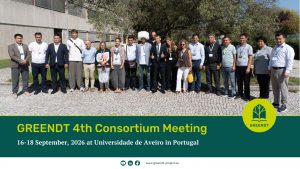
GREENDT partners meet in Aveiro to strengthen collaboration and prepare the project’s final phase

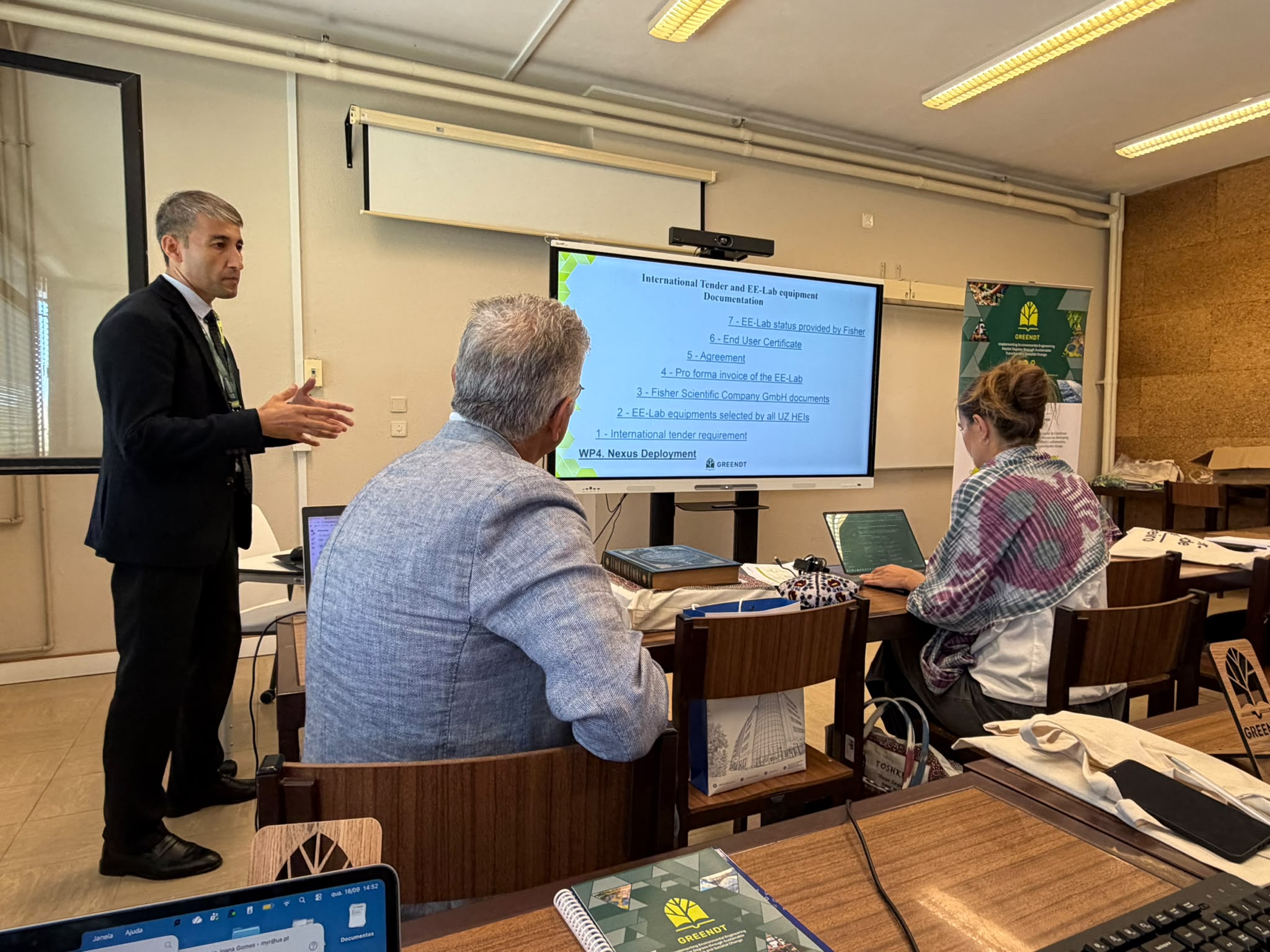
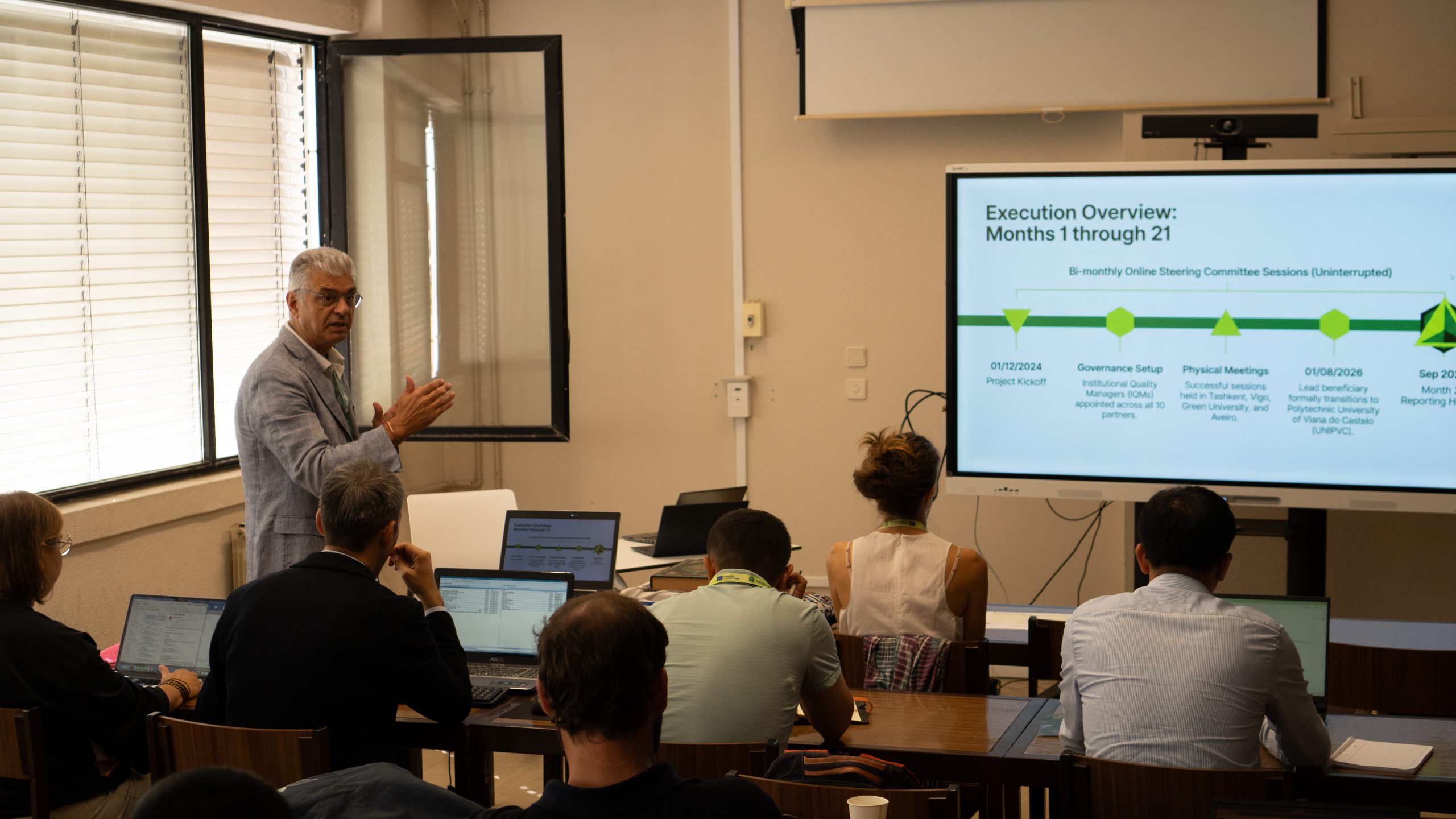
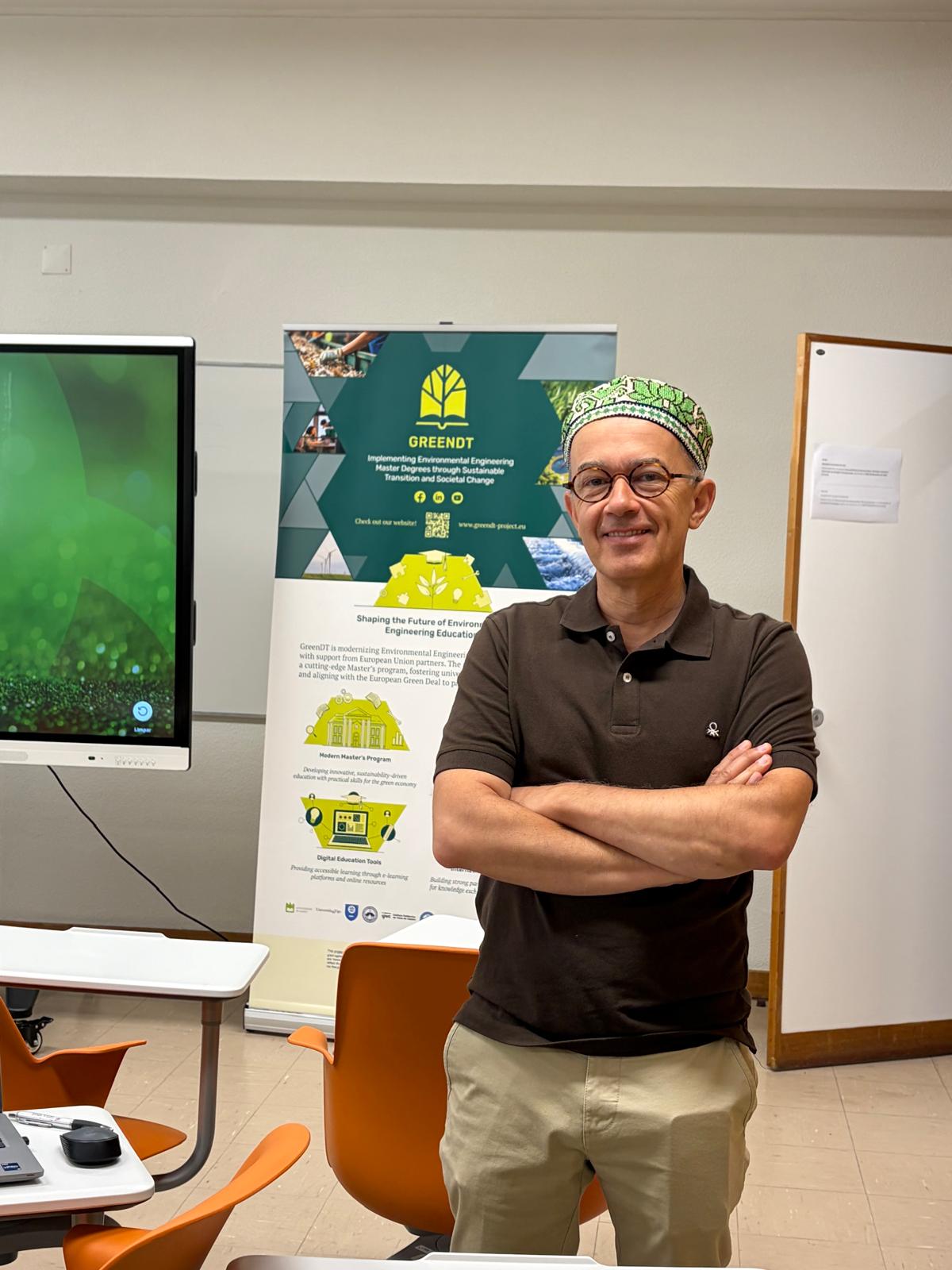
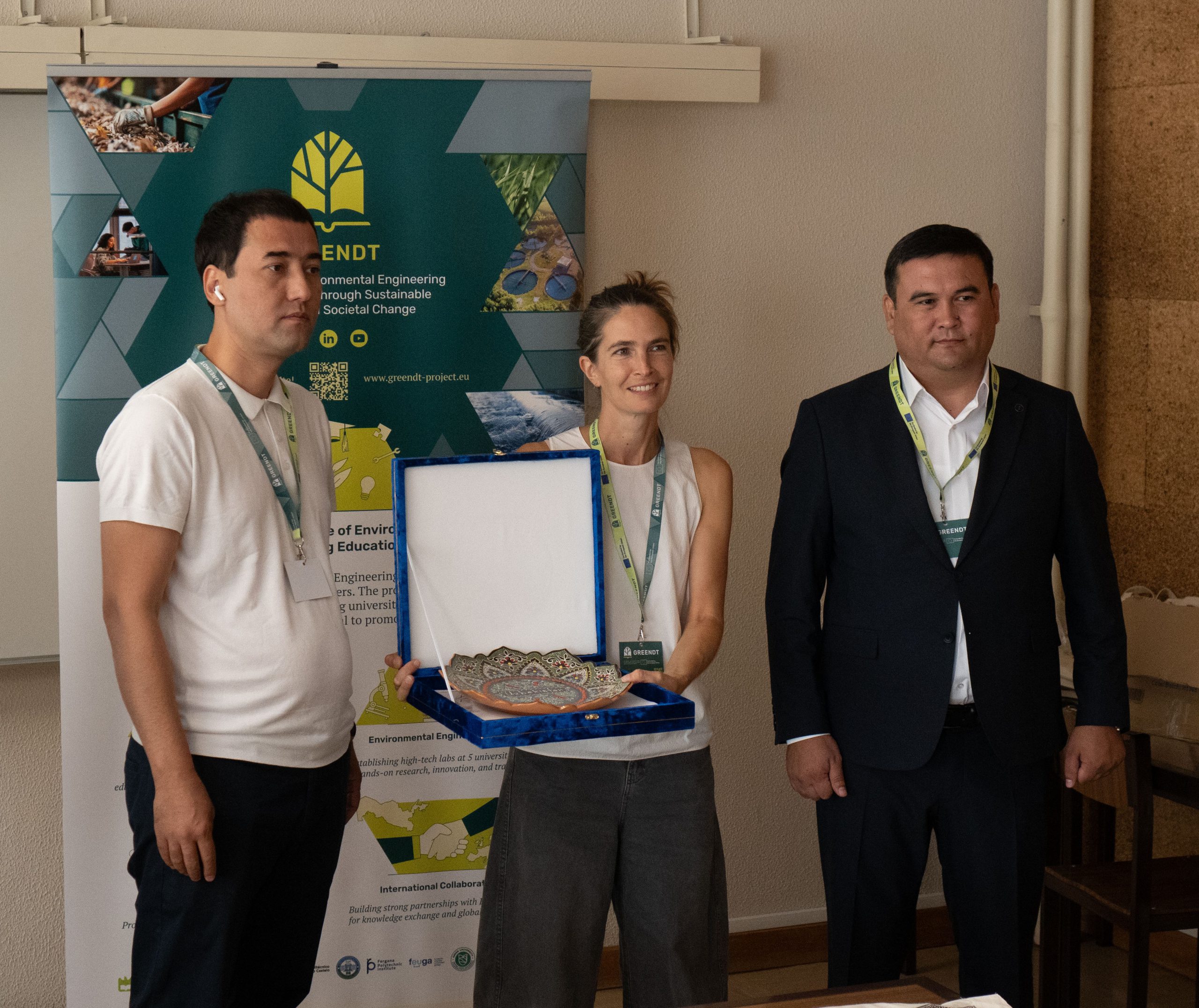
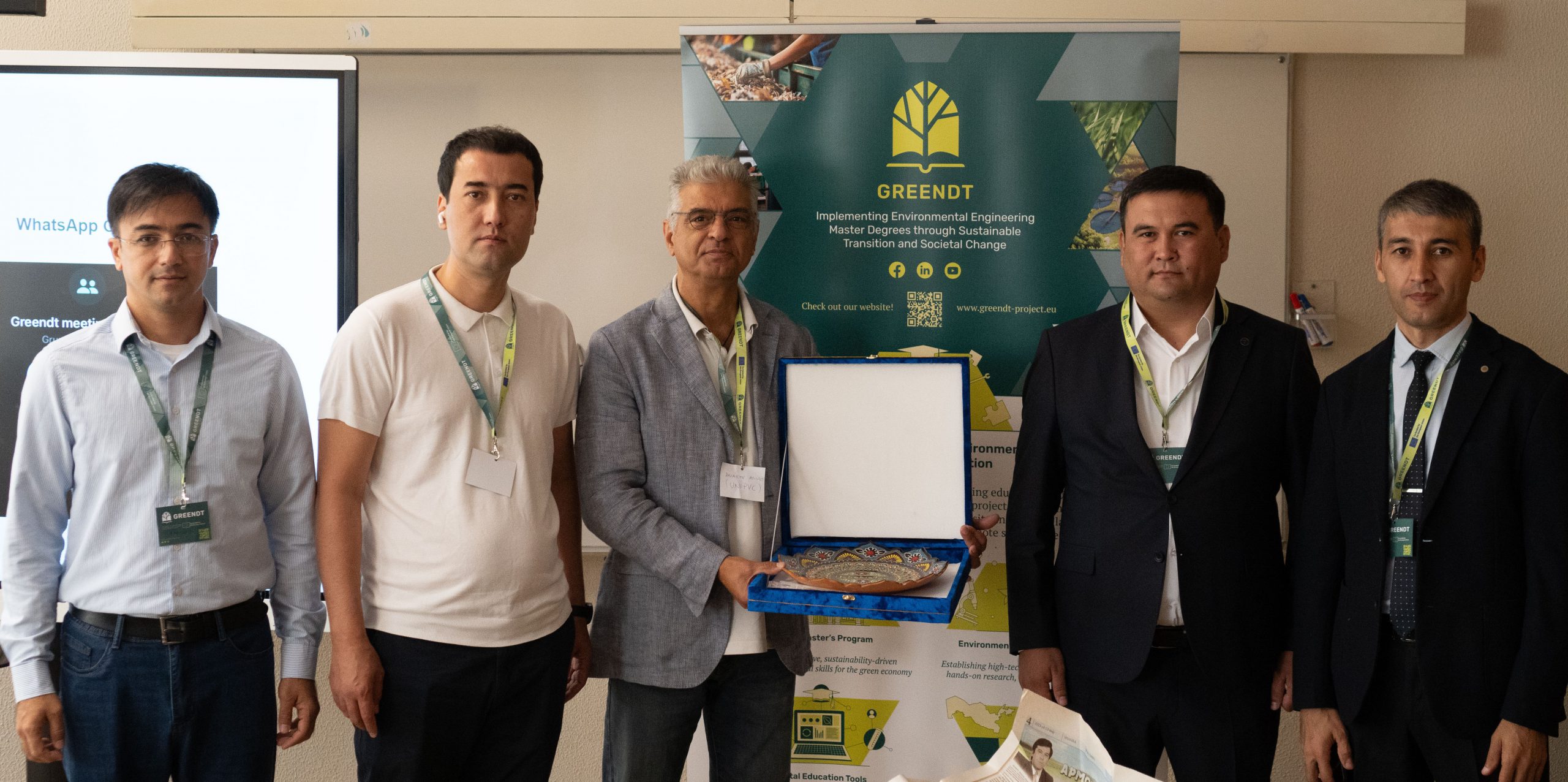
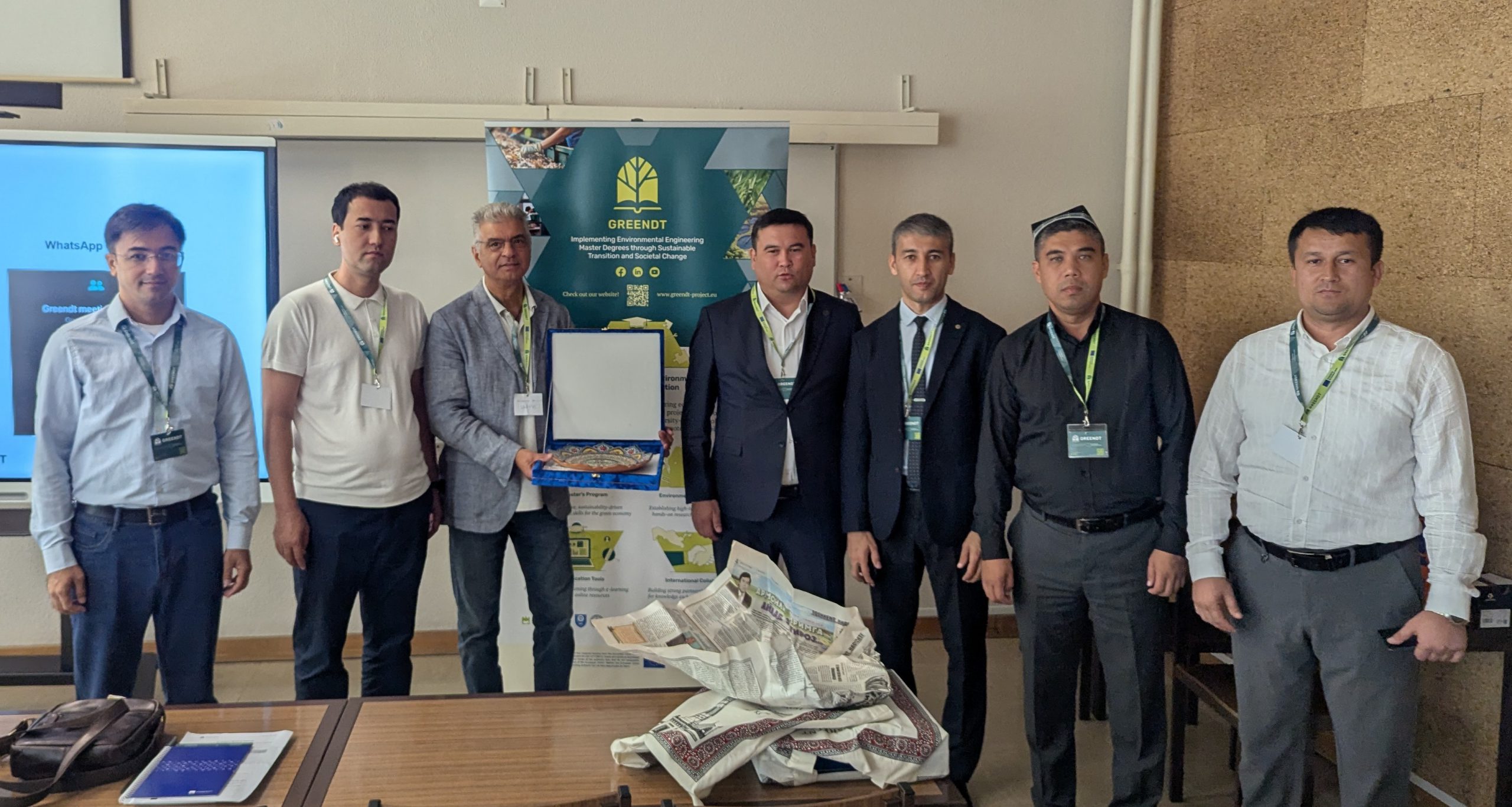
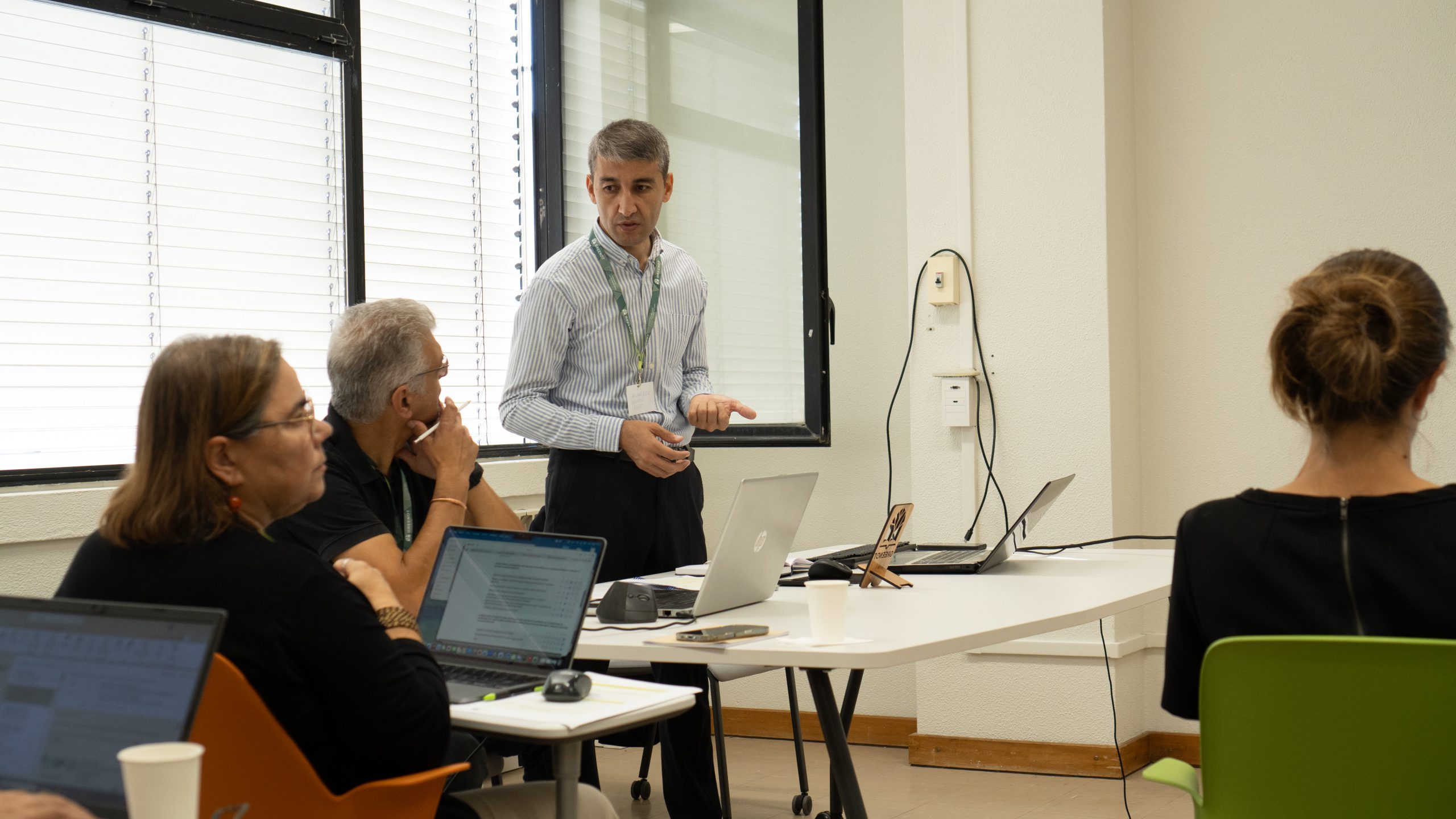
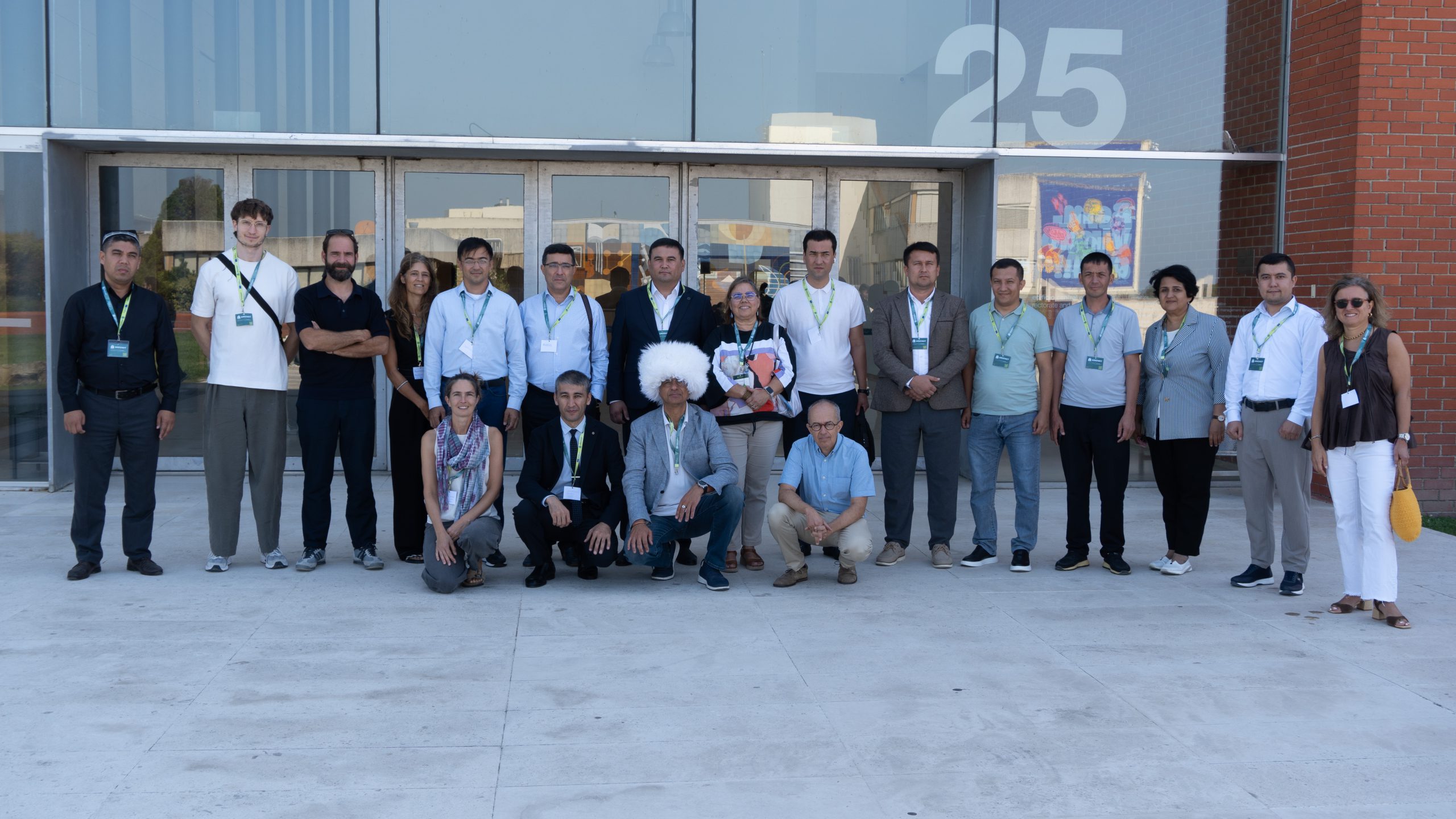
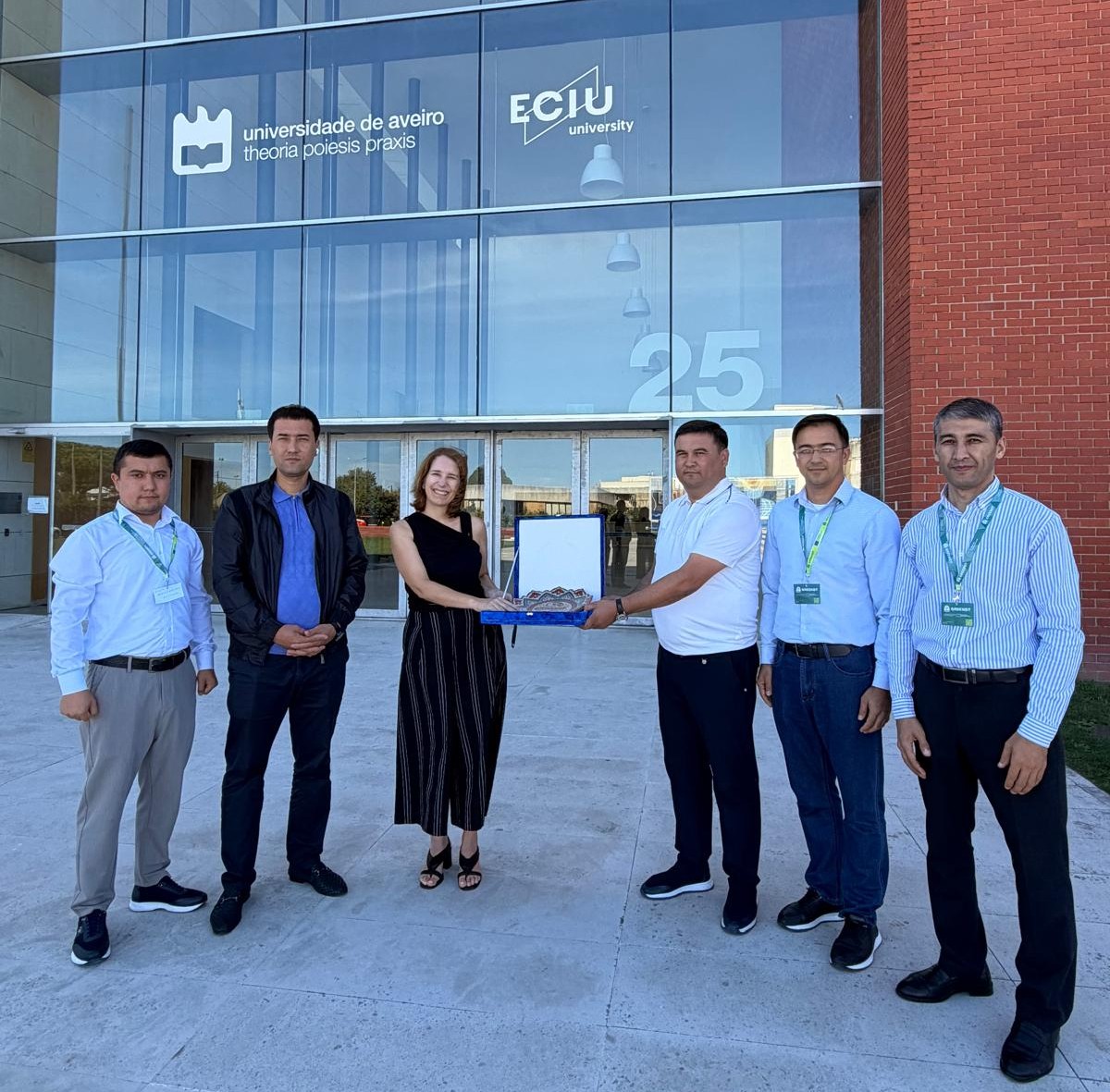
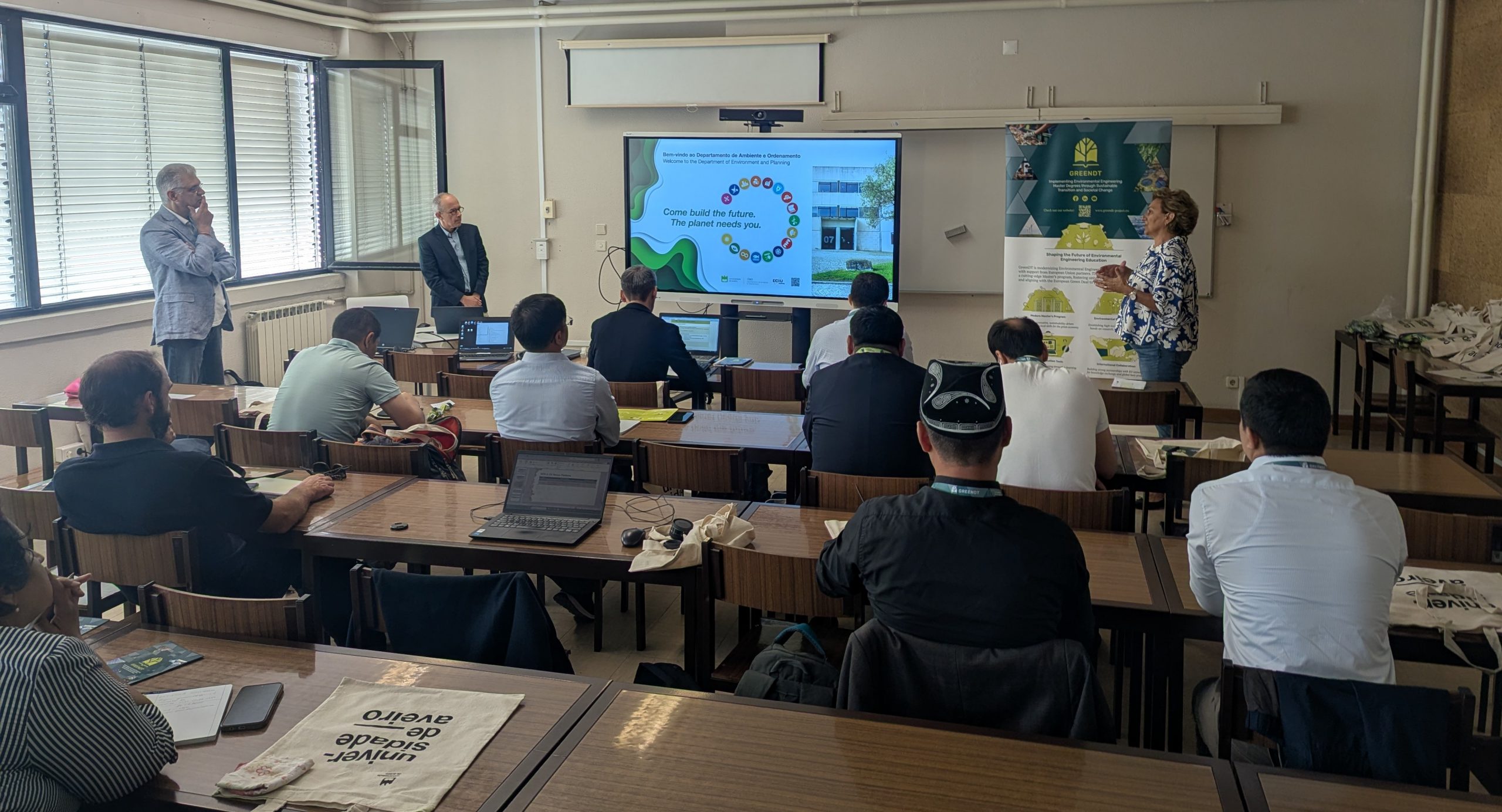
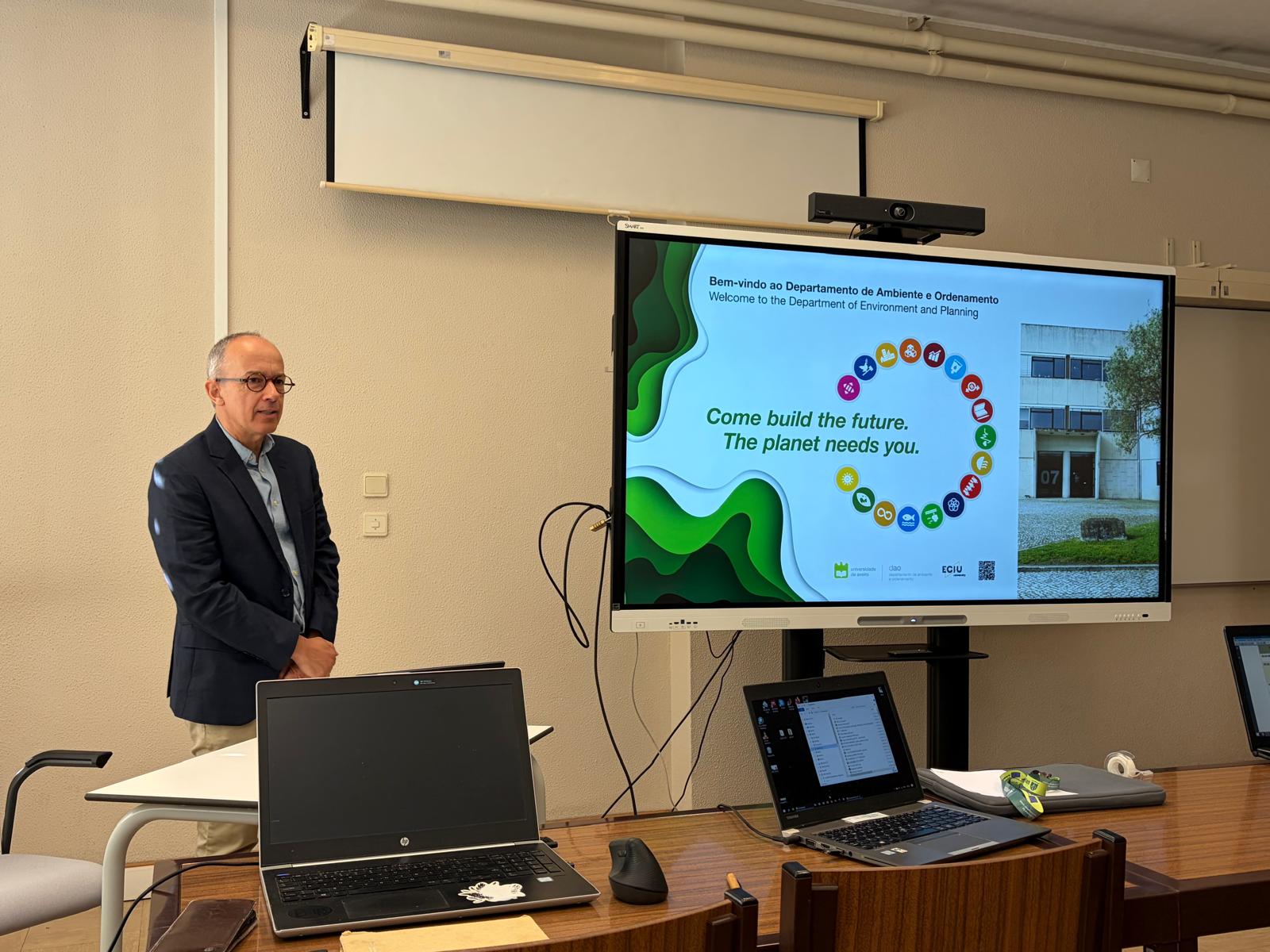
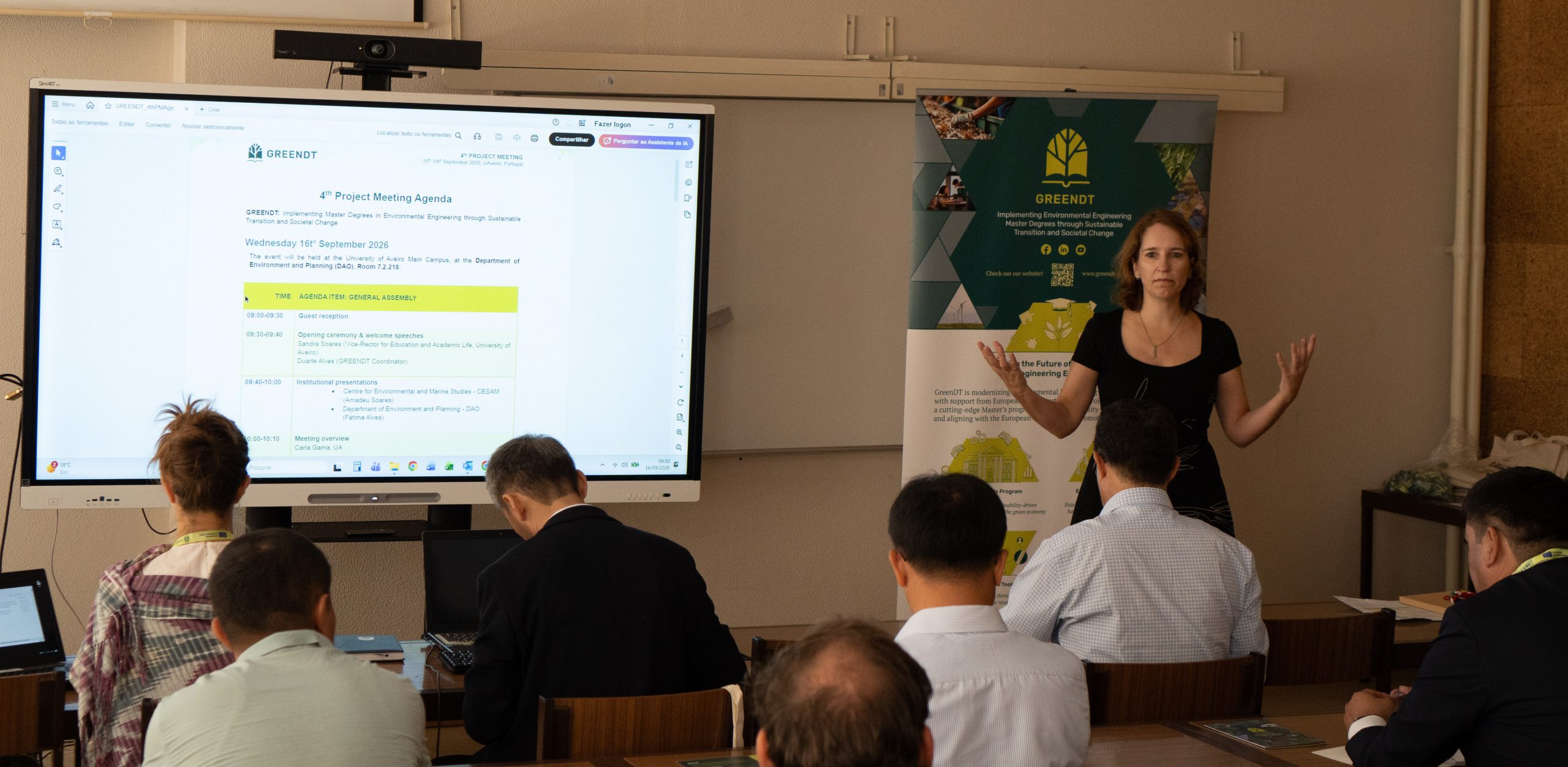
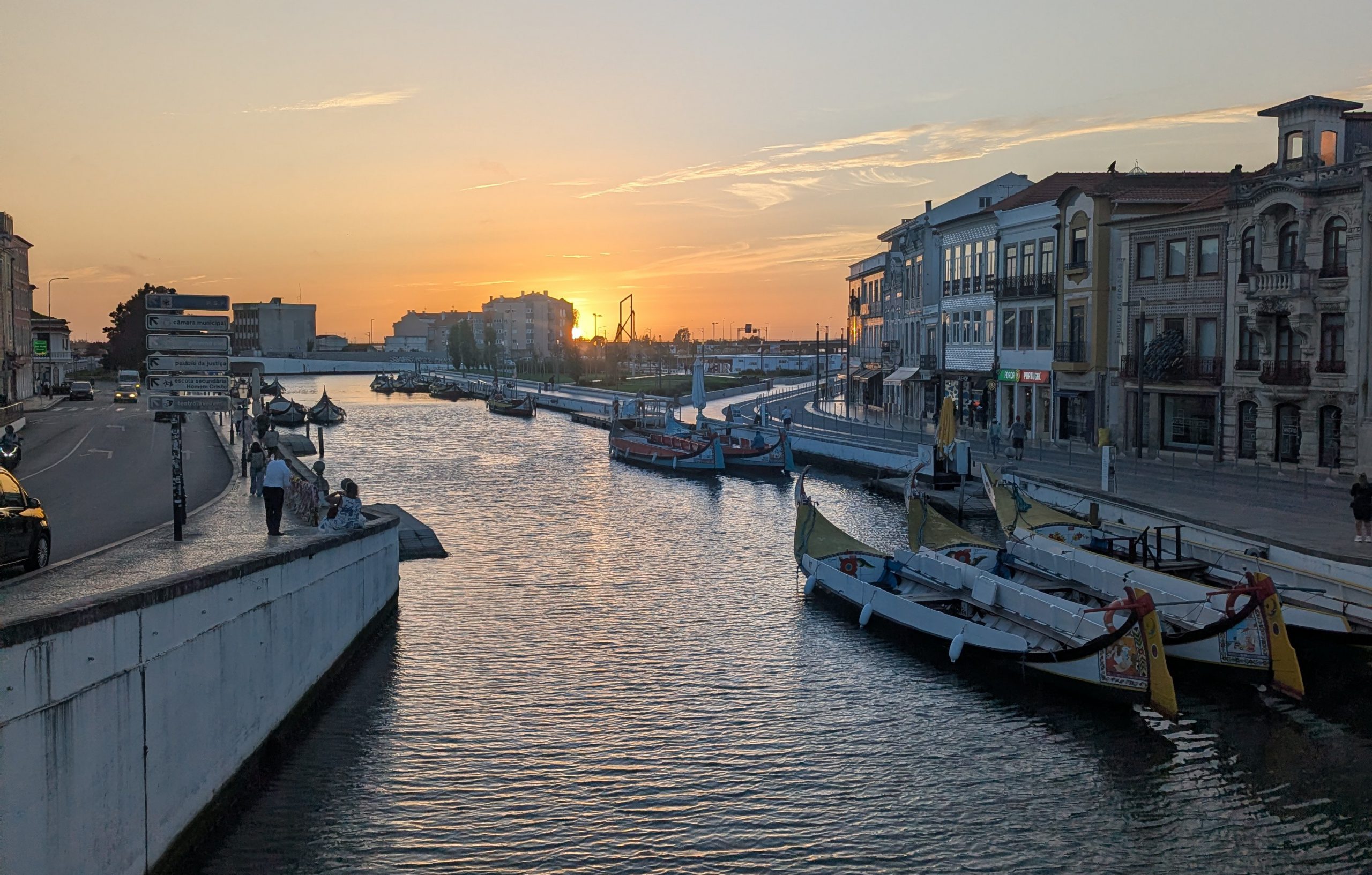
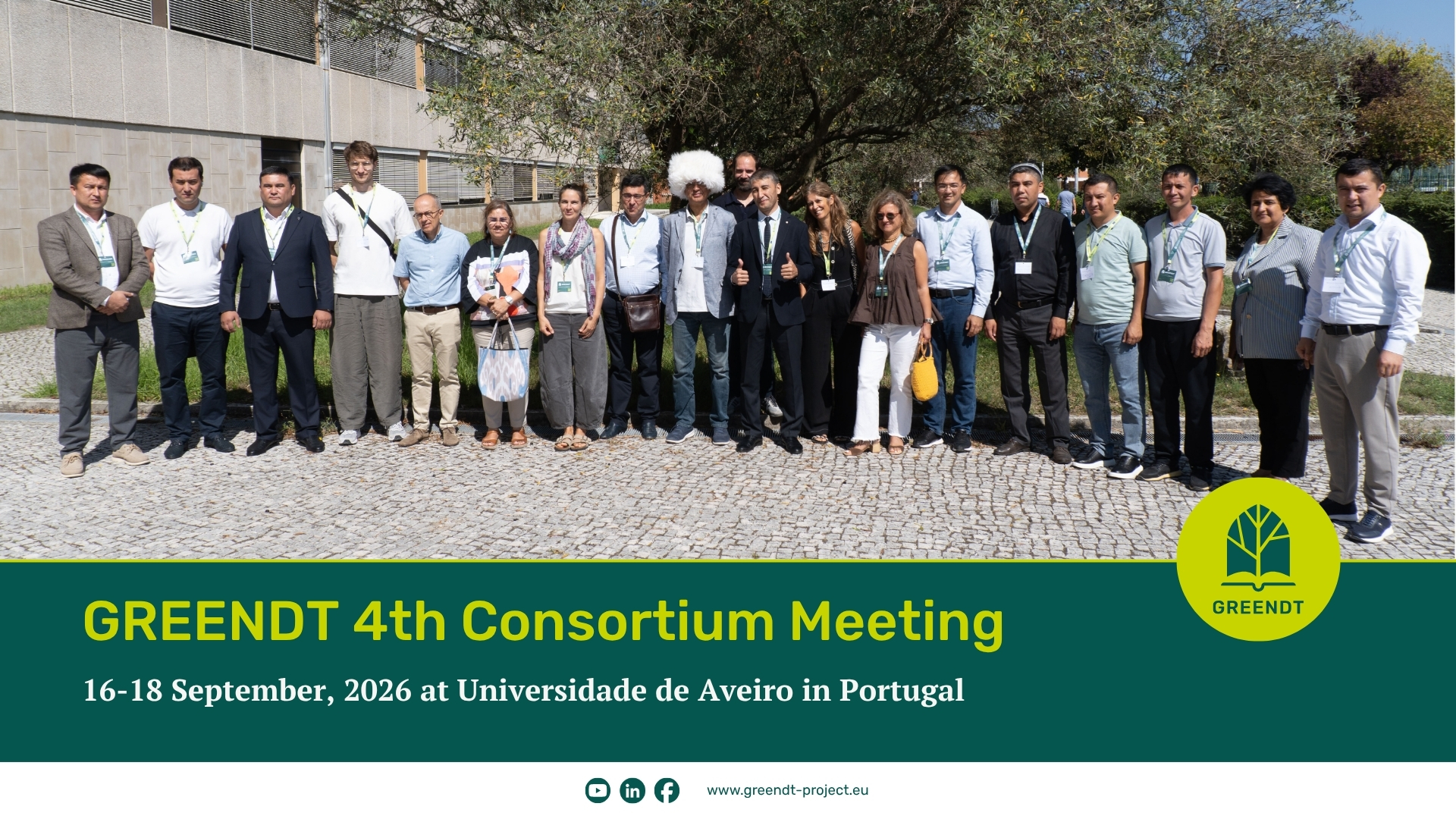
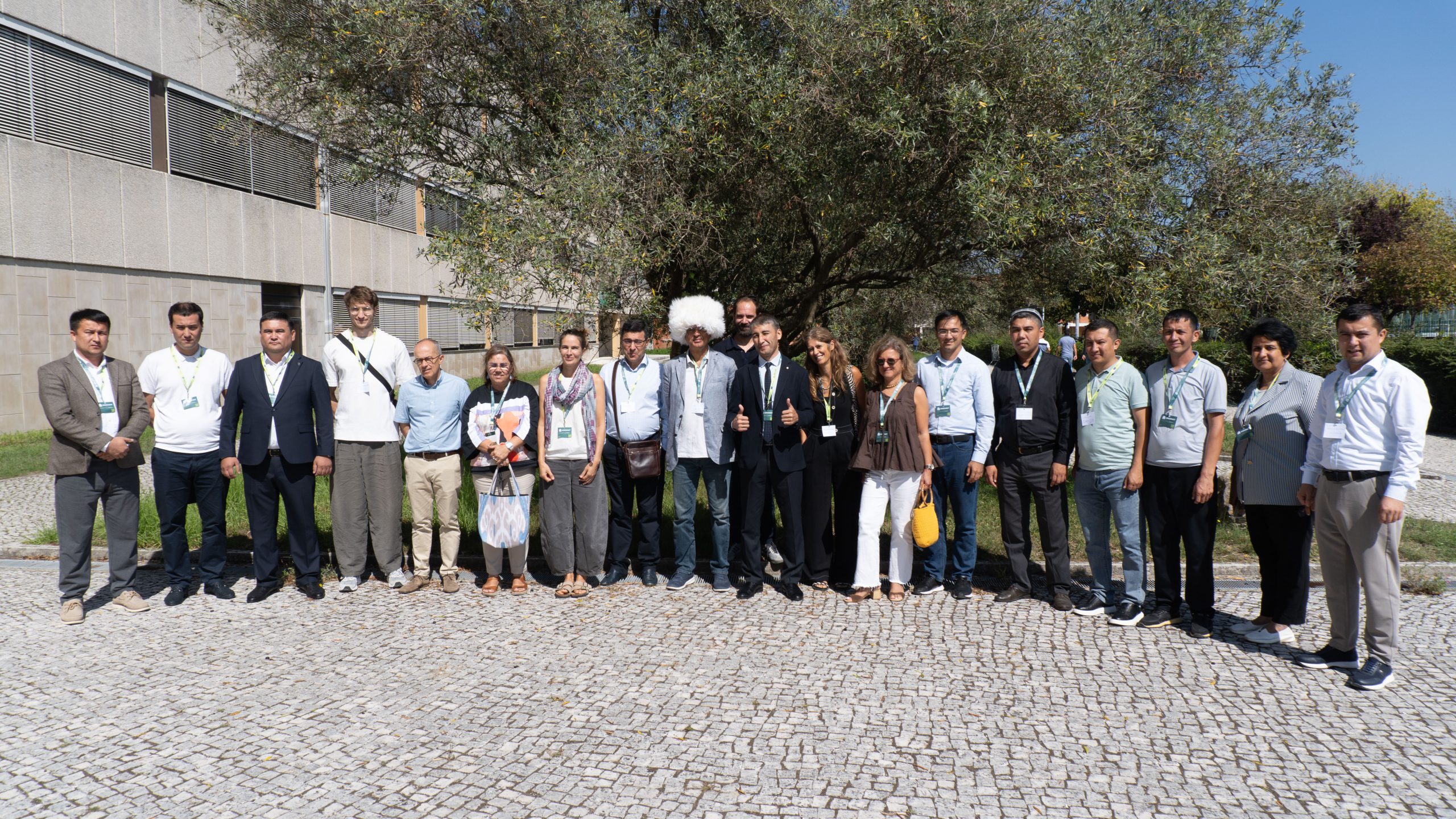
From 16 to 18 September, GREENDT partners gathered at the University of Aveiro, Portugal, for the project’s 4th Consortium Meeting. The three-day meeting provided an important opportunity to review the progress achieved so far, discuss the next steps across the different Work Packages and, above all, strengthen the collaboration between partners as GREENDT enters its final stage.

The meeting combined technical and strategic discussions with visits, cultural activities and informal moments, creating an environment that encouraged both effective project coordination and stronger relationships among the consortium members.

From planning to implementation

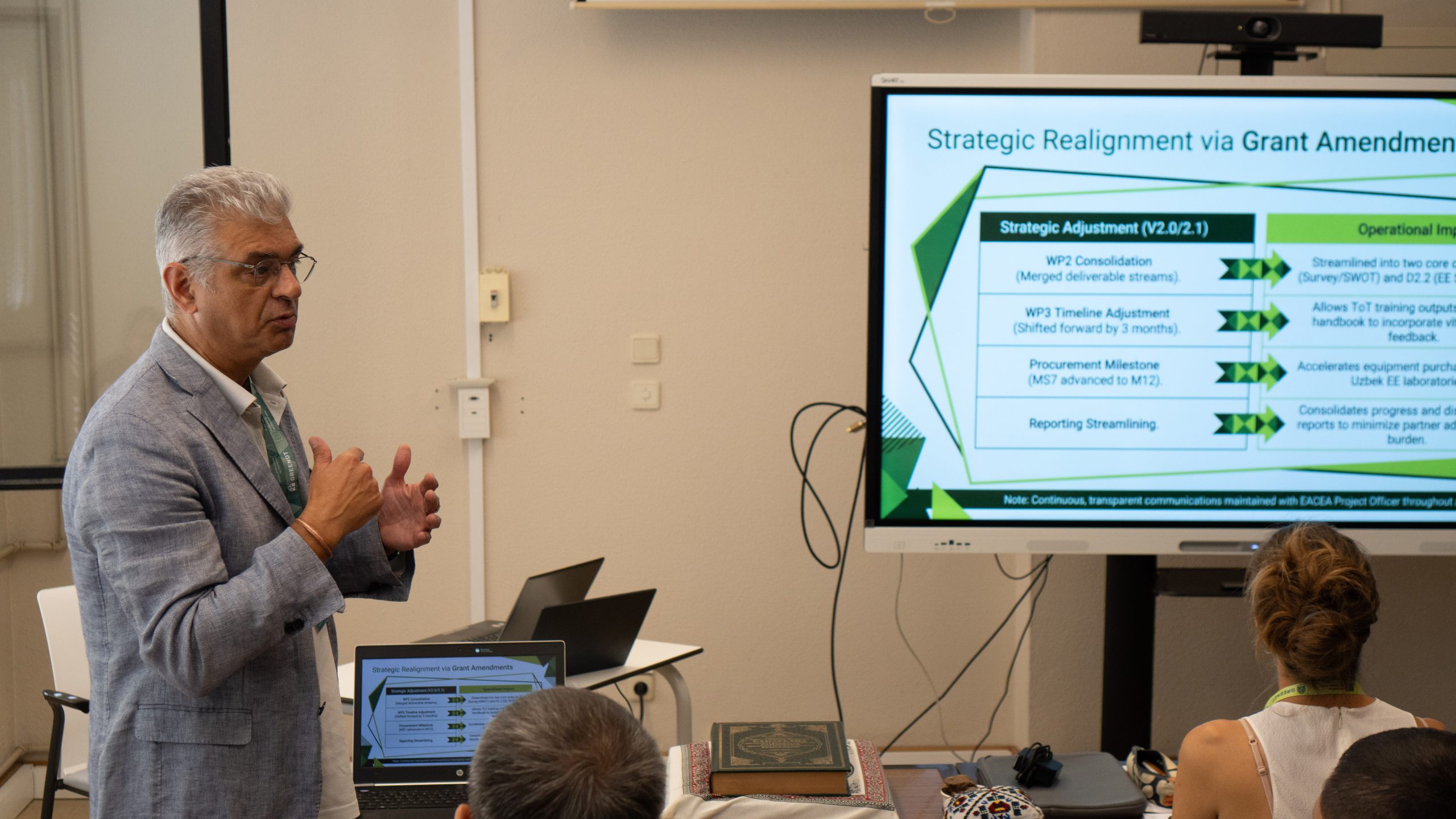
The first day focused on the overall project status, milestones, deliverables, quality assurance and financial implementation. Partners also reviewed the latest External Evaluation Interim Report, presented by Anastasios Ntabizas, Senior EU Project Manager and Quality Assurance Expert.

The evaluation provided very positive feedback on the progress of GREENDT, with Anastasios delivering a clear message to the consortium: “Good job!”.

The meeting then moved into the implementation of some of the project’s key results. In particular, partners presented important progress on the Environmental Engineering Laboratories (EE-Labs). The procurement process is now moving forward, with the orders for the EE Laboratory Equipment already placed, marking an important step towards the deployment of the laboratories.

Partners also discussed the implementation of the EE Nexus Platform, as well as the development of the project’s digital learning environment. A first version of the EE e-learning platform was presented to the consortium, providing a concrete view of how the digital resources developed through GREENDT will support teaching and learning.

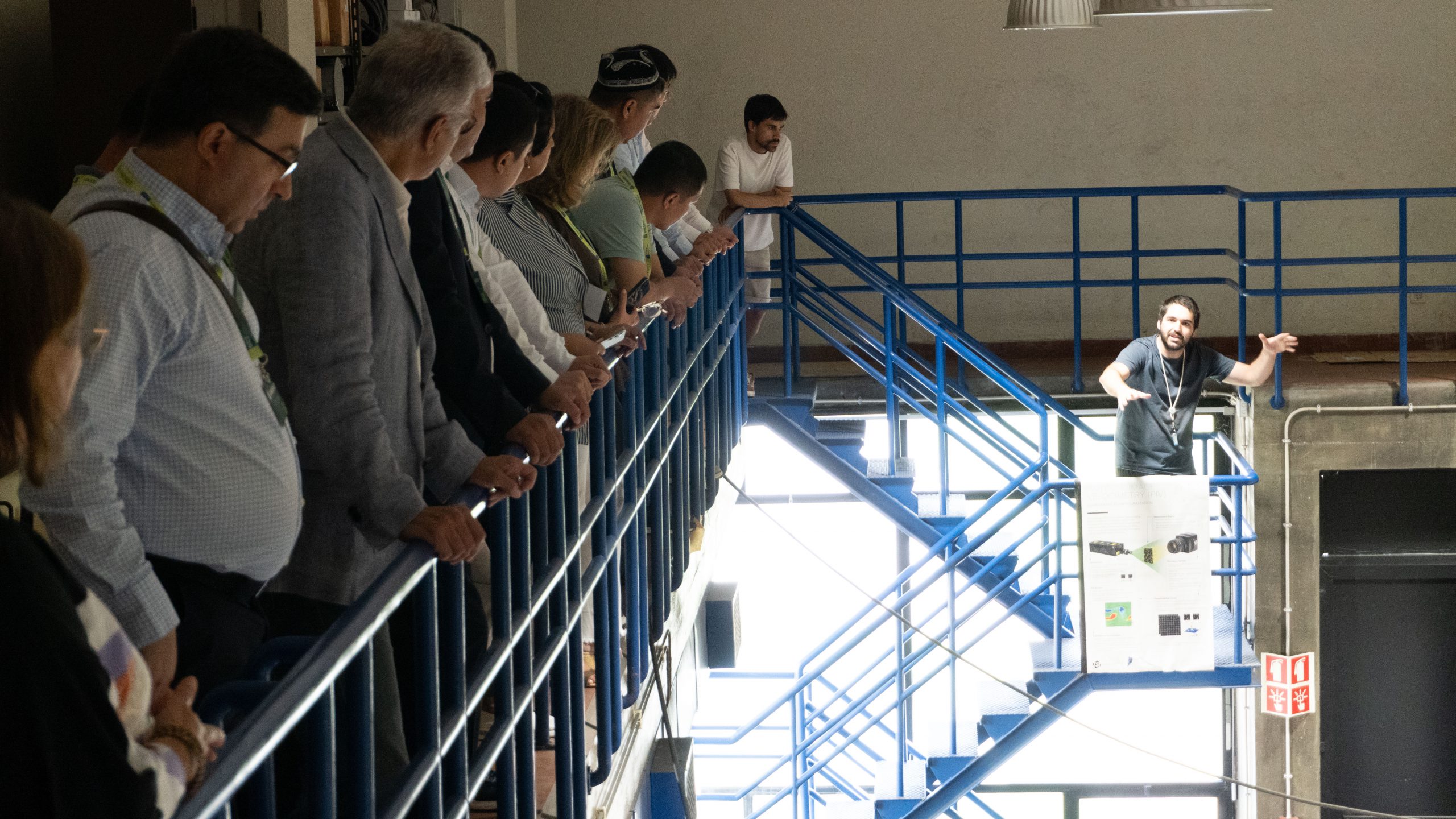
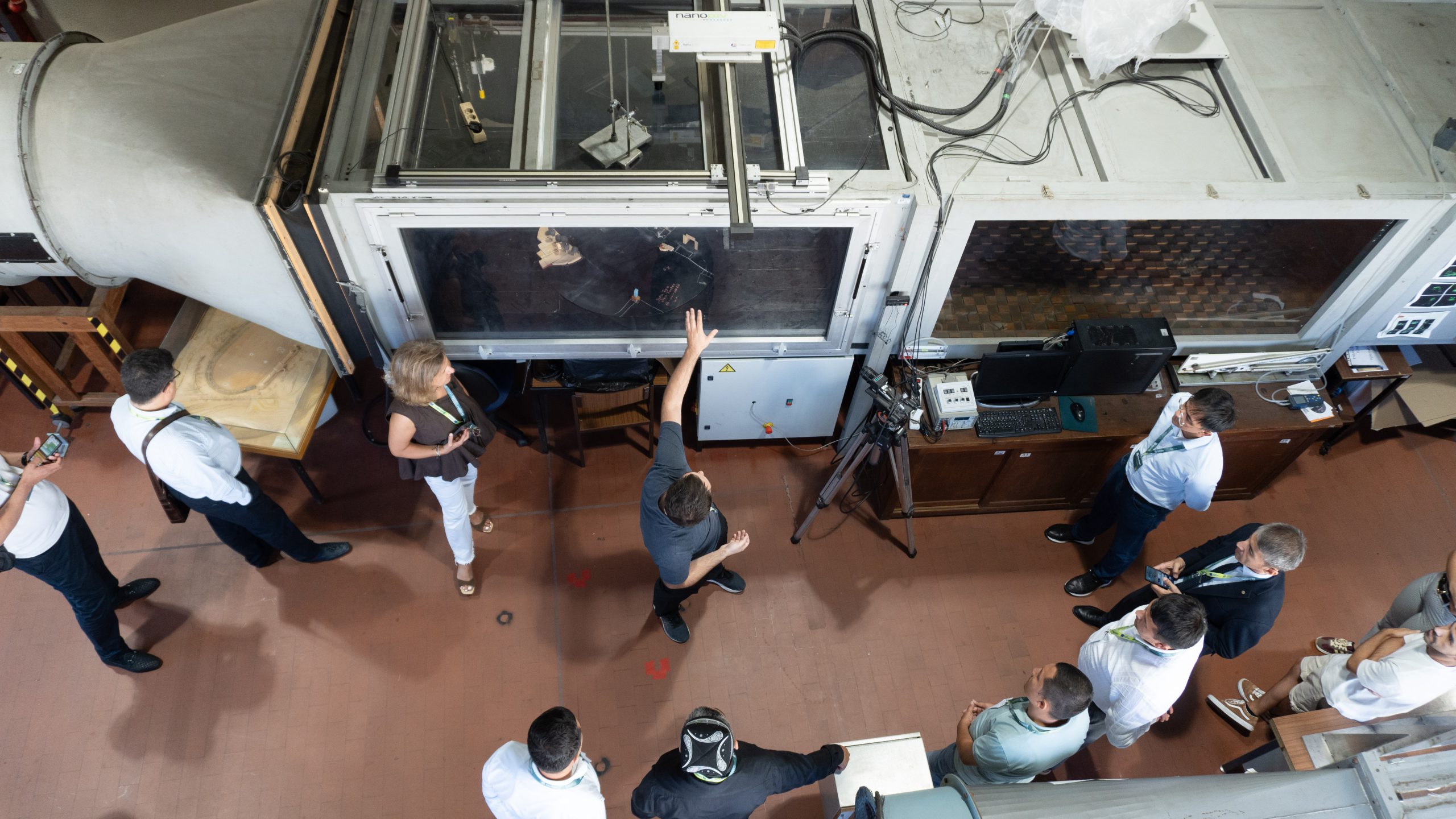
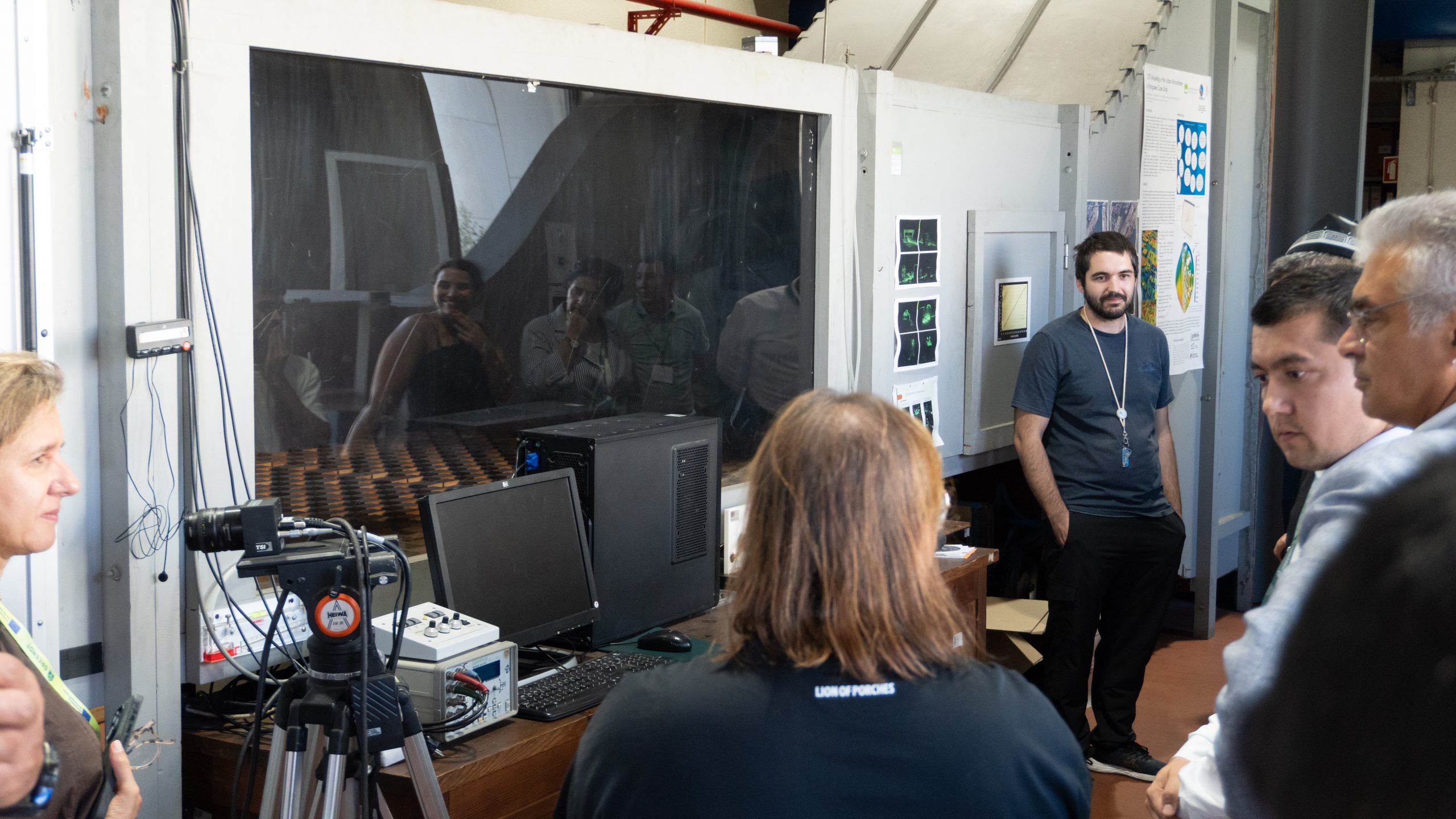
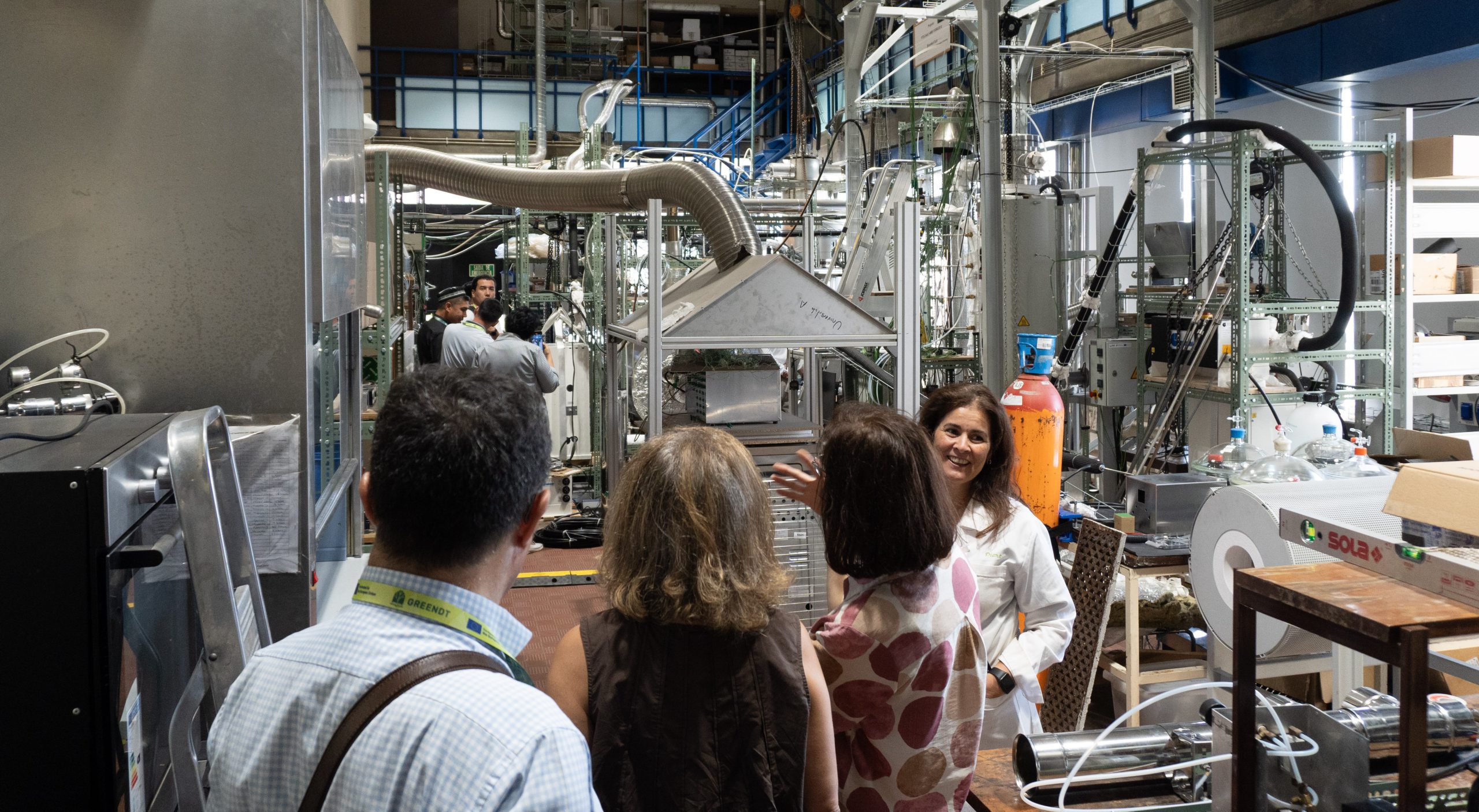
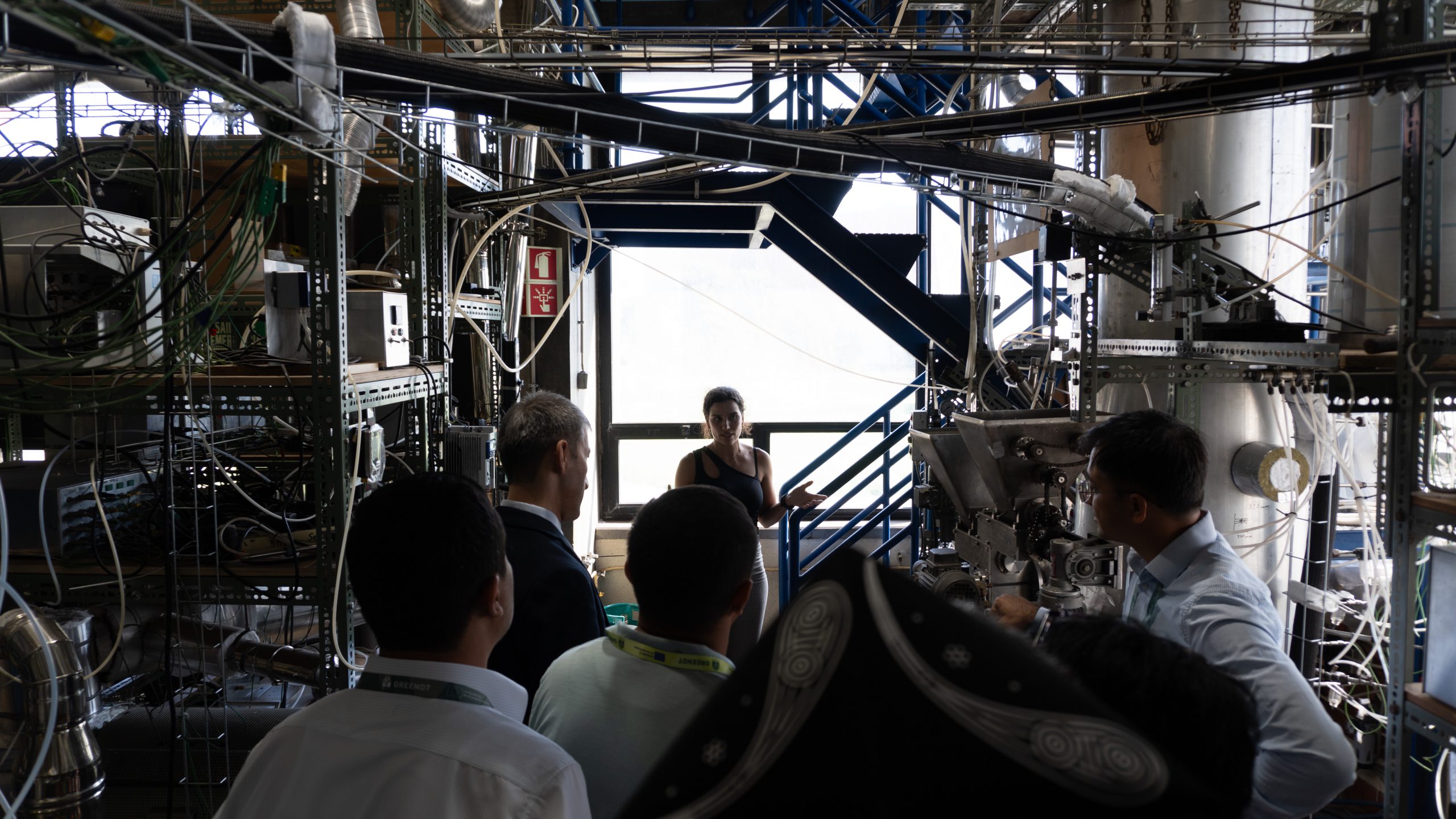
The meeting also included a visit to the Environmental Engineering teaching and research laboratories at the University of Aveiro, offering partners the opportunity to exchange practical experiences and ideas around laboratory-based education.

A major milestone discussed during the meeting was the development of the MSc programme in Environmental Engineering. The didactic contents and training programme have now been developed, representing a significant step towards the implementation of the new Master’s studies. The next key stage will be the accreditation process, with the objective of making the programme available to interested students from the 2027/2028 academic year, starting in September 2027.

This marks an important transition for GREENDT: the project is moving from designing and developing new educational resources towards preparing them for real implementation and use by students and academic institutions.

Putting knowledge into long-term impact

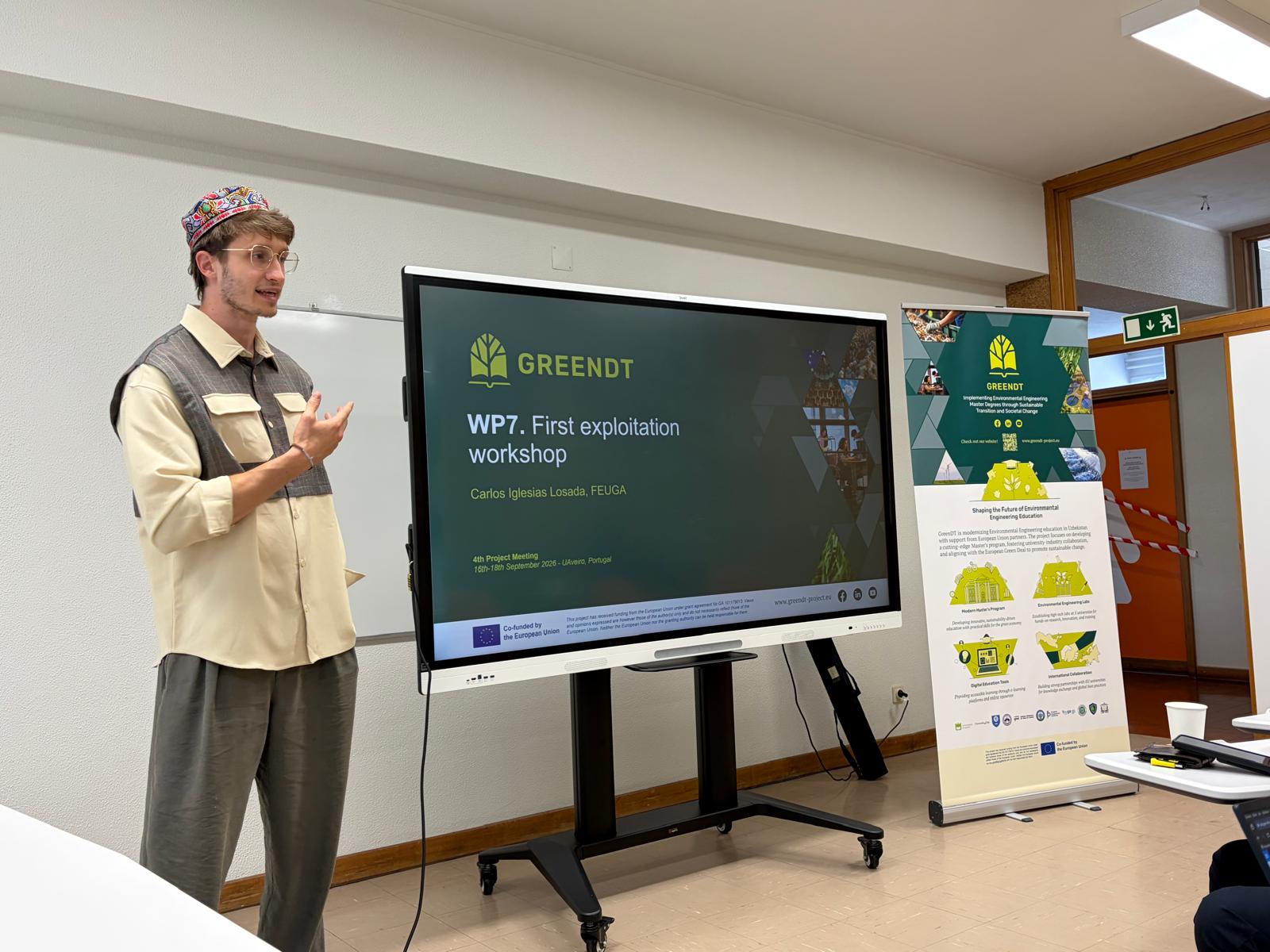
Exploitation and sustainability were also at the centre of the meeting. FEUGA led the first GREENDT Exploitation Workshop, dedicated to analysing how the project’s Key Exploitable Results (KERs) can be further valued, developed and connected with future opportunities beyond the project lifetime.

The workshop provided a space for partners to reflect on the potential of GREENDT’s results and on the actions needed to increase their future uptake and impact. This work will be particularly important as the consortium moves towards the final stage of the project and prepares the ground for the sustainability of its results beyond 2027.

Collaboration beyond the meeting room

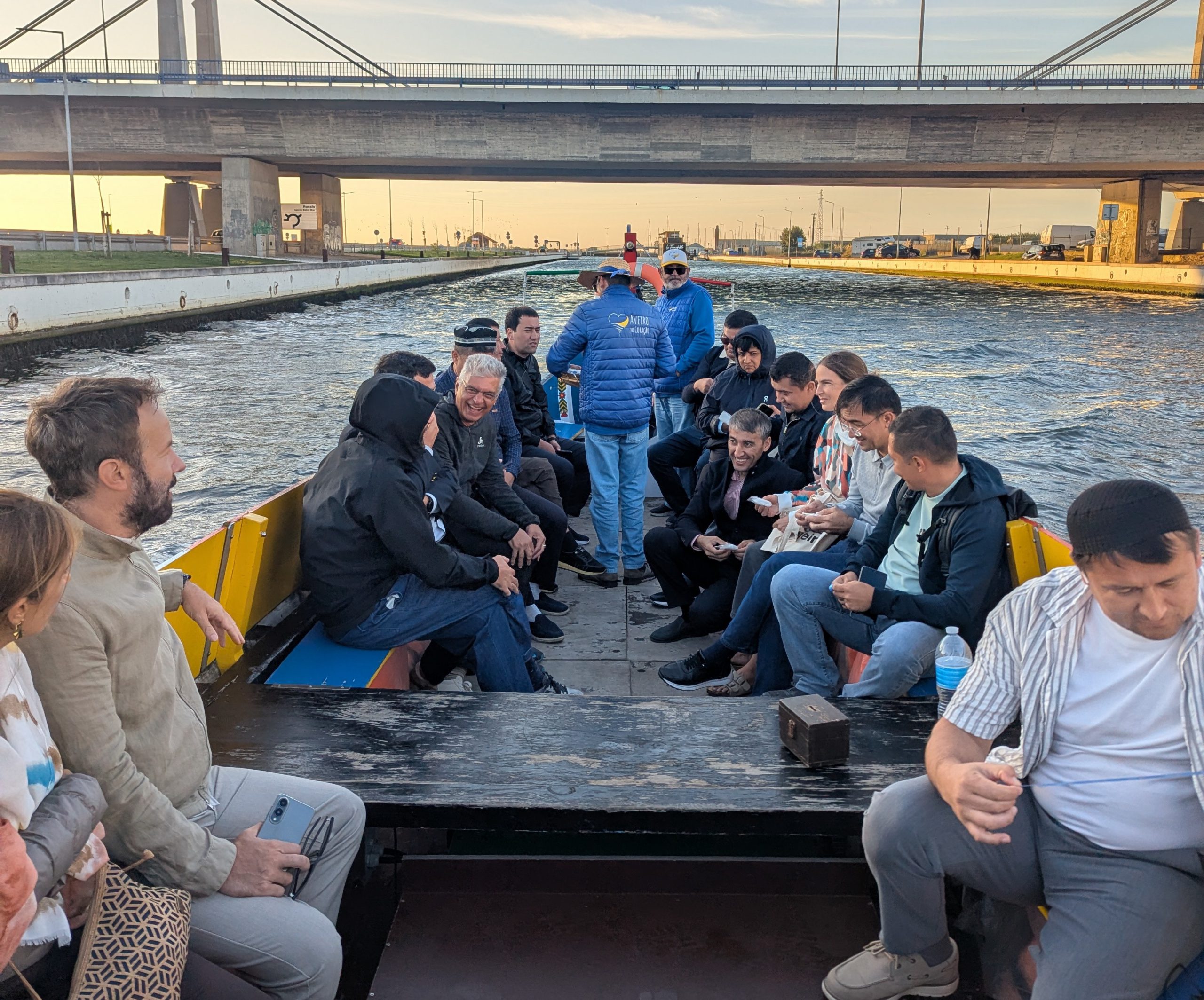
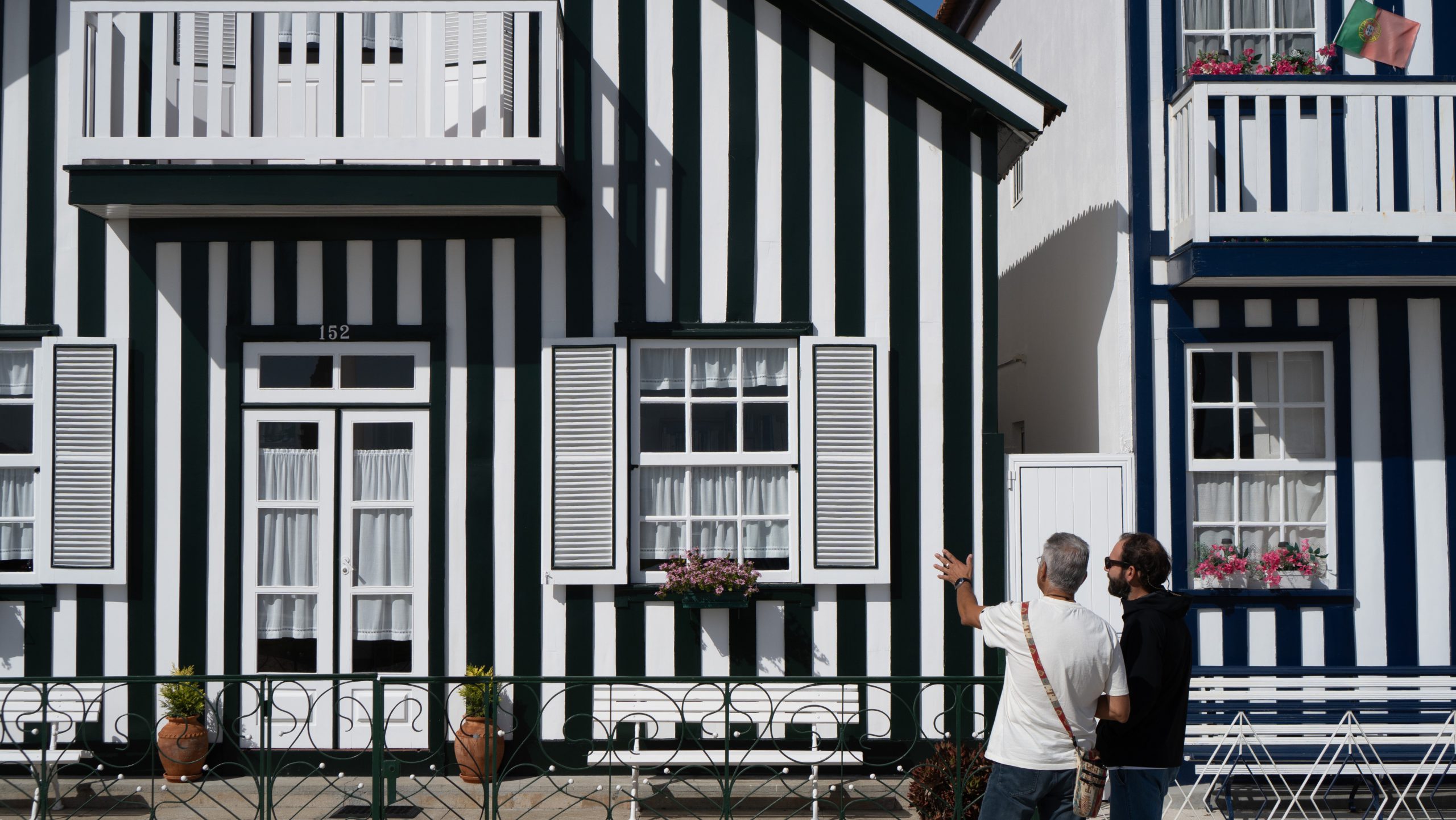
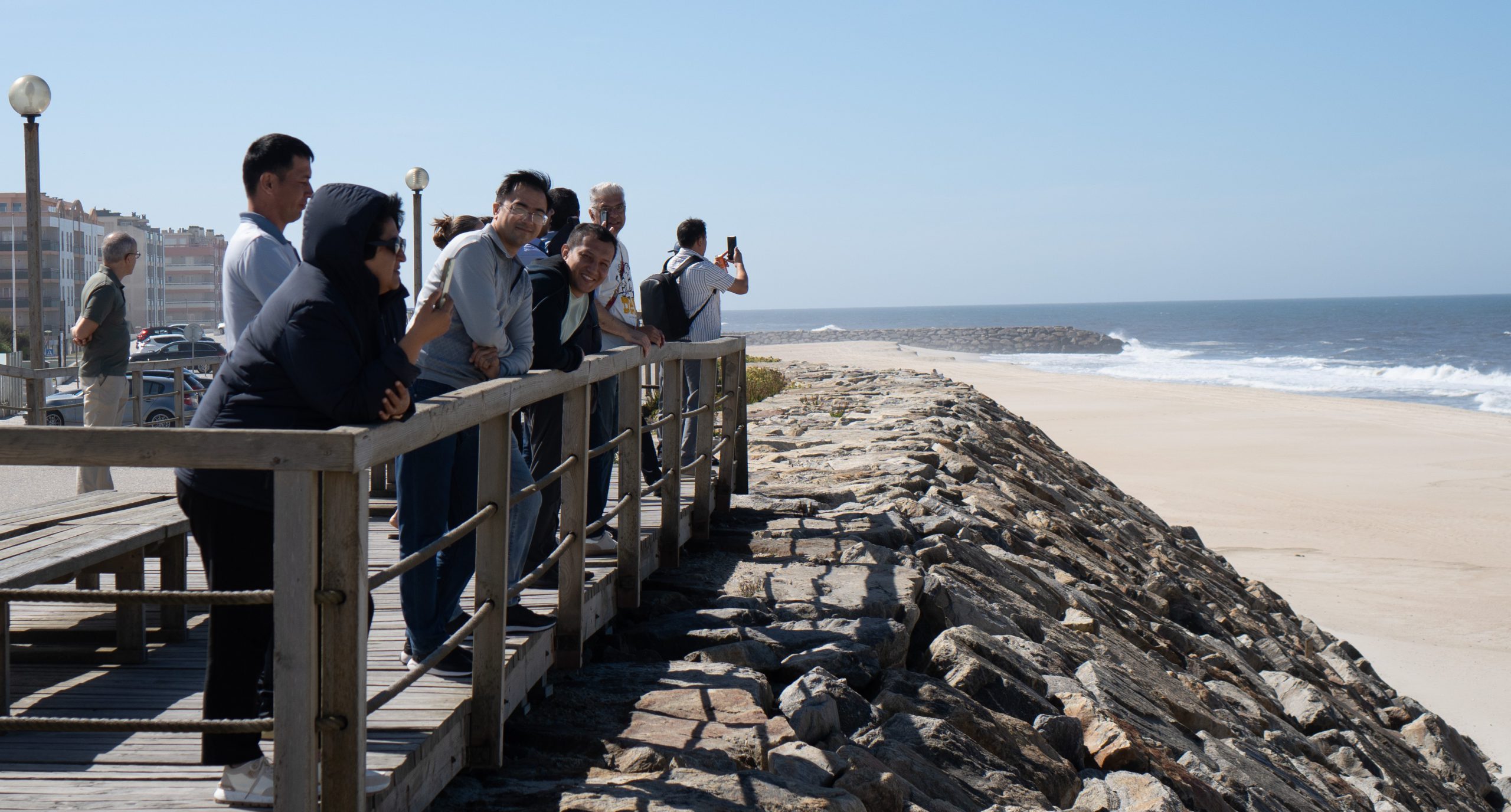
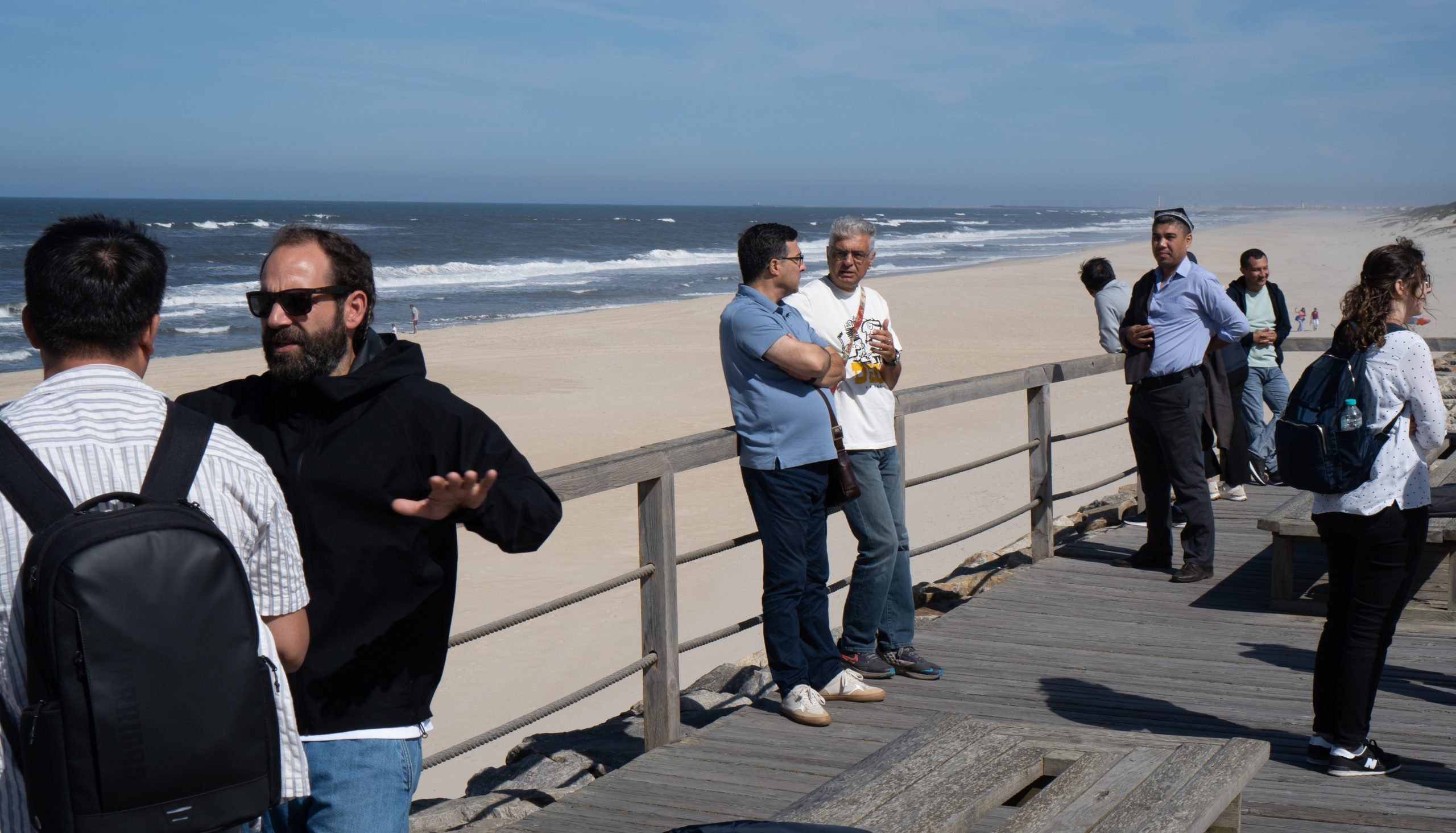
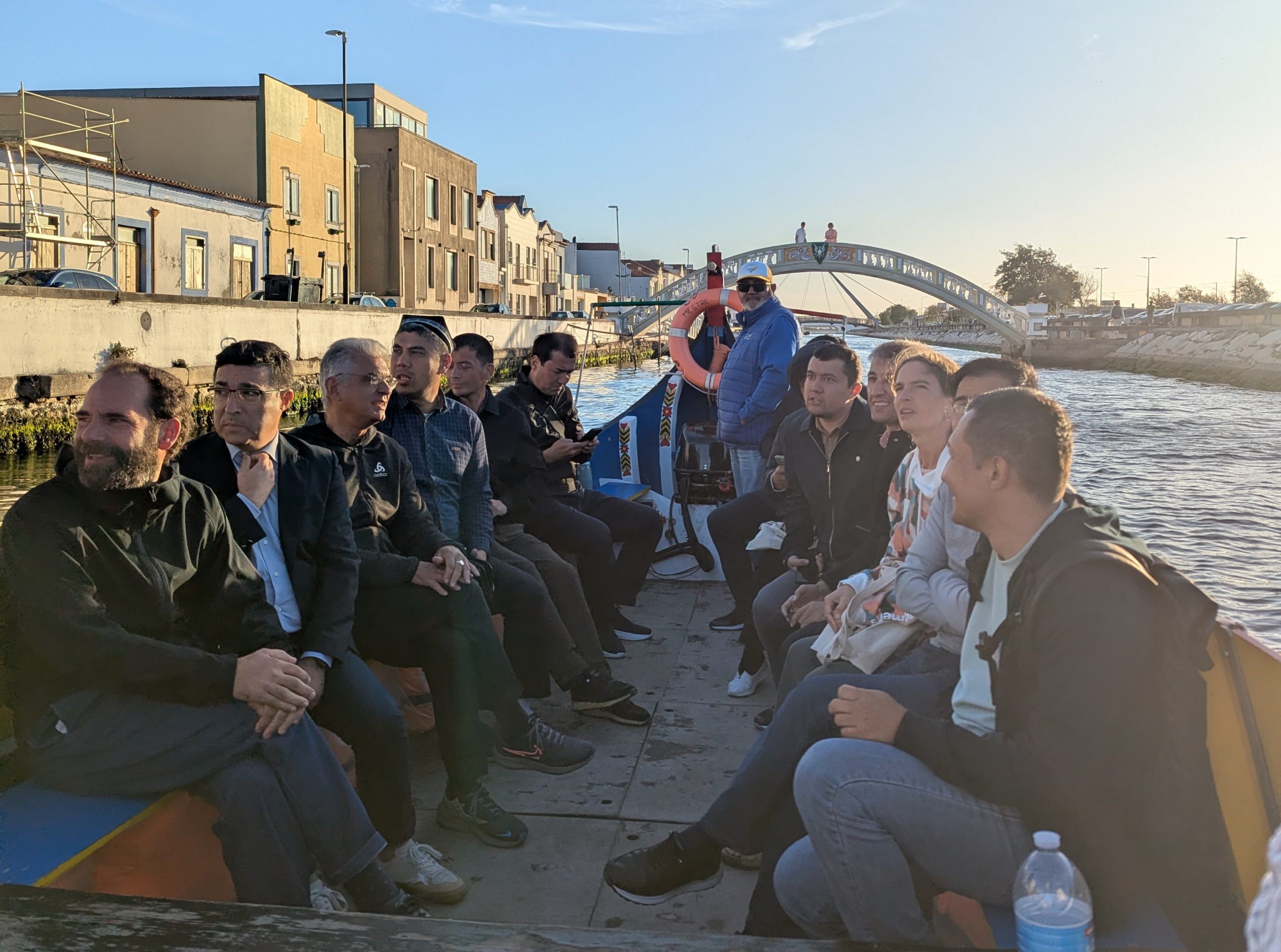
The Aveiro meeting was not only about presentations and technical discussions. The programme also included a visit to the University of Aveiro campus, a cultural tour and a social dinner, providing valuable opportunities for partners from Uzbekistan, Portugal and Spain to connect in a more informal setting.

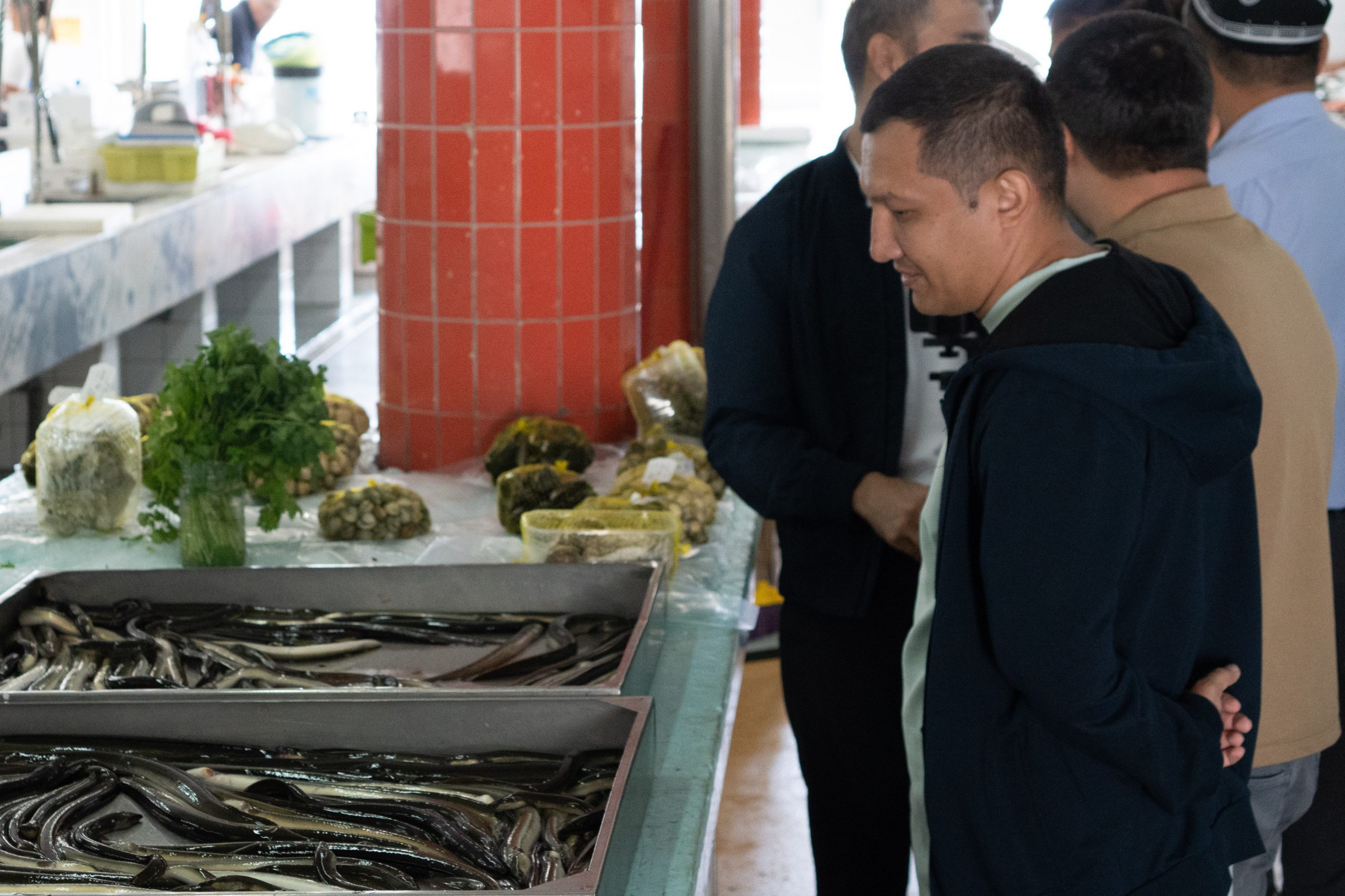
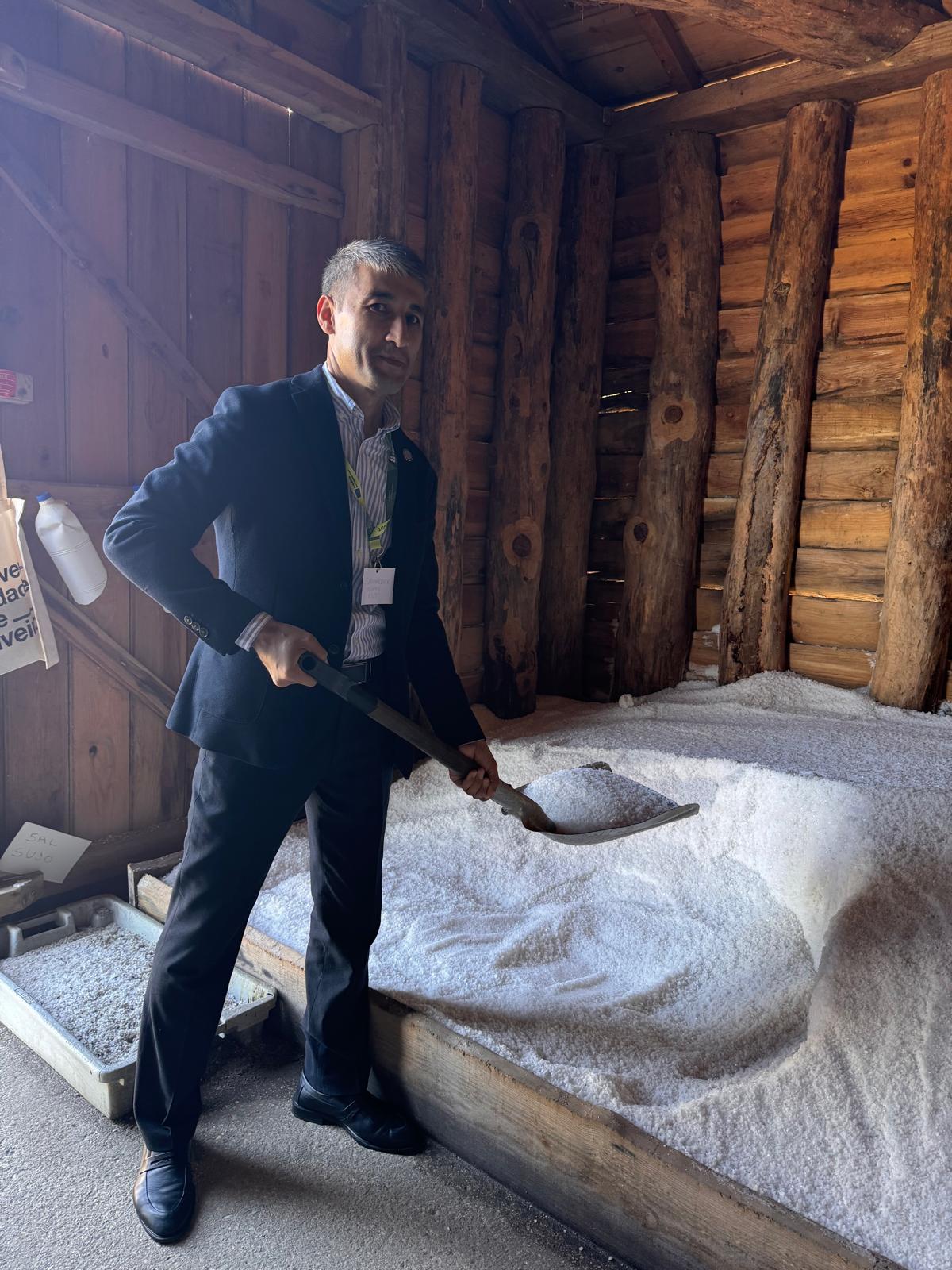
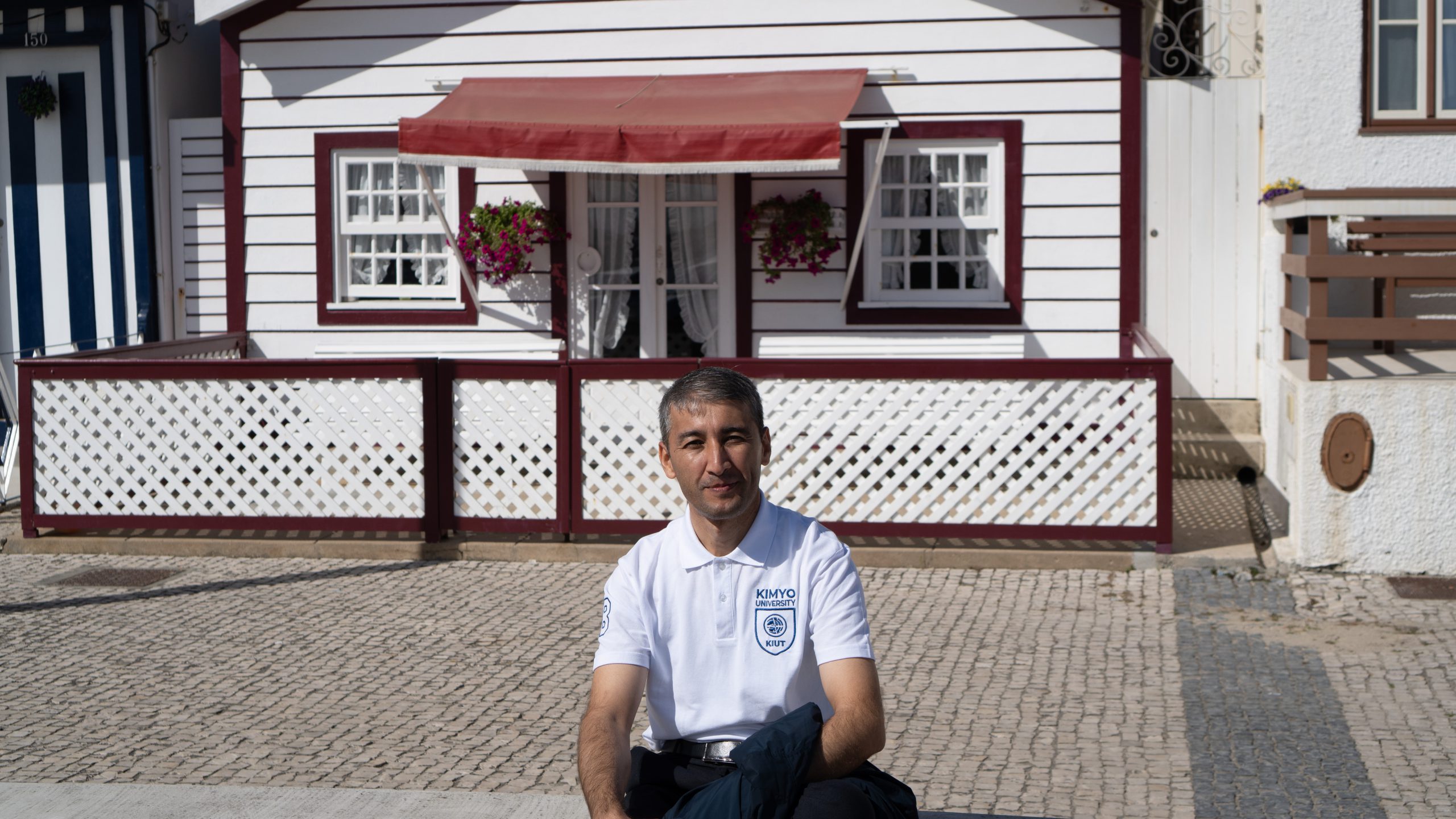
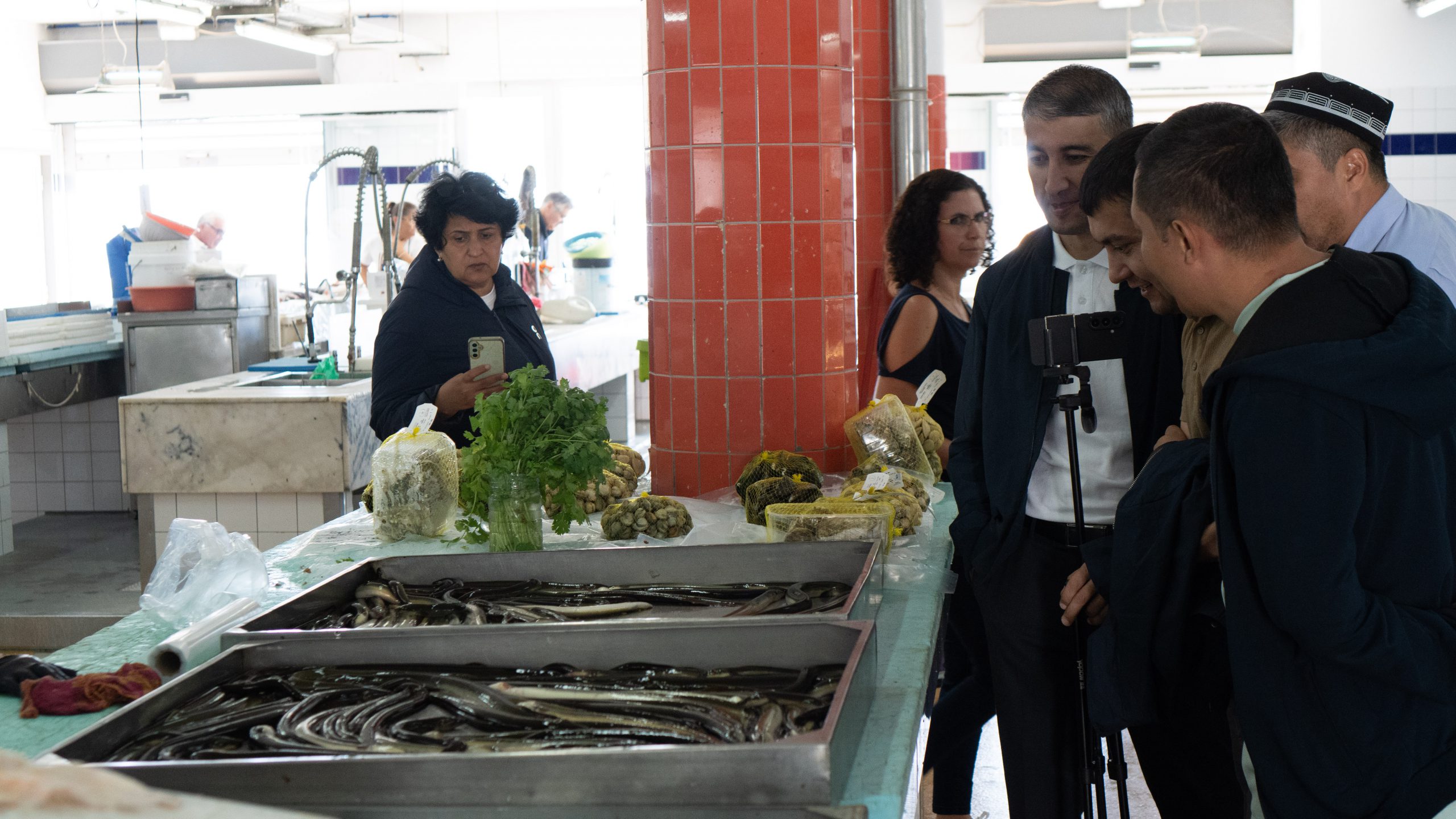
The planned technical visit on Friday afternoon was replaced by a morning programme of technical visits to different areas of Aveiro with environmental relevance for the city, offering partners an additional opportunity to connect the project’s environmental engineering focus with real-world local contexts.

Entering the final stretch

The Aveiro meeting comes at an important moment for GREENDT. With the project approaching its final phase in 2027, several of its most significant results are now taking shape: the EE Laboratory equipment is being procured, the first internal versions of the digital platforms are available, the MSc programme has been developed and is moving towards accreditation, and the consortium is actively working on the exploitation and long-term sustainability of its results.

Beyond these tangible achievements, the meeting demonstrated another essential strength of GREENDT: the ability of partners to work together, exchange knowledge and build the relationships needed to turn the project’s plans into lasting results.

As the consortium looks towards 2027, the focus is now firmly on completing implementation, achieving the expected results and maximising the project’s impact on Environmental Engineering education and the green and digital transition in Uzbekistan.
GREENDT Team Participated in EU Village 2026

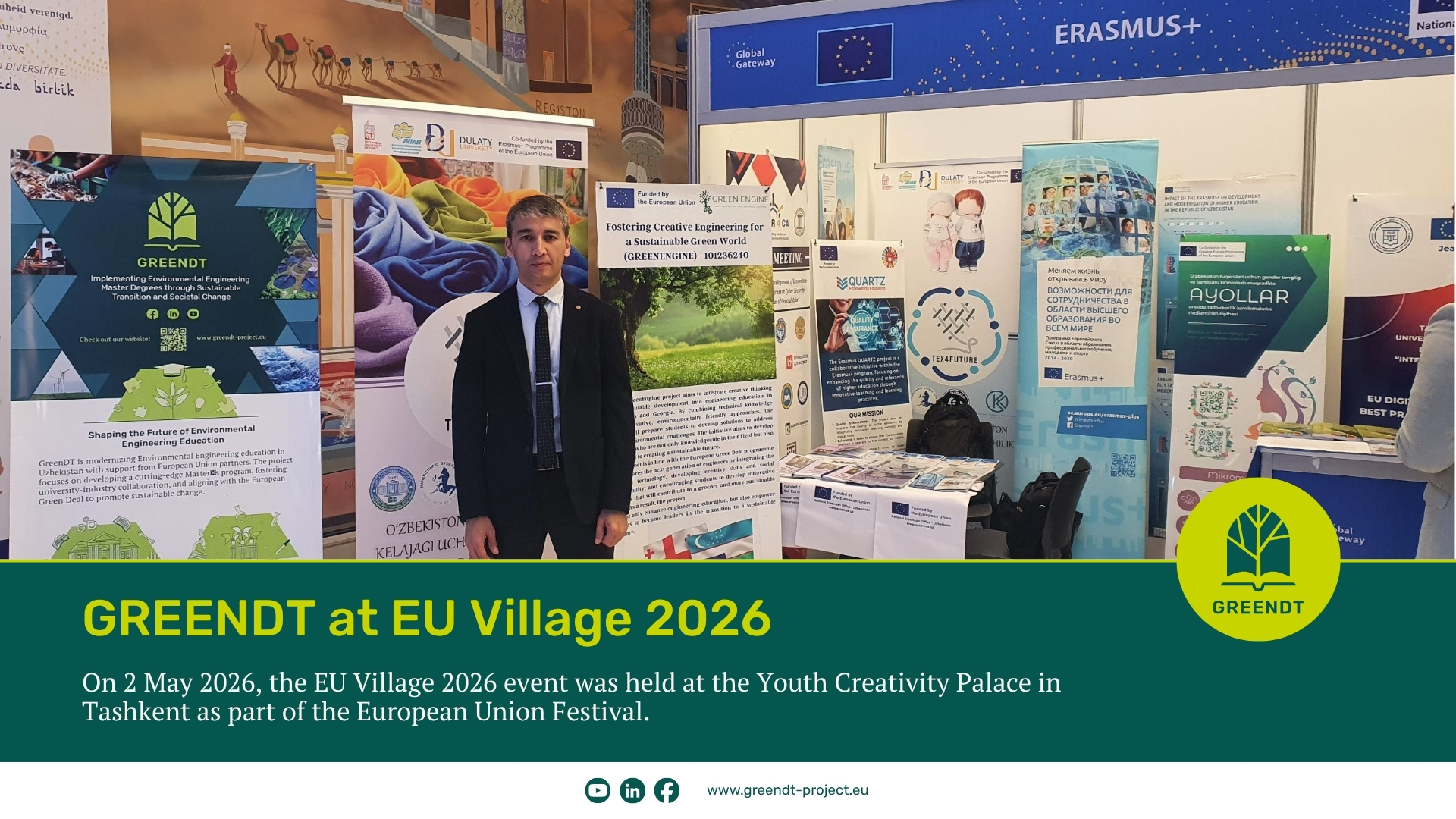
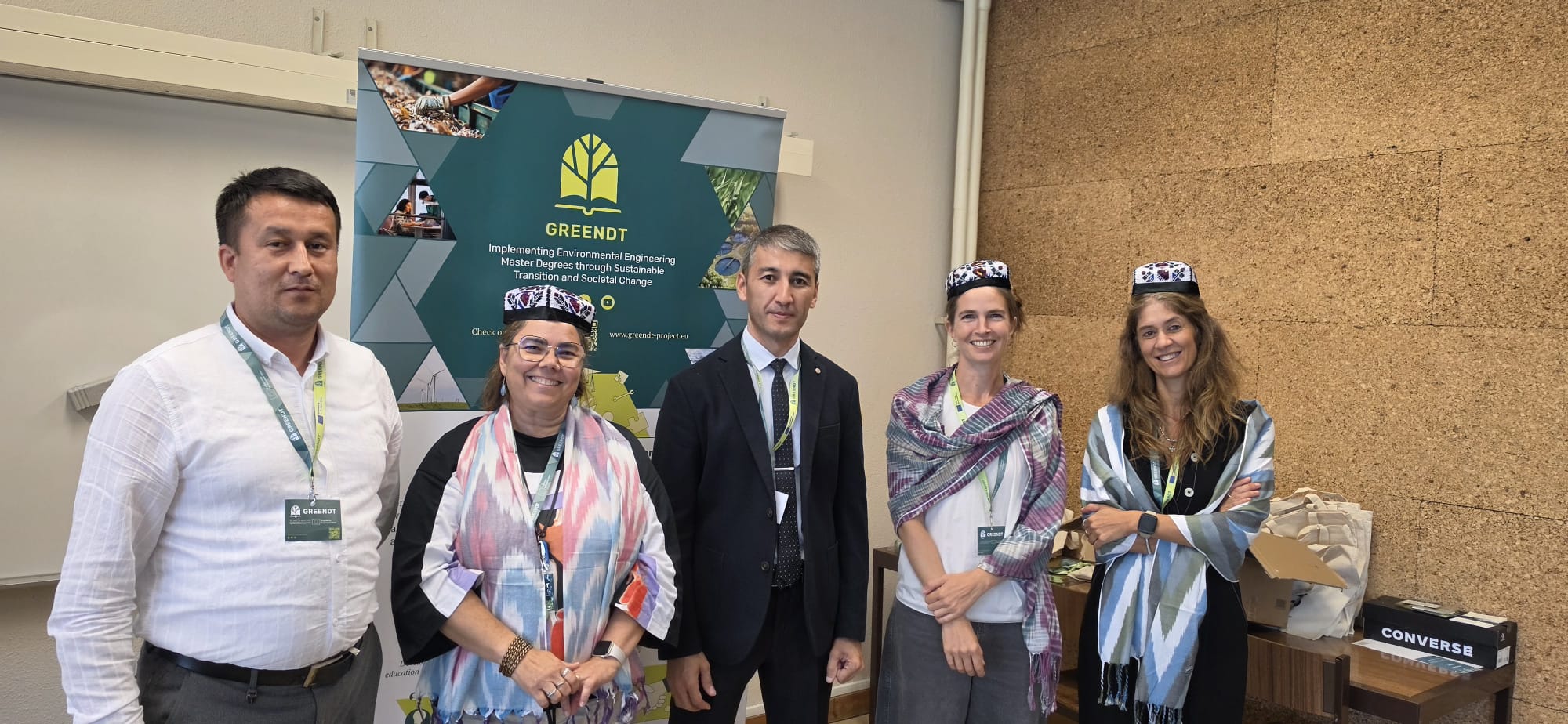
On 2 May 2026, the EU Village 2026 event was held at the Youth Creativity Palace in Tashkent as part of the European Union Festival. 

The event aimed to showcase EU-funded projects, partnerships, educational opportunities, and Erasmus+ initiatives to the wider public, media representatives, students, and stakeholders. 

The GREENDT Erasmus+ CBHE project – “Implementing Environmental Engineering Master Degrees through Sustainable Transition and Societal Change” – was also represented at this important public outreach event. During the festival, GREENDT promotional and communication materials were presented to visitors, highlighting the project’s objectives, partner institutions, key activities, and expected impact on the development of Environmental Engineering education in Uzbekistan. 
GREENDT contributes to the modernization of higher education by supporting the development of Environmental Engineering Master’s programmes, promoting green transition, sustainability, climate awareness, and innovative approaches to environmental education. 

EU Village 2026 provided an excellent platform to promote the achievements of Erasmus+ CBHE projects in Uzbekistan, strengthen visibility, and engage with a broad audience interested in European cooperation and educational opportunities. 

The GREENDT team remains committed to fostering international cooperation for a sustainable future, green education, and the advancement of Environmental Engineering in Uzbekistan. 

GREENDT held dissemination conference at CAGU on green and digital transformation

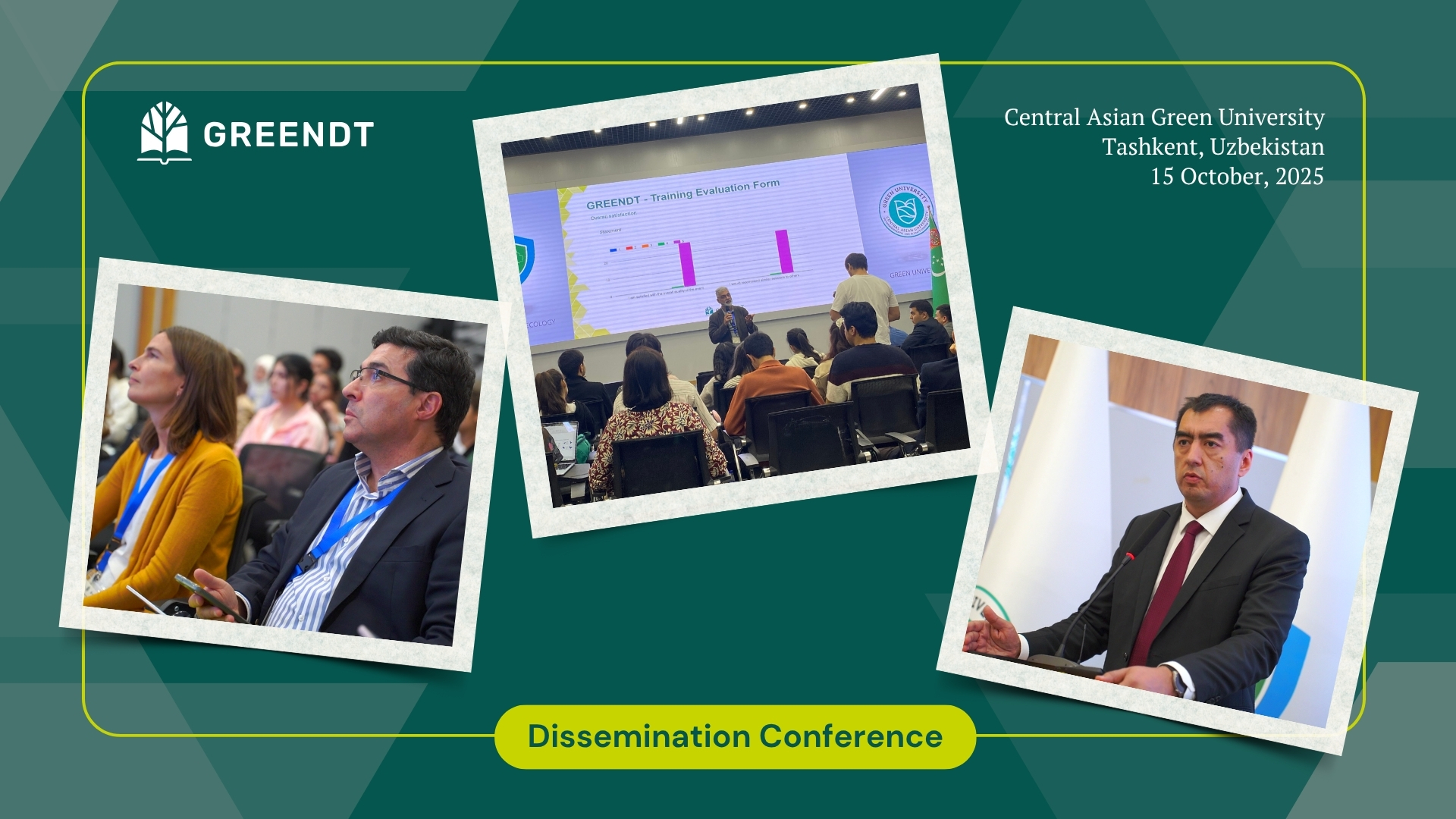
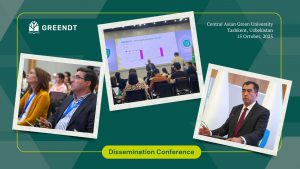
The GREENDT Project held a Dissemination Conference on October 15, 2025, at the Central Asian Green University (CAGU) in Tashkent, Uzbekistan. The event brought together representatives from ministries, universities, and related initiatives to exchange perspectives and foster collaboration on sustainable development, environmental engineering educationt and digital transformation in Central Asia.

As hosts of the event, the seminar was opened by Mr. Shakhriyor Nurulloev, Vice-Rector and currently Acting Rector of CAGU, who welcomed participants. Following him, Duarte Alves, coordinator of the GREENDT Project, presented the project’s status, emphasizing its key role in supporting environmental engineering education in Uzbekistan.
The conference then turned to the experiences gained through the Training of Trainers (ToT) activities carried out under the GREENDT framework. Claudio Cameselle (Universidade de Vigo), António Curado (Instituto Politécnico de Viana do Castelo), and Carla Gama (Universidade de Aveiro) shared insights and reflections from the ToT sessions recently held in Ourense, Viana do Castelo, and in parallel with the event at CAGU. Their contributions covered a wide range of topics, including engineering diplomacy, equity and inclusion, and water management; sustainable energy management, natural radiation, and GIS; as well as air pollution and climate change.

The seminar also featured presentations from related initiatives active in Uzbekistan and Central Asia, showcasing their efforts to foster sustainability, innovation, and capacity building across the region.

  • The SPHERE project (2024-2027) is driving Uzbekistan toward a greener future by transforming higher education into sustainable transportation.
  • The GDCAU project (2024-2027) aims to promote sustainable development and green transformation within higher education institutions in Central Asia.
  • The SILKWAY project (2024-2027) is focused on electricity and heat production, which is also particularly important given the current geopolitical situation affecting countries in the Central Asian region.

Through this conference, GREENDT reinforced its commitment to advancing green and digital transformation in higher education, fostering stronger academic cooperation between European and Central Asian institutions.

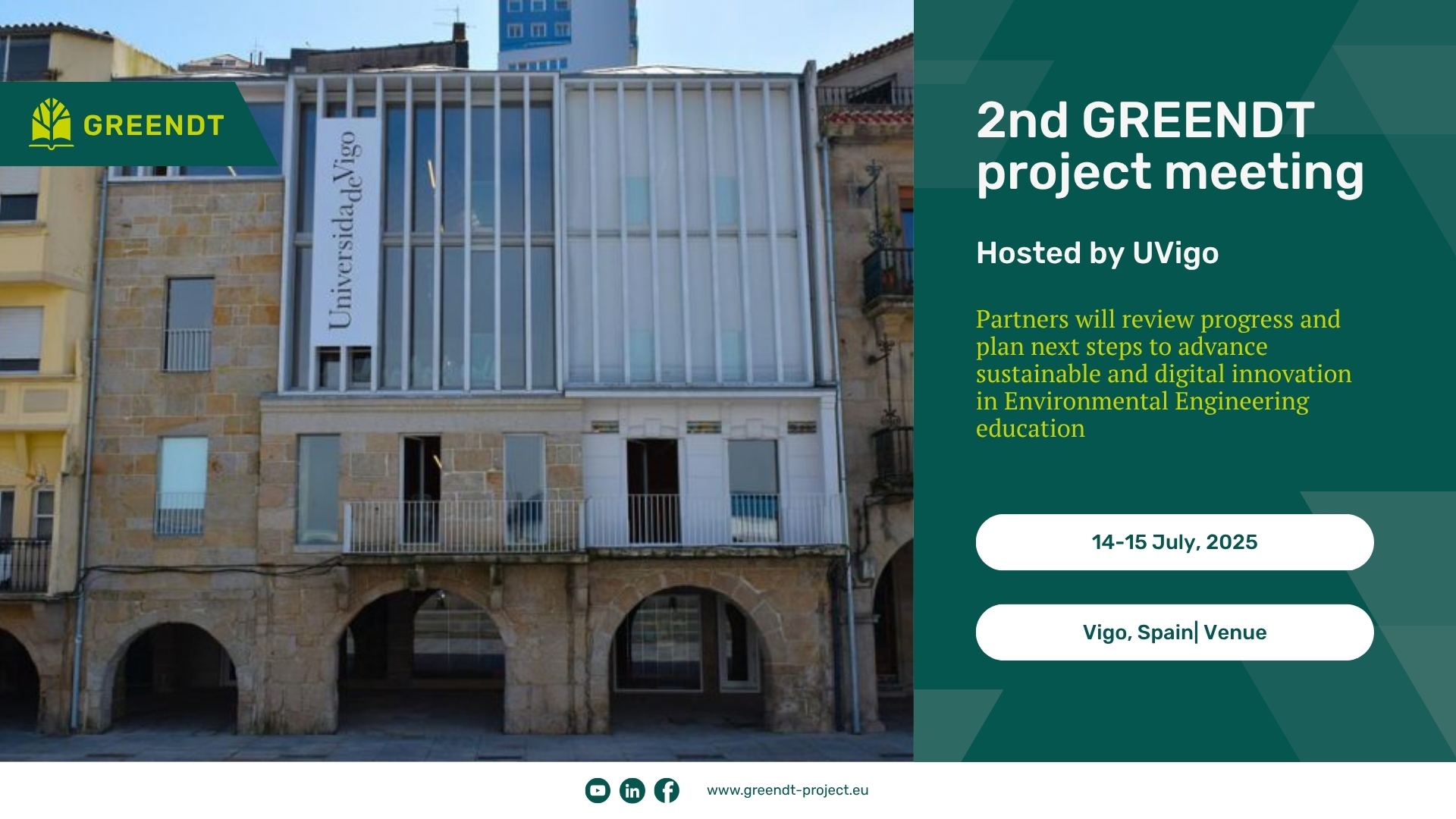
The GREENDT consortium to hold in Vigo its second project meeting for advancing Environmental Engineering Education

From July 14 to 15, 2025, the GREENDT consortium will gather in Vigo, Spain, for its second project meeting, which will take place at the Edificio Redeiras. Over two intensive days, partners will discuss the progress made, align efforts, and coordinate the next steps. Focusing on sustainable transition, digital innovation and capacity building, the project aims to support an inclusive transition across Uzbekistan’s and Central Asian Higher Education Institutions. 

Day 1 

The meeting will begin with welcome speeches and a brief overview of the agenda, led by Maribel Doval from the University of Vigo (UVigo). 

The morning will focus on project coordination (WP1), where the Instituto Politécnico de Viana do Castelo (IPVC) will present updates on the overall status, project deliverables, financial aspects, and the consortium agreement. The session will also include a presentation of the project’s Quality Control Plan and an external evaluation strategy. These tools are essential to ensure that the work stays on track and meets the expected standards. 

In the afternoon, after lunch, the spotlight will turn to the project’s technical work packages. WP2 and WP3 will address the planning of the next training sessions, with input from Jizzakh Polytechnic Institute (JizPI), Universidade de Averiro (UAveiro), Central Asia Green University (CAGU), and the UVigo. WP4 and WP5 will follow, with updates on laboratory equipment procurement, the implementation of the EE Nexus platform, and strategies for implementing training and digital learning platforms in Uzbek partner institutions. The day will wrap up with a group discussion to consolidate key insights and prepare for the strategic planning to come. 

Day 2 

The second day will shift focus toward the implementation of new educational programs. WP6 presentations will outline plans for launching master’s degrees in Environmental Engineering, while WP7 will address dissemination activities, including events in Vigo and Viana do Castelo.  

After a short coffee break and informal interviews led by the Fundación Empresa-Universidad Gallega (FEUGA), the group will dive into a planning session to review the project’s timeline, performance indicators, and key takeaways from the meeting. CAGU will also present a preliminary plan for the next consortium meeting. 

In the afternoon, participants will have the opportunity to visit the UVigo campus and learn more about the university’s facilities and educational environment. The meeting will close with a special cultural event, “Uzbekistan Cultural Day,” organized in collaboration with UNESCO and Fergana State Technical University (FerPI). It will be a unique chance to celebrate cultural exchange and strengthen the sense of community across the GREENDT partnership. 

Looking ahead 

The upcoming meeting in Vigo will be a key milestone for GREENDT. As the project begins to move from planning into implementation, partners will have the chance to build on the work done so far and take concrete steps toward strengthening environmental engineering education. With everyone’s continued collaboration and commitment, GREENDT is well positioned to bring about meaningful, long-term improvements in higher education systems across Central Asia. 

Help Shape the Future of Environmental Engineering Education in Uzbekistan

As part of the Erasmus+ Capacity Building project “Implementing Environmental Engineering Master Degrees through Sustainable Transition and Societal Change” (GREENDT), we are conducting a survey to support the development of a new Master’s program in Environmental Engineering in Uzbekistan.
Why This Survey Matters

Uzbekistan faces a range of pressing environmental challenges—from air and water pollution to waste management and soil degradation. The GREENDT project seeks to address these challenges by designing a modern, innovative Master’s program grounded in the expertise of European Union universities. But for the program to be effective and relevant, we need the perspectives of those most connected to the issues: you.

What the Survey Covers

The survey aims to identify:

  • The most critical environmental concerns in Uzbekistan.
  • Gaps in current education and policy.
  • Public awareness of environmental engineering as a profession.
  • Motivations for pursuing a degree in this field.
  • Opportunities for collaboration between universities, industries, and government institutions.
  • The potential for integrating sustainable practices into higher education and beyond.

Who Should Participate

We invite individuals with a connection to Uzbekistan to take part in the survey, including:

  • Students and recent graduates.
  • University faculty and staff.
  • Professionals working in environmental fields.
  • Policy makers and members of civil society.
  • Anyone interested in sustainability and environmental education.

Take the Survey

Your feedback is essential in designing a curriculum that meets both local and global standards. Please choose the language version that suits you best:

Why Participate?

Your insights will directly influence the creation of a high-quality academic program that not only prepares students for future careers but also contributes to environmental protection and sustainable development in Uzbekistan.