GREENDT completes the internal training sessions to strengthen Environmental Engineering Education in Uzbekistan

The GREENDT project has successfully completed the set of internal training sessions outlined within Work Package 5, marking an important milestone in the project’s capacity-building activities. Building on the Training of Trainers (ToT) programme previously delivered by the European partner institutions, the sessions enabled the trained academic staff from the Uzbek universities to transfer their knowledge and experience to their colleagues within their own institutions.

Building on the Training of Trainers Programme

As planned, each Uzbek partner institution organized at least three internal training sessions during the first half of 2026, ensuring the effective transfer of knowledge acquired through the Training of Trainers programme. Kimyo International University in Tashkent (KIUT) delivered four training sessions in April, including a dedicated session involving external stakeholders. Andijan State Technical Institute (ASTI) and Fergana State Technical University (FSTU) each organised three sessions in March, while Jizzakh Polytechnic Institute (JizPI) conducted its three sessions in February. Central Asian University of Environment and Climate Change Studies (CAGU) completed its three planned sessions in May, bringing the implementation of the training programme to a successful conclusion across all partner institutions.

These training sessions targeted academic staff, researchers, administrative personnel and other stakeholders involved in the development and delivery of the new Master’s programmes in Environmental Engineering. Through this multiplier approach, GREENDT has expanded the impact of the knowledge acquired during the ToT activities, building institutional capacity and promoting the adoption of innovative teaching practices.

The programme covered a wide range of topics related to Environmental Engineering and Sustainability, including:

  • European environmental policy.
  • Engineering diplomacy.
  • Equity and inclusion.
  • Water management.
  • Sustainable energy.
  • Geographic Information Systems (GIS).
  • Risk assessment.
  • Atmospheric pollution.
  • Air quality monitoring.
  • Climate change.

The training materials developed throughout the project were adapted to the needs of each institution, ensuring their effective integration into local teaching and learning environments.

Beyond the technical content, the sessions promoted active participation, knowledge exchange and the dissemination of European pedagogical approaches. Particular attention was also given to fostering inclusive learning environments by integrating principles of equity, diversity and accessibility into the design and delivery of the training activities.

Strengthening Capacity for Long-Term Impact

The implementation of the internal training sessions was followed by participant feedback and evaluation processes, providing valuable insights into the effectiveness of the activities and helping identify lessons learned and recommendations for future capacity-building initiatives. The overall outcomes confirmed the relevance of the training programme in strengthening institutional expertise and supporting the modernisation of Environmental Engineering education in Uzbekistan.

The successful completion of these activities represents another significant achievement for GREENDT, reinforcing the project’s long-term objective of enhancing higher education through international cooperation, knowledge transfer and the adoption of European best practices.
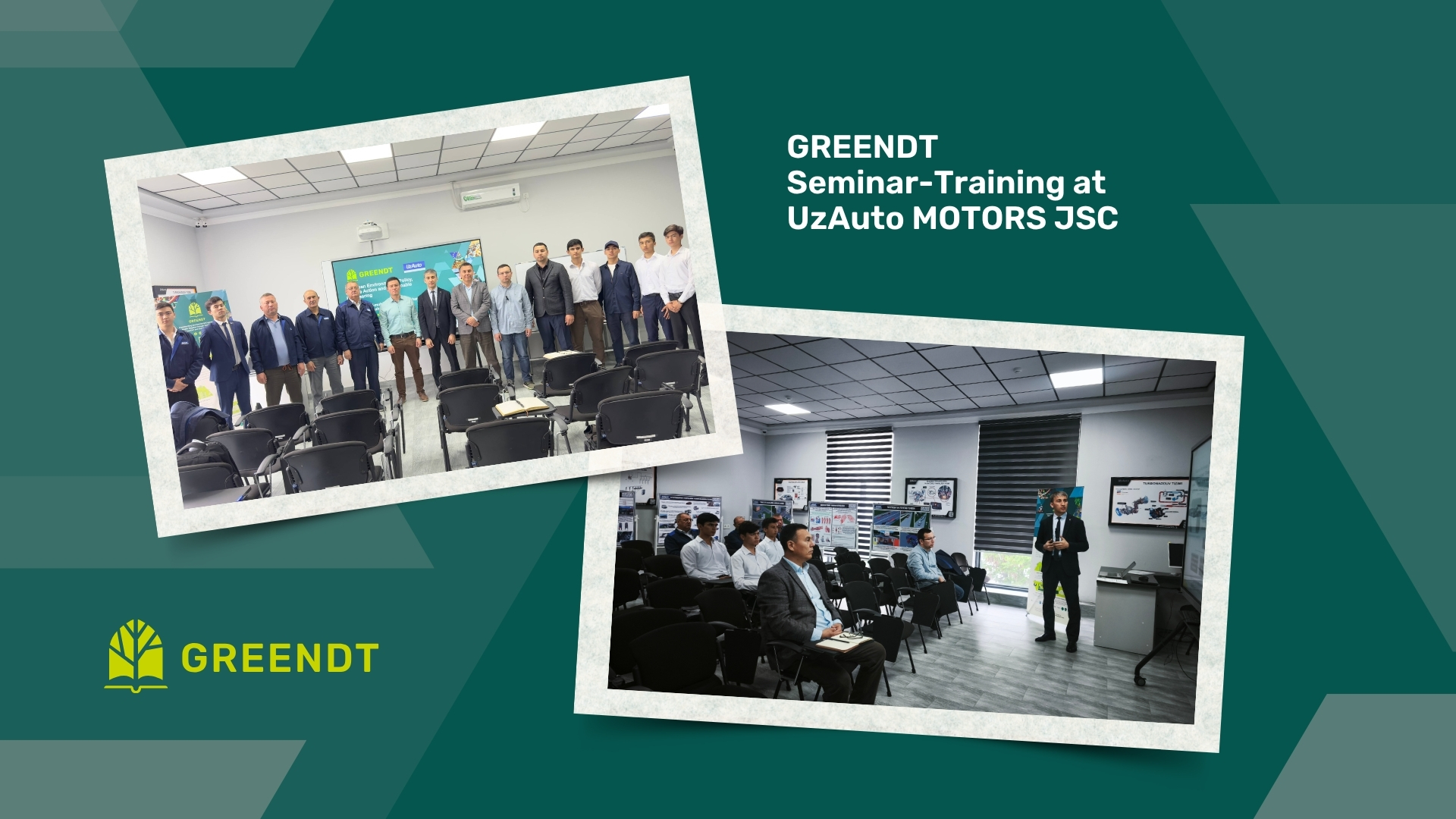

A Seminar-Training was held at “UzAuto MOTORS” JSC within the GREENDT Project

On 22 April 2026, within the framework of the GREENDT project under the ERASMUS+ programme, and as part of WP5: Dedicated capacity building on European environmental policy and environmental engineering, a seminar-training was organized at UzAuto MOTORS JSC.

The training was devoted to the topic “European Environmental Policy, Climate Action and Sustainable Engineering”, and covered the following areas:

  • An introduction to the GREENDT project and European Environmental and Climate Law.
  • Air Quality Monitoring & Modelling: A Comprehensive Approach.
  • Environmental Engineering, Sustainability, and Water Issues: Engineering Our Future.
  • Sustainability and Energy Efficiency in Buildings: Driving the Future of Climate Action
  • Fossil Fuels vs Renewable Energies.  

During the seminar, managers and specialists from various departments of UzAuto MOTORS JSC took part and gained important knowledge in the fields of environmental safety, sustainable production, and green technologies. 

This event became an important step toward strengthening the integration of education and industry, as well as promoting the wider implementation of environmental responsibility and sustainable development principles within enterprises. 

Such trainings within the GREENDT project contribute to strengthening capacity in environmental engineering in Uzbekistan, promoting the wider introduction of modern green approaches in enterprises, and enhancing practical efforts in environmental protection.

GREENDT held dissemination conference at CAGU on green and digital transformation

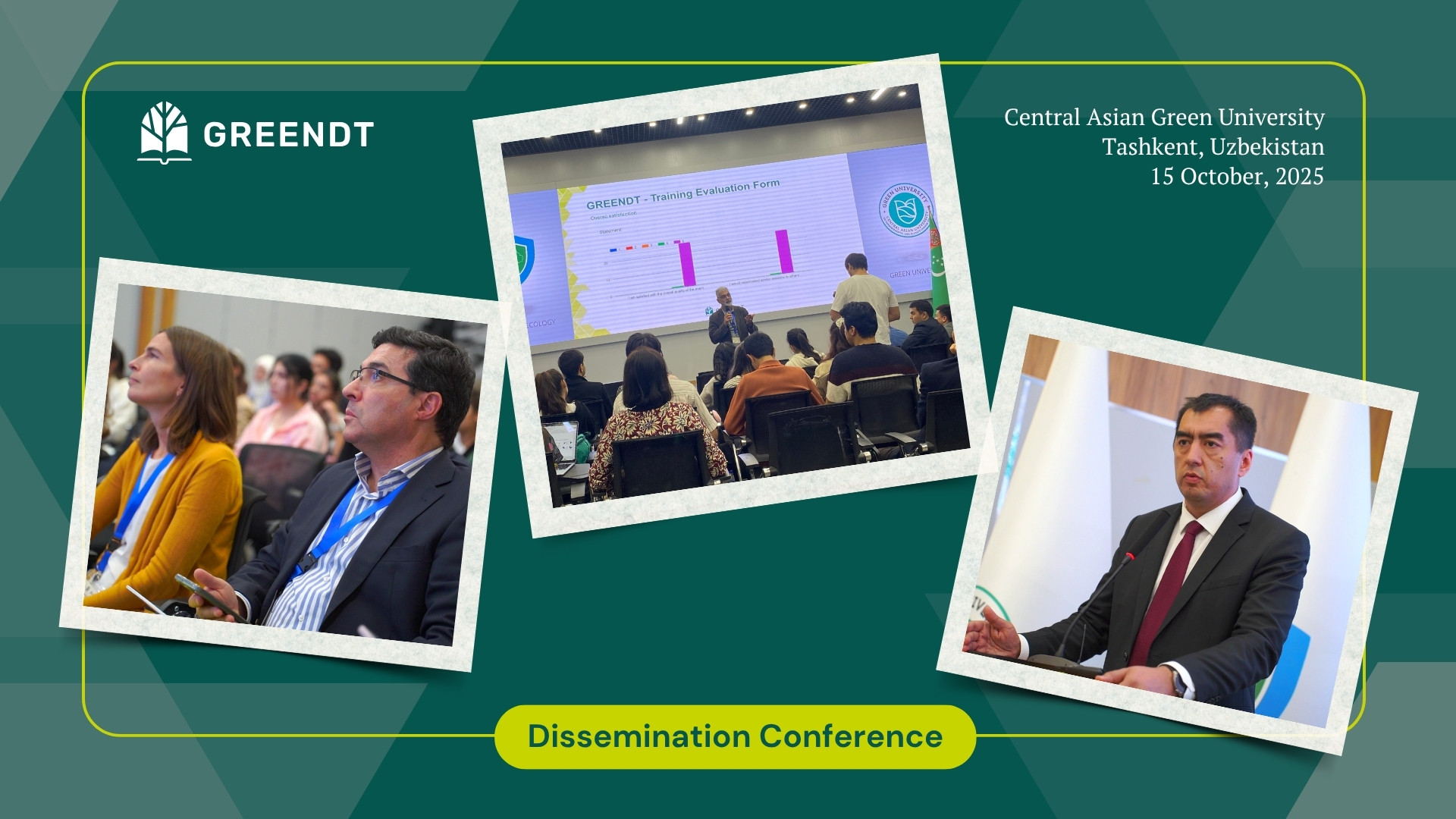
The GREENDT Project held a Dissemination Conference on October 15, 2025, at the Central Asian Green University (CAGU) in Tashkent, Uzbekistan. The event brought together representatives from ministries, universities, and related initiatives to exchange perspectives and foster collaboration on sustainable development, environmental engineering educationt and digital transformation in Central Asia.

As hosts of the event, the seminar was opened by Mr. Shakhriyor Nurulloev, Vice-Rector and currently Acting Rector of CAGU, who welcomed participants. Following him, Duarte Alves, coordinator of the GREENDT Project, presented the project’s status, emphasizing its key role in supporting environmental engineering education in Uzbekistan.

The conference then turned to the experiences gained through the Training of Trainers (ToT) activities carried out under the GREENDT framework. Claudio Cameselle (Universidade de Vigo), António Curado (Instituto Politécnico de Viana do Castelo), and Carla Gama (Universidade de Aveiro) shared insights and reflections from the ToT sessions recently held in Ourense, Viana do Castelo, and in parallel with the event at CAGU. Their contributions covered a wide range of topics, including engineering diplomacy, equity and inclusion, and water management; sustainable energy management, natural radiation, and GIS; as well as air pollution and climate change.

The seminar also featured presentations from related initiatives active in Uzbekistan and Central Asia, showcasing their efforts to foster sustainability, innovation, and capacity building across the region.

  • The SPHERE project (2024-2027) is driving Uzbekistan toward a greener future by transforming higher education into sustainable transportation.
  • The GDCAU project (2024-2027) aims to promote sustainable development and green transformation within higher education institutions in Central Asia.
  • The SILKWAY project (2024-2027) is focused on electricity and heat production, which is also particularly important given the current geopolitical situation affecting countries in the Central Asian region.

Through this conference, GREENDT reinforced its commitment to advancing green and digital transformation in higher education, fostering stronger academic cooperation between European and Central Asian institutions.

GREENDT highlights intercultural dialogue with Uzbekistan Cultural Day

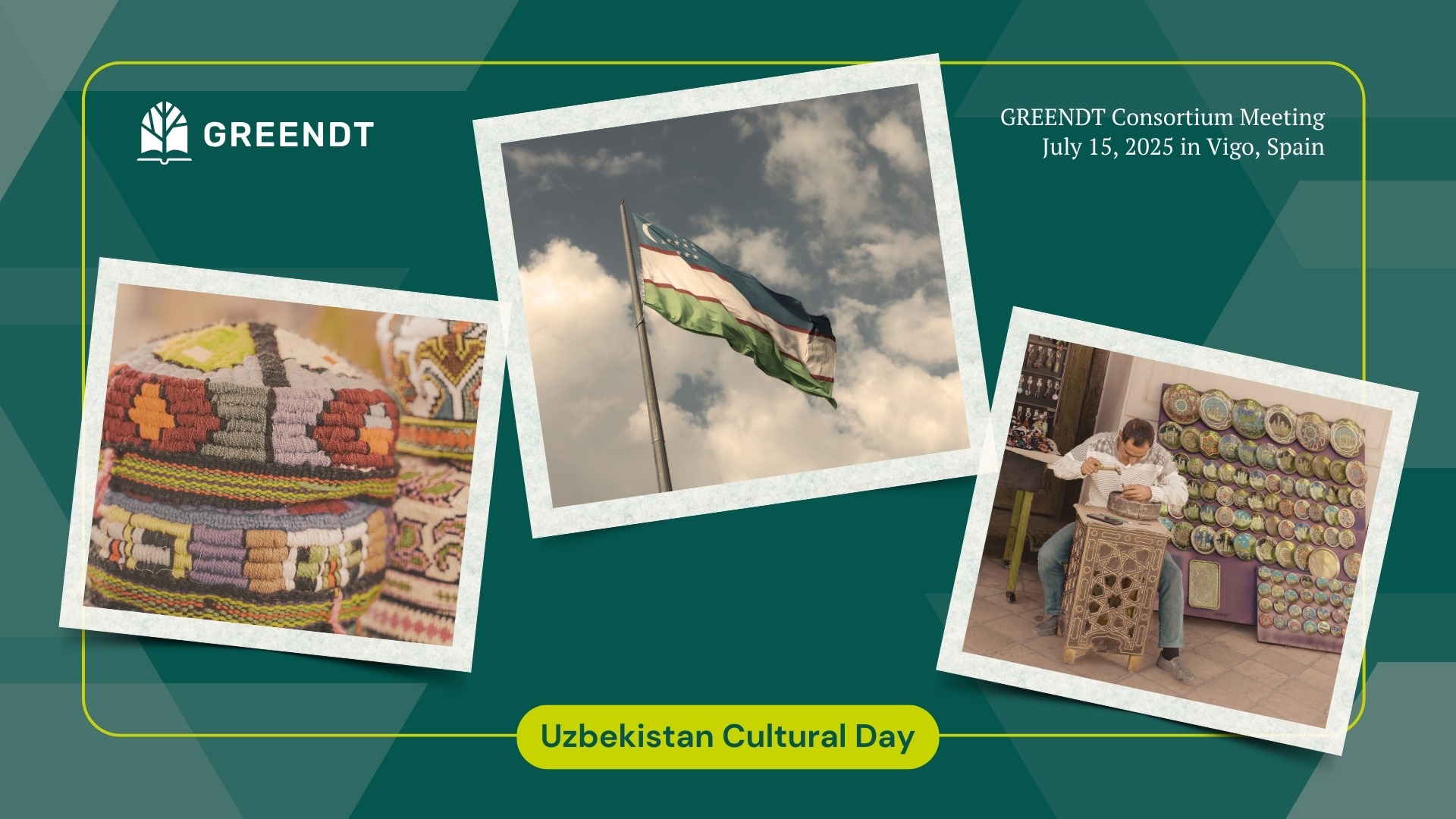
As part of the second GREENDT project consortium meeting, which will take place in Vigo, Spain on July 14 and 15, 2025, a special event titled “Uzbekistan Cultural Day” will be held on July 15 from 15:00 to 17:00 at the Edificio Redeiras and from 17:00 to 19:00 at the Afundación building. The event is jointly organized by the University of Vigo, the Embassy of Uzbekistan in Spain, the Embassy of Uzbekistan in France, and Fergana State Technical University (FSTU) and aims to celebrate and share the rich cultural heritage of Uzbekistan with an international audience. 

This initiative seeks to foster intercultural dialogue and highlight the significance of cultural heritage in advancing global values such as sustainability, inclusion, and cooperation. A key message of the event will be to promote the upcoming 43rd UNESCO General Assembly session, which will, for the first time in history, be hosted in Samarkand, Uzbekistan — marking a historic milestone as the session traditionally takes place in Paris. 

The event will feature a dynamic program including: 

  • Live performances of traditional Uzbek music and dance. 
  • Exhibitions showcasing national handicrafts, including embroidery, ceramics, and textiles.
  • Short documentary screenings on Uzbekistan’s cultural sites and intangible heritage.
  • Presentation of Uzbekistan’s more than 100-year-old rich history, from ancient civilizations to modern reforms.
  • Tasting of national Uzbek cuisine, offering guests an authentic multisensory experience. 
  • Guest speakers from the Embassy of Uzbekistan in Spain and FSTU, who will discuss the role of cultural preservation and exchange. 

Beyond its cultural focus, the event is also an opportunity to reinforce Uzbekistan’s image on the global stage as a country that honors its traditions while embracing innovation and progressive reforms. By sharing its identity, history, and national values, Uzbekistan aims to position itself as a committed partner in the global effort for sustainable development. 

Uzbekistan’s Role in the Global Cultural Landscape 

Like every country, Uzbekistan holds a distinct place in the global cultural mosaic. With its ancient history as a cradle of civilizations and its strategic location along the Silk Road, the nation has for centuries been a vibrant crossroads of knowledge, trade, and cultural exchange. 

Today, the Uzbek diaspora spans many countries, where communities maintain a strong connection to national traditions while actively participating in local cultural life. This strong sense of identity—combined with a spirit of openness—enables Uzbek people to live in harmony with other cultures and contribute meaningfully to shared development. 

Events such as Uzbekistan Cultural Day play a vital role in promoting intercultural understanding and cross-border knowledge exchange. In an increasingly interconnected world, these moments of dialogue and celebration are essential for building trust, encouraging innovation, and reinforcing mutual respect among nations. 


Photo 1: MarjonaKhidirova